Objection Handling: Uncover Hidden Late-Stage Concerns
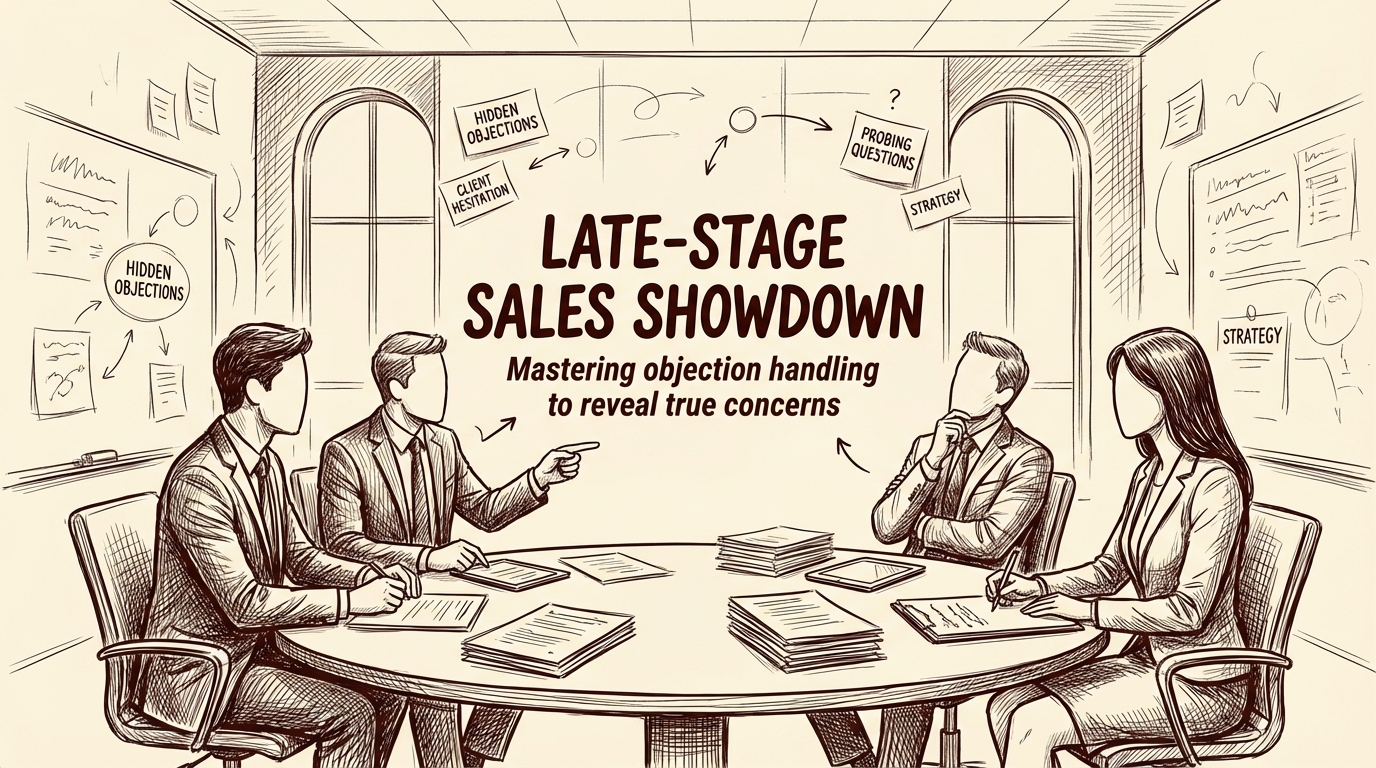
Late-stage enterprise sales can feel like a game of cat and mouse. Buyers will say, “It’s too expensive,” or “We need more time,” but seasoned sales pros know those words often hide deeper worries. Understanding how to handle these objections effectively—by telling stated concerns apart from real ones—can make or break the deal.
When the stakes are high, and your buyer has invested weeks or months evaluating your offer, you need to listen carefully. Objections signal underlying fears that are rarely solved by a quick discount. By mastering the art of sales objection handling, you bridge the gap between what buyers say and what they actually fear.
The Critical Distinction: Stated vs. Real Objections
In complex enterprise deals, objections aren’t just noise. They’re clues. Stated objections might be about budget or timelines, but deep down, real objections revolve around issues like ROI doubts or political misalignment. Inspire Em – Final Stage Objection Handling explains that many late-stage deals stall because the real blockers stay hidden. Instead of tackling the fear at its core, sellers often negotiate on surface-level concerns.
This happens when key stakeholders feel uncertain about risk, or when they worry if the solution will align with strategic goals. They use price as a shield to avoid admitting internal challenges, like buy-in from other departments. Meanwhile, your sales team gets stuck negotiating a number on a spreadsheet instead of solving the real problem.
Why Late-Stage Enterprise Buyers Hide Their True Concerns
In late-stage enterprise sales, the buyer has invested time, so admitting deeper hesitations can be awkward. Think of a C-suite executive who insists, “We just didn’t budget for this.” Often, it’s easier to cite budget constraints than reveal uncertainty about how the project fits long-term or if other teams even support it.
According to Sterling Chase – Handling Sales Objections Part 3, many enterprise buyers only show surface pushback. Their real concerns emerge later: fear of failed adoption, unclear ROI, or lack of synergy with existing systems. They hide these worries to avoid looking unprepared in front of procurement or peers. Without clarity, deals drag on, many times ending in frustration for all involved.
Probing Techniques to Uncover Real Objections
Your ability to probe deeper separates average performers from top-tier closers. Begin with open-ended questions and a mindset of curiosity. For instance, when a buyer says, “We need more time,” you can respond, “May I ask what outcome you’d like to see before moving forward?” This encourages them to reveal the actual issue driving the delay.
The RAIN Sales Training – 4 Steps to Overcoming Objections approach highlights listening, understanding, responding, and confirming. Restate the objection in your own words, then gain permission to dig deeper. Ask, “Is this about funding, or is someone else on your team hesitant?” Often, you’ll find the problem isn’t about cash flow but about unresolved concerns from other stakeholders. Digging beneath the surface helps you address what truly matters.

3 Practical Tips for Mastering Objection Handling in Enterprise Deals
After uncovering the hidden roadblocks, you need a plan to handle them head-on. Here are three practical strategies:
- Re-anchor with the buyer’s own metrics: Remind them of the value your solution brings. For example, ask, “Based on your projections, how much lost revenue occurs for every month without this solution?” This moves the focus from price to the cost of doing nothing.
- Co-create a mutual action plan: Instead of unilaterally scheduling next steps, invite stakeholders to shape the rollout timeline. This gives them ownership and lets you spot hidden doubts early. Mindreader reveals why diagnosing hidden objections quickly is crucial: it clarifies action items so buyers can move ahead with confidence.
- Use selective “give-to-get” concessions: If procurement demands a discount, present it as a unique gesture. For instance, “Let me see if I can secure a special partnership rate for a limited scope.” This satisfies their request without undervaluing your solution.

Re-Engaging Economic Buyers: The Game-Changer
When you can’t shake off a repeated objection, the real issue often lies with the economic buyer. Even if you’ve talked to high-level executives, there might be one key decision-maker who hasn’t fully bought in. At this point, you must tactfully suggest bringing that individual back into the loop. For example, “Should we include your CIO again to ensure this aligns with upcoming initiatives?” This cuts through the noise and reconfirms priorities.
In Mindreader insights on the evolution of consultative selling in 2026, it’s evident that proactive communication with all stakeholders not only re-establishes trust but also anchors the decision process. Decision-makers will appreciate your willingness to keep them informed and ensure alignment. As you circle back, you’ll often quell internal politics before they turn into major blockers.

Value-Based Responses Over Discounts
A knee-jerk discount is a short-term fix that weakens long-term value. Instead of slashing your price, revisit the buyer’s initial excitement. Ask, “Which part of our solution did you find most relevant to your goals?” A reminder of the original vision can re-ignite enthusiasm. Walnut – 10 Objection Handling Techniques encourages flexible customization—like offering a limited pilot or phased rollout—that addresses enterprise requirements without handing out blanket discounts.
If the concern is timing, tie your solution to their strategic objectives, such as next year’s growth targets or system integrations. This approach respects true relationship selling by emphasizing collaboration and measured returns instead of pure price negotiation. With Mindreader exploring how AI tools speed up sales communication, you can also show how responding in a timely, tailored fashion reaffirms your solution’s worth.
Case in Point: Turning a “No” into an Enterprise Victory
Picture a SaaS package pitched to a global tech firm. Procurement insisted they lacked sufficient budget for the quarter. Upon deeper probing, the real blocker was IT department worries about integration risk. By highlighting how similar clients had integrated quickly—and showing the lost opportunity cost per month—the seller showed that waiting was far costlier than committing now.
They agreed to do a no-risk pilot phase with tight success benchmarks instead of a blanket discount. According to Outreach – Objection Handling Guide, this is a solid example of customizing the offer without devaluing it. Once the IT team saw proof of concept, the full deal closed at the original rate, preserving profit margins and trust.
Your Path to Sales Mastery
The difference between merely “good” and truly elite sales teams lies in how well they identify the gap between stated and real objections. Instead of giving in to price cuts or indefinite delays, top sellers dig deep and address issues at their core. By practicing consultative discovery and maintaining strong relationships throughout the enterprise, you’ll mitigate surprises late in the game.
Ultimately, sales objection handling is about delivering clarity and building confidence. Show your buyers the value they stand to gain, confirm that their concerns are taken seriously, and guide them toward genuine eagerness to move forward. And if you’re looking to accelerate your ability to spot hidden concerns, consider how Mindreader can help you interpret buyer signals faster and more accurately. The future of enterprise sales belongs to those who look beyond the surface—and uncover what truly matters.