Buyer Intelligence: Navigating Cognitive Bias in B2B Sales
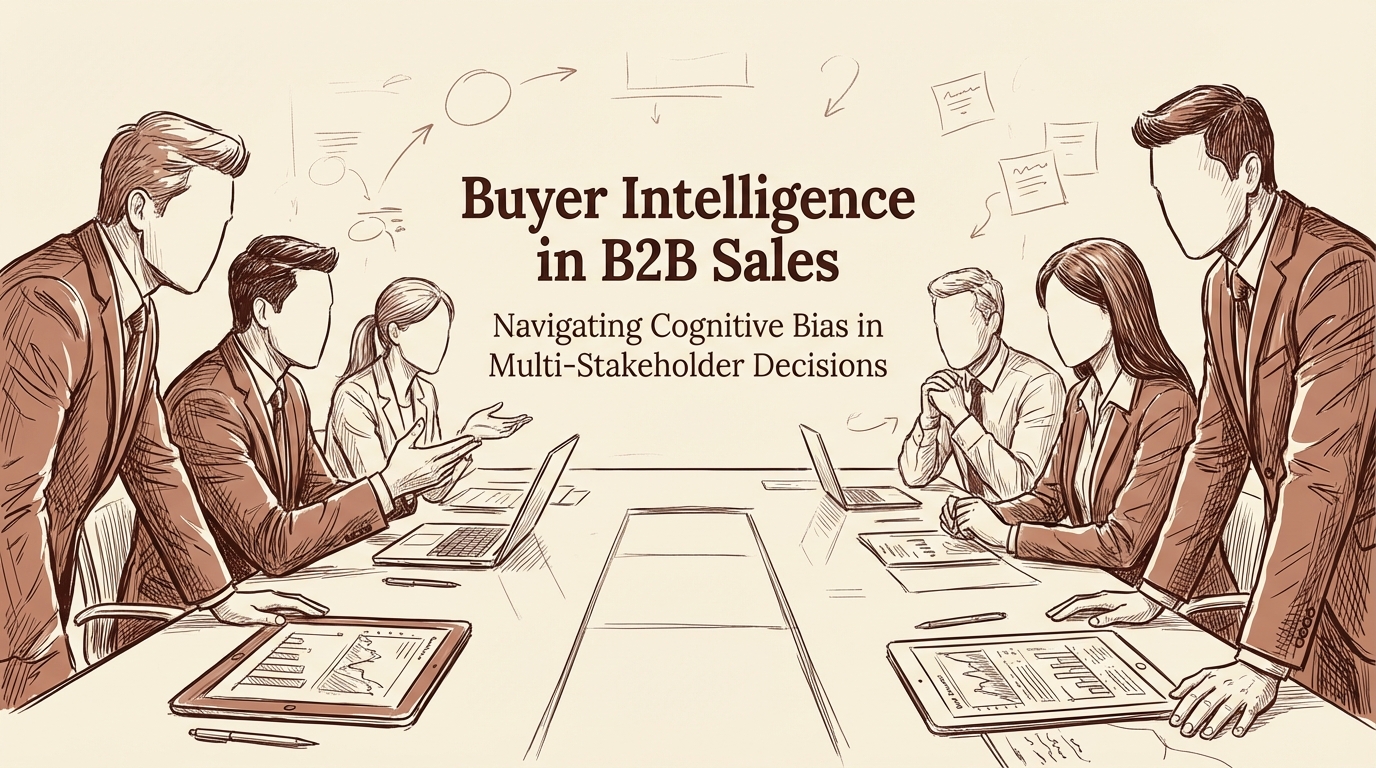
Imagine a tense boardroom where multiple decision-makers debate whether to invest in a multimillion-dollar SaaS platform. They have reams of data in front of them, yet something still feels “off.” Despite clear benefits, they lean toward an option that’s objectively inferior. It’s not incompetence—it’s cognitive bias shaping their choices. In modern multi-stakeholder B2B sales, recognizing these mental filters can be the difference between signing the deal or getting stuck in endless deliberations.
In today’s high-level relationship selling, a seller who uses buyer intelligence to address those hidden biases can guide committees toward smarter buying decisions. Instead of pushing standard features, they shift focus to how each stakeholder thinks, feels, and decides. The result isn’t just a closed deal—it's a partnership built on true understanding.
The Rise of Multi-Stakeholder Decision-Making and Hidden Biases
Modern B2B buying committees often have 11 or more stakeholders, each bringing a unique viewpoint. While more brainpower may seem helpful, it also introduces competing fears, goals, and assumptions. Biases thrive in these settings long before anyone realizes—some researchers at Lift Enablement note that the subconscious mind handles about 99% of decisions. Add in a group dynamic, and suddenly everyone’s reliable “logical” thinking can be nudged by social proof, hidden fears, and incomplete data.
According to GetMonetizely, even senior executives rely on intuition for around 40% of decisions. Add more people to the mix, and biases like anchoring, confirmation bias, or loss aversion often push committees to stick to “safe” choices rather than pursuing real innovation. Understanding buyer intent and reading client behavior therefore becomes crucial in consultative selling. By unpacking these biases, you’re not just pitching features—you’re guiding a group toward a balanced, rational decision.
Scenario 1: Anchoring Bias Derails Pricing Negotiations

Meet Sarah, a VP of Sales at TechNova. Her team is reviewing CRM proposals. The first vendor quotes $150,000 per year, and that number sticks in everyone’s mind. Later quotes at $120,000 seem like bargains, even if they’re still overpriced. Because the initial figure set the “anchor,” stakeholders unconsciously treat it as the baseline. According to Owen Van Syckle, anchoring bias can warp value perceptions at every stage—from RFP to closing.
For Sarah’s committee, the CFO fixates on that $150,000 figure, and the IT lead overlooks the potential return on a lower bid with better integrations. Together, they almost sign off on a plan that costs more but delivers less. By shifting the focus to bigger objectives—like growth goals or productivity gains—Sarah reframes the baseline for judgment. This approach, which is a core part of consultative selling, shows how anchoring can be neutralized by discussing outcomes instead of fixating on sticker prices.
Scenario 2: Confirmation Bias Filters Out Superior Solutions

Confirmation bias prompts people to seek out data that confirms their existing beliefs. In a multi-stakeholder sale, this can lock teams into tunnel vision. Picture Raj, a CTO at HealthLink. After a flashy demo from Vendor A, he’s already convinced it’s the best. He clings to positive reviews but disregards Vendor B’s stronger security features. Insights from Corporate Visions highlight how confirmation bias slows decision-making and causes good solutions to be ignored.
This bias can snowball when multiple personalities are in the room. Some stakeholders back Raj and question any data that contradicts their favorite choice. By the time detractors speak up, the rest of the team is already invested in proving themselves right. One simple fix is to share diverse information early and require structured comparisons. This ensures that alternative solutions aren’t unfairly brushed aside.
Scenario 3: Loss Aversion and Status Quo Stall Innovation
Nobody wants to risk downtime or a potential flop. At ManuCorp, procurement leader Lisa struggles to convince her committee to switch ERP systems. Their current platform has glaring flaws, but it’s familiar. Even when a new system promises a 30% efficiency boost, the fear of what might go wrong spooks the finance reps.
Loss aversion—where the pain of losing feels stronger than the joy of gaining—blocks progress. Research from Corporate Visions references Daniel Kahneman’s theory: people weigh potential losses about twice as much as equivalent gains. In a multi-stakeholder environment, one anxious voice can stall the entire group. Showcasing pilot programs or guaranteeing minimal disruptions helps buyers see change not as a threat, but as a safer pathway to improvement.
Scenario 4: Bandwagon Effect and Social Proof in Committees
At Apex, a financial services firm, the buying team notices a well-known competitor using Vendor X. Suddenly, the group views Vendor X as the “safe” choice. A classic bandwagon effect takes hold—if other reputable companies chose X, it must be the right bet. But as William & Mary Online points out, sometimes as little as 5% of influencers can sway the remaining 95%. That can lead to a cascade of unexamined decisions.
In multi-stakeholder situations, testimonials and references can be crucial. Yet they also risk overshadowing a buyer’s unique requirements. It’s important to use social proof wisely. You might highlight how “many firms similar to yours have achieved X results,” while still dealing honestly with potential gaps. When used ethically, social proof can reduce perceived risk without hiding key facts.
Practical Tips for Sales Pros Mastering Bias-Aware Selling

When you understand how hidden biases drive group decisions, you can tailor your approach to neutralize them. Here are a few ways to apply bias-aware selling in real scenarios:
- Implement Structured Frameworks: Use objective scoring or predefined criteria before demos to control for anchoring bias. Document reasons for each score so that early impressions don’t derail better options. This helps decision-makers recognize value more accurately.
- Assign Devil’s Advocates: In multi-stakeholder meetings, designate a person (or two) to challenge the group’s favorite solutions. By forcing everyone to address the other side, you minimize groupthink and prevent a status quo mindset from settling in.
- Highlight Risk Mitigation: Because loss aversion is powerful, show how your solution lowers risks. Demonstrate how you’ll protect them from worst-case scenarios. This reframing helps committees pivot from worrying about losses to spotting gains.
For a deeper look at how language shapes buyer perceptions, see how Mindreader reveals the hidden power of words to overcome objections. You’ll discover how small tweaks in phrasing can defuse concerns before they escalate.
Advanced Strategies for Consultative Selling
Once you’ve addressed biases head-on, amplify your effectiveness with these advanced techniques:
- Delay Pricing Discussions: Don’t talk numbers until stakeholders fully grasp the unique value you bring. If you show a price too early, anchoring bias may fix the deal in their heads as “too big” or “too small” before benefits are clearly understood.
- Use Long-Term Metrics: If your solution pays off most in Year 2 or Year 3, show that data. Many committees focus on immediate costs and fail to see the larger win. Presenting total cost of ownership and ROI over time can disrupt short-sighted thinking.
- Publicly Address Biases: By naming common traps (like confirmation bias), you gain trust. Saying “It’s easy to anchor on the first quote you see—let’s compare by ROI and usability instead” can unify the committee around a fair process.
As you build deeper relationships, it helps to see how AI can streamline your approach. Learn more about Mindreader’s consultative selling insights for 2026 to see how strategic relationships will shape tomorrow’s high-ticket deals. In an age where data is everywhere, the real challenge lies in guiding people past bias, not just selling more features.
Reflection: Turn Bias Awareness Into Your Sales Superpower
By confronting cognitive biases head-on, you position yourself as more than a salesperson—you become a trusted advisor who helps clients think more clearly. When you acknowledge fears around switching vendors or emphasize how you’ll protect them from unforeseen risks, you pave the way for real consensus. Ultimately, that leaves buyers feeling empowered rather than pushed.
For sales teams aiming to accelerate motivational shifts, understanding how AI improves follow-up strategies with Mindreader can simplify those last-mile communication hurdles. Once you’ve established the logic, consistent touchpoints can keep fear-based thinking at bay.
The key takeaway: Cognitive biases aren’t roadblocks if you know how to navigate them. With buyer intelligence, consultative selling, and a proactive approach to risks, you’ll transform tough objections into genuine opportunities for growth.