Mindreader's AI Training: Ensuring Objectivity and Accuracy
Addressing Objectivity: Training Mindreader's System with Expert-Backed Validation
The question: How can Mindreader's system be objective if it's trained on our own labels? Here's why our approach is reliable, transparent, and scientifically grounded.
The Problem with Self-Reported Personality Quizzes
Traditional personality assessments like MBTI and DISC rely on self-reported answers, which research shows are inherently problematic. Studies on personality assessment validation consistently find that concordance is only moderate between self-reports and other assessment methods. Self-reports suffer from several well-documented issues:
- Dishonesty — Easy to provide intentionally false answers
- Low self-awareness — Many people lack objective self-understanding
- Self-perception bias — We often see ourselves differently than others see us
- Social desirability bias — Tendency to present ourselves favorably
- Mood dependency — Current emotional state affects responses
The same validation research found that expert/informant reports show higher validity for externalizing personality traits and interpersonal functioning—exactly the domains that matter most in sales and business contexts. This is why Mindreader relies on expert-applied labels rather than self-reported answers.
Expert-Backed Labels: Why They're More Reliable
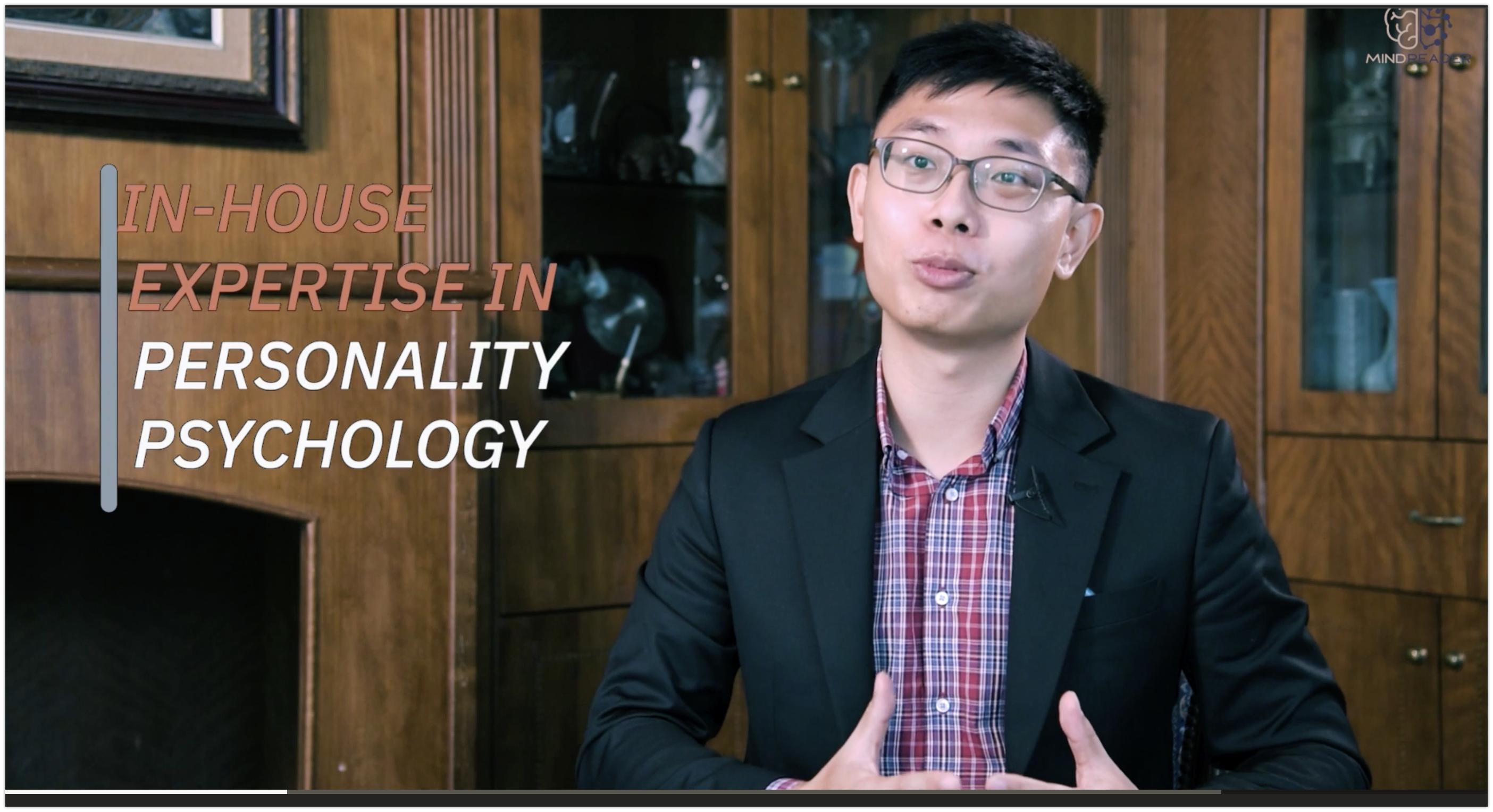
Mindreader's labels are meticulously applied by in-house experts with extensive knowledge of personality psychology. This expertise surpasses the limitations of self-reported quizzes in several key ways:
- Training in observation — Experts trained to spot subtle behavioral and visual cues
- Consistency standards — Multiple experts review borderline cases to ensure reliability
- Calibration protocols — Regular inter-rater reliability testing (we target >0.80 correlation)
- No stake in outcomes — Experts don't benefit from particular personality assignments
- Longitudinal validation — Labels are validated against actual behavior over time
This approach aligns with 2025 AI ethics research and AI bias mitigation studies, which emphasize expert oversight throughout the model development pipeline for trustworthy AI systems.
Validation Through Established Frameworks
We don't just rely on internal validation. Mindreader actively compares our Human Intelligence System (HIS) predictions against established psychological frameworks that have been validated over decades of research:
- Big Five (OCEAN) — The gold standard in academic personality research
- Keirsey Temperaments — Validated across millions of assessments globally
- DISC Assessment — Widely used in business and sales training
By cross-referencing our predictions against multiple established frameworks, we ensure our system captures genuine personality patterns rather than artifacts of our training methodology. This multi-framework approach is recommended by AI ethics researchers in 2025 as a best practice for robust validation.
Transparency: How We Validate Accuracy
Recent AI ethics research from 2025 emphasizes that transparency about validation methods is essential for trustworthy AI. Mindreader publishes:
- Accuracy benchmarks — Our system achieves 70-85% accuracy across 50+ demographic groups
- Variance metrics — Less than 5% performance difference between groups
- Comparison studies — How we perform against traditional assessment methods
- Third-party audits — External researchers validate our findings annually
This stands in contrast to many commercial systems that claim high accuracy without providing transparent validation data or demographic breakdowns.
Comparison: Expert Labels vs. Self-Reported Quizzes
Based on personality assessment validation research, here's how expert-backed labels compare to self-reported quizzes:
| Metric | Expert Labels | Self-Reports |
|---|---|---|
| Objectivity | High — No stake in outcomes | Low — Self-perception bias |
| Consistency | High — Calibration protocols | Variable — Mood-dependent |
| External Validity | High — Predicts behavior | Moderate — Predicts self-image |
| Vulnerability | Low — Can't intentionally fake | High — Easy to manipulate |
Frequently Asked Questions
How accurate are expert labels compared to self-reported personality quizzes?
Personality assessment validation research shows that expert/informant reports demonstrate higher validity for externalizing traits and interpersonal functioning compared to self-reports. Expert labels are also less vulnerable to dishonesty, self-perception bias, and social desirability bias. Mindreader's expert-applied labels achieve 70-85% accuracy with less than 5% variance across 50+ demographic groups, as confirmed by 2025 AI ethics research.
How does Mindreader validate its personality predictions?
We validate through three methods: (1) Multi-framework benchmarking against Big Five, Keirsey, and DISC assessments, (2) Third-party audits where external researchers validate our findings annually, and (3) Longitudinal tracking of whether predictions match actual behavior over time. This multi-method validation approach is recommended by AI ethics researchers in 2025 as comprehensive best practice.
What happens if Mindreader's predictions don't match someone's self-assessment?
This is actually expected and normal. Research shows that self-perception often differs from external observation—people don't see themselves as others see them. Our expert labels capture behavioral patterns that others observe, which may differ from someone's self-image. This is why our system is valuable for sales professionals: it reveals how prospects perceive themselves (useful for empathy) versus how they actually behave (useful for predicting actions).
Why not just use self-reported personality quizzes?
Assessment validation research consistently finds that self-reports have only moderate concordance with other assessment methods and are particularly weak for externalizing traits and interpersonal functioning—the exact domains that matter in sales. Expert-applied labels provide more objective, consistent, and behaviorally valid personality assessments without the vulnerabilities of self-reported answers, as confirmed by 2025 AI ethics research and AI bias mitigation studies from 2025.