Your Guide to Sales and Marketing Automation
At its core, sales and marketing automation is all about using smart software to handle the repetitive, time-consuming tasks that bog your teams down. Think of it as a digital assistant that never sleeps, taking care of everything from sending personalised emails and nurturing leads to keeping your customer database pristine. The goal? To make sure no opportunity ever slips through the cracks.
Your Company's Digital Nervous System
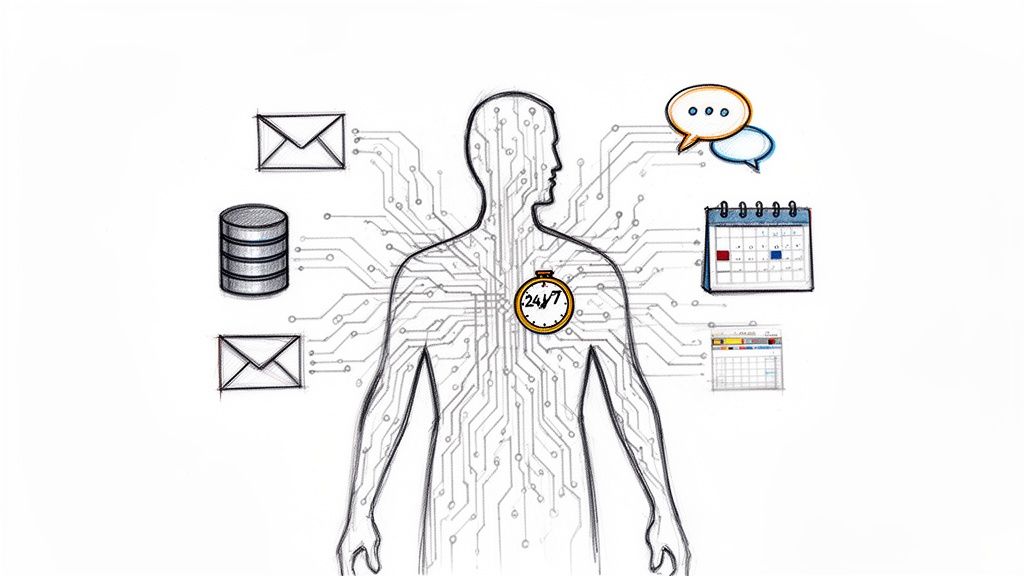
Imagine your business having a digital nervous system that runs 24/7. This system doesn't just react; it anticipates customer needs, responds to their actions in real-time, and keeps every department perfectly in sync. That's the real power of sales and marketing automation. It’s far more than just scheduling a few social media posts—it's a complete strategy for managing and nurturing customer relationships at a massive scale.
This system has two sides, both working together. Marketing automation handles the top of the funnel, pulling in new visitors and warming them up until they become genuinely interested leads. From there, sales automation takes the baton, streamlining the process of converting those qualified leads into paying customers.
From First Click to Qualified Lead
Let's walk through a simple, everyday example. A potential customer lands on your website and decides to download one of your e-books.
- Instantly, marketing automation sends a thank-you email with the e-book attached. But it doesn't stop there. Over the next few weeks, it follows up with a series of targeted emails related to the e-book's topic.
- The entire time, the system is tracking their engagement—which emails they open, what links they click, and how often they return to your site.
- Once their engagement score hits a pre-set level, they're officially flagged as a marketing-qualified lead (MQL).
The Seamless Handoff to Sales
This is where sales automation jumps in. The lead's contact details and their entire activity history are automatically pushed into your CRM. At the same moment, a task is created for a sales rep to follow up. This whole journey, from an anonymous visitor to a sales-ready lead, happens without a single manual click.
By taking over these repetitive yet vital steps, automation frees up your team to do what humans do best: have meaningful conversations, build relationships, and think strategically. This efficiency is precisely why so many businesses now rely on these platforms to drive predictable growth.
This foundation is built on a blend of powerful software and a well-thought-out strategy. To see how automated engagement can get even more sophisticated, check out this ultimate guide to chatbots for marketing, which breaks down their role as 24/7 automated pros. And for a deeper look at the data that fuels these systems, our article on sales intelligence is a must-read.
What Makes Your Automation Engine Tick?
To really nail a sales and marketing automation strategy, you first have to get your head around its core components. Think of it like building a high-performance engine; every part has a specific job, but they all need to work together perfectly to drive your business forward. If you miss one of these foundational pieces, even the most ambitious plan is going to sputter and stall.
At the very heart of this system is lead management. This is so much more than just a list of names in a spreadsheet. It’s the entire process of capturing, tracking, and intelligently scoring potential customers based on what they do. For instance, when a prospect downloads a white paper or lingers on your pricing page, your automation platform can instantly assign points to them, signalling just how interested they are. This automated scoring helps your sales team immediately see who the hottest leads are, letting them focus their energy where it will actually count.
The Power Trio of Automation
Effective automation really stands on three interconnected pillars. Together, they capture, nurture, and organise all your customer data.
- Lead Management: This is where it all starts. It involves grabbing leads from web forms, webinars, and other touchpoints, then using scoring systems to figure out who to talk to first.
- Email Marketing: This is your main tool for nurturing those leads. It’s all about delivering personalised, automated email sequences (often called drip campaigns) that guide prospects through the sales funnel with content that’s genuinely relevant to them.
- CRM Integration: Think of this as the central hub or the 'brain' of the operation. It stores every bit of customer data, interaction history, and lead scores, creating a single source of truth that both your sales and marketing teams can rely on.
Here’s a real-world example: a software company can use automated lead scoring to flag trial users who have repeatedly explored key features. This action instantly triggers an automated email campaign offering a personalised demo. At the same time, it updates their status in the CRM, alerting a sales rep that it’s time to pick up the phone. To build an engine like this, you need the right parts, which means understanding the software and platforms available, like the best LinkedIn automation tools.
From Manual Grind to Automated Growth
The difference between sticking with manual processes and embracing automated workflows is night and day. Trying to track every lead interaction by hand isn't just inefficient; it’s a recipe for mistakes. Automation, on the other hand, brings precision and scale to the game.
In Singapore's competitive B2B scene, marketing automation has been a massive game-changer. A staggering 80% of marketers have reported a significant jump in high-quality leads after putting these systems in place. This just goes to show how tools that streamline lead generation, nurturing, and scoring are completely reshaping sales pipelines.
The table below really drives home the efficiency gains by swapping out common manual tasks for automated solutions.
Manual Effort vs Automated Workflows
| Task | Manual Process | Automated Workflow |
|---|---|---|
| Lead Follow-Up | Sales reps manually send individual emails and log calls. | Personalised email sequences are triggered automatically based on lead behaviour. |
| Lead Scoring | Reps guess which leads are warmest based on limited data. | The system scores leads in real-time based on engagement, ensuring focus on top prospects. |
| Data Entry | Team members spend hours updating the CRM with new info. | All lead activities and data sync automatically to the CRM, eliminating manual work. |
This fundamental shift from manual grunt work to intelligent, automated workflows is what paves the way for predictable and sustainable growth. For a deeper dive into the specific platforms that make this all possible, you might find our guide on top-performing Sales AI tools helpful.
Building Workflows That Drive Real Revenue
Theory is great, but let's be honest—sales and marketing automation is all about turning those ideas into actual cash flow. The right workflows don’t just save you time; they actively generate revenue by delivering the perfect message at the perfect moment, making sure no opportunity slips through the cracks. Think of these automated sequences as the engines that power predictable, scalable growth for your business.
Once you move beyond simple tasks like scheduling social media posts, you can build powerful sequences that guide customers through their entire journey. It all starts with setting a specific trigger, defining a series of automated actions that follow, and aiming for a clear business goal—like winning back a sale or warming up a high-value lead until they're ready to talk.
From Abandoned Carts to Loyal Customers
If you run an e-commerce business, one of the most profitable workflows you can set up is an abandoned cart sequence. Why? Because studies show that nearly 70% of online shopping carts are abandoned before the customer pays. That’s a massive pool of almost-customers just waiting for a nudge. A simple automated workflow can bring a surprising number of them back.
Here’s how it usually works:
- The Trigger: A customer adds a few items to their cart but gets distracted and leaves your website without checking out. That action kicks off the automation.
- The Automated Actions: An hour later, the system sends a friendly reminder email. If they don't bite after 24 hours, a second email might follow, maybe with a small discount to sweeten the deal. A final reminder could go out 48 hours later, highlighting what makes the product great.
- The Desired Outcome: The customer is reminded, re-engaged, and returns to complete their purchase. That's a direct boost to your sales figures, all on autopilot.
This little sequence is a perfect example of how the core parts of automation—lead management, email marketing, and your CRM—work together to hit a business goal.
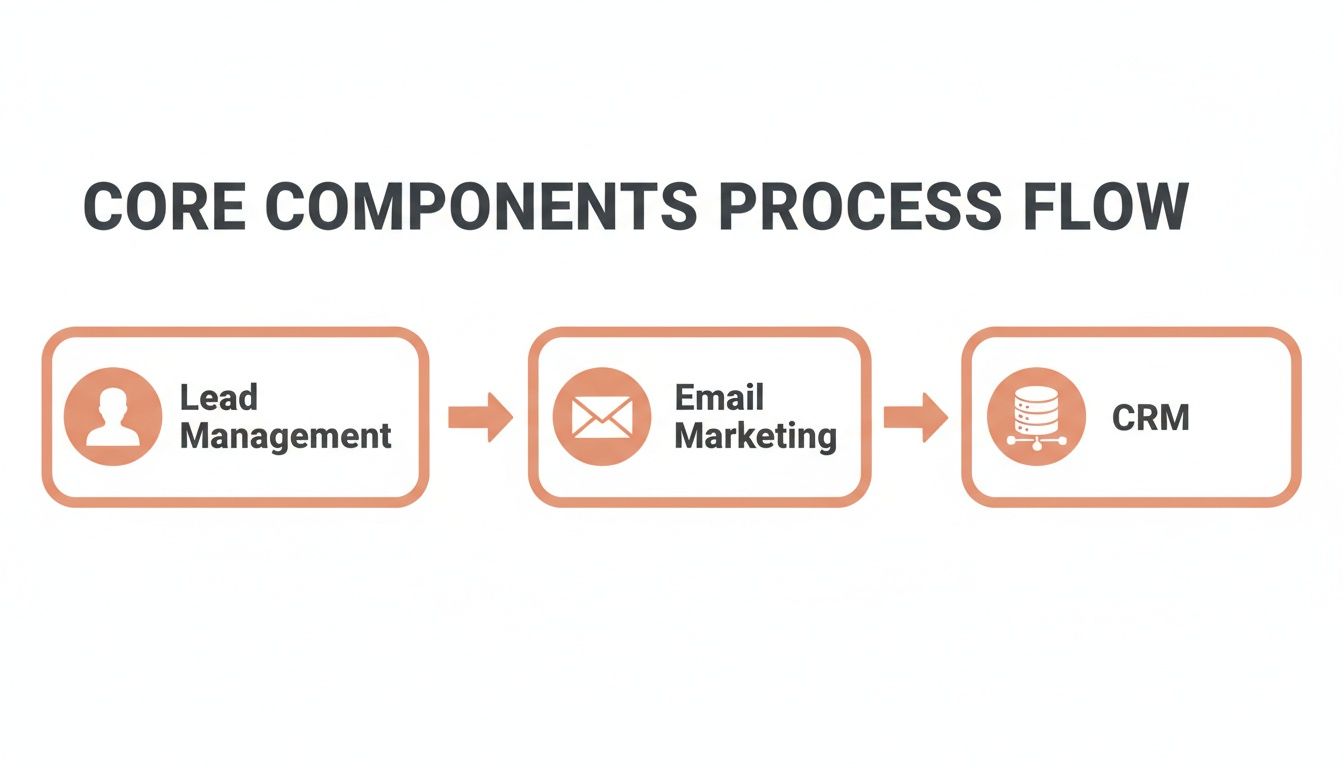
This visual really nails the flow. You capture a lead, nurture them with personalised emails, and keep all their information organised in a CRM. This integration is the backbone of any successful automated workflow, ensuring every touchpoint is smart and informed by a complete customer history.
Nurturing B2B Leads for the Long Haul
In the B2B world, things are a bit different. Sales cycles are often much longer and require a lot more education before anyone is ready to sign on the dotted line. Here, a multi-step lead nurturing campaign isn't just nice to have; it's essential for building trust and keeping your brand top-of-mind.
A well-designed nurturing workflow does more than just send emails; it builds a relationship over time. It educates, addresses pain points, and positions your solution as the obvious choice long before a sales call ever takes place.
Picture a B2B software company. A prospect downloads a white paper (that’s our trigger), and the automation kicks in. Over the next few weeks, the system sends them a curated series of helpful content: a relevant case study, an invitation to a webinar, and a blog post that tackles common industry challenges. Each step is designed to add genuine value and build credibility, gently guiding the prospect toward a sales conversation when the time is right.
These examples show how sales and marketing automation truly makes personalisation at scale possible. By delivering the right message at exactly the right time, you create a far more relevant customer experience—one that drives conversions and builds the kind of loyalty that lasts.
How to Measure Your Automation Success
Putting sales and marketing automation in place without tracking its performance is like driving a fast car with your eyes closed. Sure, you’re moving, but you have no idea if you’re heading in the right direction. To really get a handle on its impact, you need to look past vanity metrics like social media likes and zero in on the Key Performance Indicators (KPIs) that actually reflect business growth.
Think of these KPIs as the vital signs of your automation strategy. They tell you what’s working, what needs a tune-up, and most importantly, they prove the financial return on your investment. Keeping an eye on these numbers gives you the clarity to refine your workflows and make data-driven decisions that directly boost your bottom line.
Core Metrics That Matter
To get a clear picture of your automation's effectiveness, you should consistently monitor a few essential metrics. These three KPIs are the bedrock of any solid measurement strategy, offering insights into efficiency, customer value, and overall profitability.
Lead-to-Customer Conversion Rate: This is the ultimate stress test for your funnel’s health. It measures the percentage of leads that actually become paying customers, showing you just how well your automated nurturing and sales processes are syncing up.
Sales Cycle Length: How long does it take to turn a fresh lead into a customer? Good automation should shrink this timeline significantly by delivering the right information at the right time, nudging prospects toward a decision much more efficiently.
Customer Lifetime Value (CLV): This metric forecasts the total revenue your business can expect from a single customer over your entire relationship. Effective automation bumps up CLV by improving retention and spotting upsell opportunities through personalised, timely follow-ups.
This focus on actionable data is especially relevant here in Singapore, where digital marketing is absolutely booming. By 2023, digital ad spending already made up 59.7% of all advertising budgets, pushing more and more businesses to use automation analytics for real-time tracking. Discover more insights on Singapore's digital marketing landscape.
The goal isn't just to automate tasks; it's to automate growth. Measuring the right KPIs transforms your automation platform from a simple tool into a predictable revenue engine, giving you clear evidence of its value to stakeholders.
The table below is a quick-reference dashboard for these essential metrics, breaking down what each one reveals about your strategy.
| Key Performance Indicator | What It Measures | Why It Matters for Automation |
|---|---|---|
| Lead-to-Customer Rate | The percentage of leads that convert to customers. | Shows the overall effectiveness of your entire automated sales and marketing funnel. |
| Sales Cycle Length | The average time from first contact to closing a deal. | A shorter cycle proves your automation is accelerating the buyer's journey effectively. |
| Customer Lifetime Value | The total revenue generated from a customer over time. | Indicates success in customer retention and satisfaction through automated engagement. |
Your Step-By-Step Implementation Roadmap
Bringing sales and marketing automation to life isn't a mad dash to the finish line; it’s a journey that starts long before you even think about choosing a software. The first step is having a crystal-clear vision of what you actually want to achieve. Rushing this foundational work is one of the biggest reasons automation plans fall flat.
So, where do you begin? Always start by defining clear business objectives. Are you trying to slash your sales cycle, get higher-quality leads, or keep customers coming back for more? Vague goals like "get more leads" won't cut it. You need specific, measurable targets, like "increase our MQL to SQL conversion rate by 15% in the next six months."
Once your goals are locked in, you can start mapping out the entire customer journey. Pinpoint those key moments where automation can make the biggest difference. This exercise alone will make choosing the right tools for the job a whole lot easier.
Laying the Groundwork for Success
With a tool in hand, the real work begins. The next mission-critical phase is segmenting your audience. Effective automation is all about sending the right message to the right person at the right time, and that's just impossible without clean, well-organised data. Start grouping your contacts by demographics, their behaviour, or where they are in your sales funnel.
This careful segmentation is what lets you build your first workflows. My advice? Start simple with a few high-impact sequences that deliver quick wins.
- A Welcome Series: This is your chance to make a great first impression with new subscribers, introduce your brand, and set the right expectations from day one.
- A Lead Nurturing Campaign: This is for prospects who've shown some interest but aren't quite ready to pull the trigger. Use it to educate them and build trust.
- A Re-engagement Workflow: Got a list of inactive contacts? This workflow is designed to either win them back or help you clean up your database.
This phased approach keeps you from getting overwhelmed and lets you learn and adapt as you go.
Adopting a Mindset of Continuous Improvement
It's tempting to think of automation as a 'set-it-and-forget-it' magic bullet, but it’s anything but. True success comes from an ongoing cycle of testing, measuring, and refining your approach. Keep a close eye on your key metrics to see what’s working and what’s not.
This proactive mindset is especially vital in a booming market. In Singapore, for example, the marketing automation market recently pulled in $43.881 million in sales, cementing its status as a major growth hub. This surge is largely driven by SMEs using technology to sharpen everything from lead generation to reporting. You can dive deeper into this trend by exploring the latest findings on marketing automation growth.
Automation should enhance, not replace, the human touch. Use it to handle repetitive tasks and deliver timely information, freeing up your team to focus on building genuine relationships and closing complex deals.
Finally, never lose sight of the customer experience. Don't bombard people with messages, and make sure every single communication adds real value. The best automation strategies feel helpful and personal, not robotic.
By starting with clear goals, building out your system methodically, and constantly tweaking your approach, you'll create an automation engine that truly drives sustainable growth.
Going Beyond Automation with Conversational AI
Your standard sales and marketing automation is a workhorse. It’s brilliant at executing specific, rule-based tasks with perfect timing—like sending a welcome email the moment someone fills out a form. But let's be honest, that efficiency often comes at the cost of genuine connection. The approach can feel a bit robotic because it’s just following a script, no matter who’s on the receiving end.
But what if you could add a layer of adaptive intelligence on top of those powerful, automated workflows?
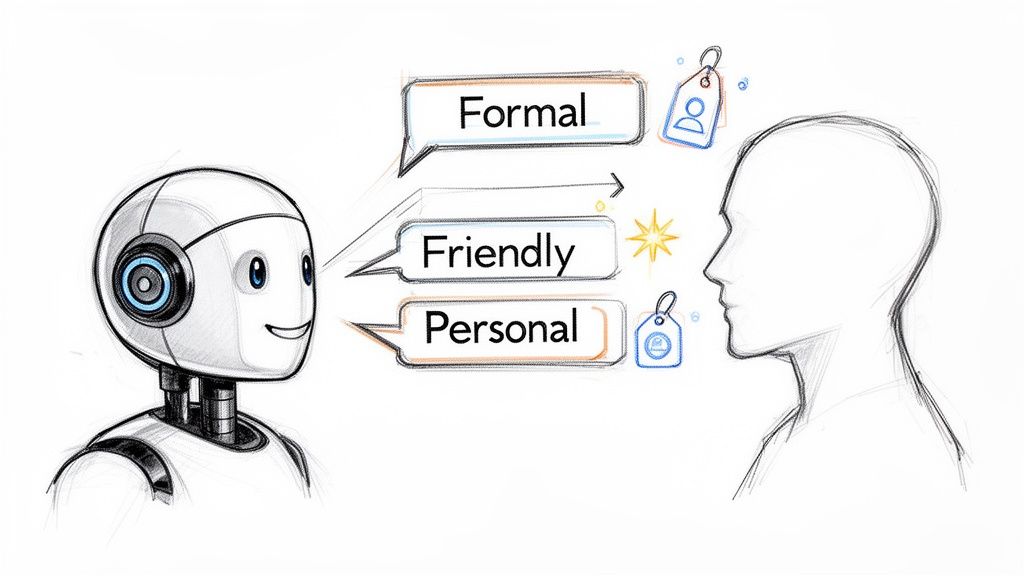
This is exactly where conversational AI comes into play. It doesn’t just blindly follow rules; it gets the nuance of a conversation—the context, the tone, and even the personality of the person you're talking to. The goal isn’t to replace your existing automation but to supercharge it, turning generic, automated touchpoints into resonant conversations that build real rapport.
From Timely Follow-Ups to Tailored Conversations
Imagine an automated follow-up that isn't just sent at the right time, but is also written in a style that’s proven to resonate with that specific prospect. This fusion of automation and intelligence creates interactions that feel remarkably human, dramatically boosting engagement where one-size-fits-all messages typically fall flat.
Think about it like this:
- The Prospect: Your AI scans the digital footprint of a key decision-maker and identifies them as a direct, no-nonsense "Knight" archetype who values data and efficiency above all else.
- The Automated Action: Instead of firing off your standard, friendly follow-up email, the system flags this crucial insight for a different approach.
- The AI-Powered Message: It then helps you generate a concise, bullet-pointed message that cuts straight to the chase, highlighting key ROI metrics and a crystal-clear call to action.
This level of hyper-personalisation is simply out of reach for basic automation. It’s a fundamental shift from just getting tasks done to forging meaningful connections that actually speed up the sales cycle and improve your conversion rates.
By analysing prospect archetypes, a generative AI sales assistant can arm your team with hyper-personalised messaging tactics that basic automation could never dream of creating on its own. It’s an approach that ensures every single automated touchpoint is not only efficient but also deeply effective because it adapts to the person on the other end.
Got Questions About Automation? We Have Answers
As you start exploring sales and marketing automation, it's natural for a few questions to pop up. Getting them answered upfront helps you set the right expectations and build a solid strategy from day one.
Let's clear up one of the most common points of confusion: what's the real difference between sales and marketing automation?
Think of it like a relay race. Marketing automation runs the first leg. Its job is to handle all the top-of-the-funnel activities—generating interest and nurturing leads with things like email campaigns, content delivery, and smart lead scoring.
Once a prospect is warmed up and showing real buying intent, the baton is passed to sales automation for the final sprint. This is all about the bottom of the funnel, helping your sales team close deals faster. We're talking automated follow-ups, slick meeting schedulers, and instant CRM updates. They're two distinct systems, but they create magic when they work together seamlessly.
How Soon Will I See Results?
This is the big one. While you’ll probably see some quick wins right away—like having your leads feel more organised and less chaotic—a significant return on your investment usually takes about six to twelve months.
Why so long? It simply takes time for leads to journey through your entire sales funnel. That timeframe also gives you enough data to see what’s working, what isn’t, and where you can tweak your workflows for even better results.
Is This Really for Small Businesses?
Finally, many small business owners wonder if automation is overkill for their team. The answer is a definite yes—it's absolutely a fit. In fact, it can be a game-changer.
Automation is a powerful equaliser. It gives small businesses the tools to operate with the efficiency and consistency of a much larger organisation. It handles the repetitive grind, makes sure no lead ever falls through the cracks, and lets you deliver personalised communication at a scale you couldn't manage manually. For sustainable growth, it’s one of the highest-impact investments you can make.
Ready to turn your automated outreach into genuinely personal conversations? Mindreader uses conversational AI to analyse your prospect's communication style, giving you the exact messaging tactics needed to build rapport and close more deals. See how it works.