Ambivert vs Omnivert: A Strategic Guide to Sales Communication
When you’re trying to read a prospect, the difference between an ambivert and an omnivert boils down to one simple thing: consistency.
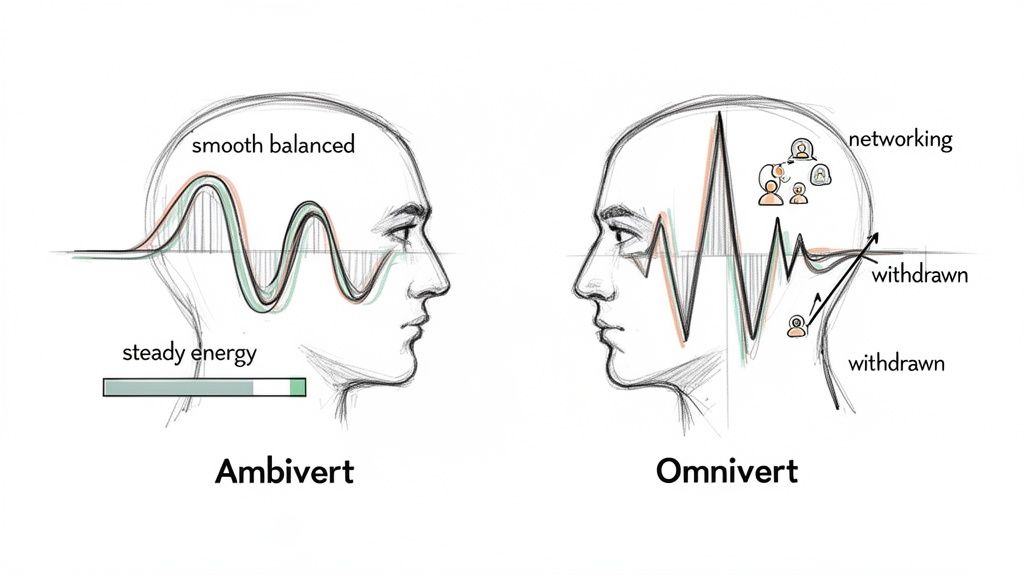
Think of an ambivert as a balanced blend of introvert and extravert. They can smoothly adapt their energy to fit the situation, dialling it up or down as needed without much fuss. On the other hand, an omnivert is more like a switch—they swing between extreme introversion and extreme extraversion. One day they’re the life of the party, and the next, they’re completely withdrawn.
Understanding the Hidden Edge in Sales
In the high-stakes world of sales, mastering communication is everything. If you can move beyond the simple introvert-extravert binary, you gain a massive advantage, especially when you can spot the subtle differences between an ambivert and an omnivert in your prospects. Getting a handle on these personality frameworks is your key to building genuine rapport, and fast.
For sales professionals and founders, this isn't just theory—it translates directly into better engagement and higher conversion rates. It gives you the power to tailor your pitch, adjust your meeting pace, and craft a follow-up strategy that actually resonates instead of falling flat.
Key Signals for Quick Identification
Recognising these personalities in a live conversation means looking for specific behavioural cues. Ambiverts usually give off a stable, predictable energy, making them pretty reliable conversation partners. Omniverts, though, can be a wild card. It's vital to get a read on their current "mode" before you dive deep into your pitch.
This skill is particularly powerful in Singapore's competitive business environment, where personal connection can make or break a deal. Interestingly, data from 16Personalities' research on Singapore shows that locals tend to lean slightly more introverted. This suggests that the balanced, adaptable style of an ambivert is a common and effective archetype you'll encounter in the workforce here.
Ultimately, the ability to read and adapt to a prospect's communication style is a core component of high performance in sales. It’s a practical application of emotional intelligence, a topic you can explore further in our guide on emotional intelligence vs intelligence quotient.
Quick Comparison: Ambivert vs Omnivert Key Signals
To help you spot the difference on the fly, here's a quick breakdown of the core signals that distinguish an ambivert from an omnivert.
| Trait | Ambivert | Omnivert |
|---|---|---|
| Energy Expression | A stable, consistent blend of social and solitary energy. | Extreme swings between highly social and deeply withdrawn. |
| Communication Style | Balanced; listens thoughtfully and speaks assertively. | Situational; can be the life of the party or completely silent. |
| Predictability | Consistent and adaptable, making them easy to engage. | Unpredictable; their behaviour depends heavily on mood and context. |
| Social Battery | Recharges with a mix of social time and solitude. | Drains and recharges in all-or-nothing cycles. |
Use these cues as a mental checklist during your next call or meeting. Identifying whether you're talking to a steady ambivert or a situational omnivert will help you adjust your strategy in real-time for a much better outcome.
Identifying the Ambivert Profile in Sales
When you encounter an ambivert in a sales conversation, you’ve hit the communication sweet spot. These prospects are the balanced communicators, armed with a natural mix of introverted focus and extraverted confidence. This blend makes them uniquely receptive to a consultative, value-driven sales approach.
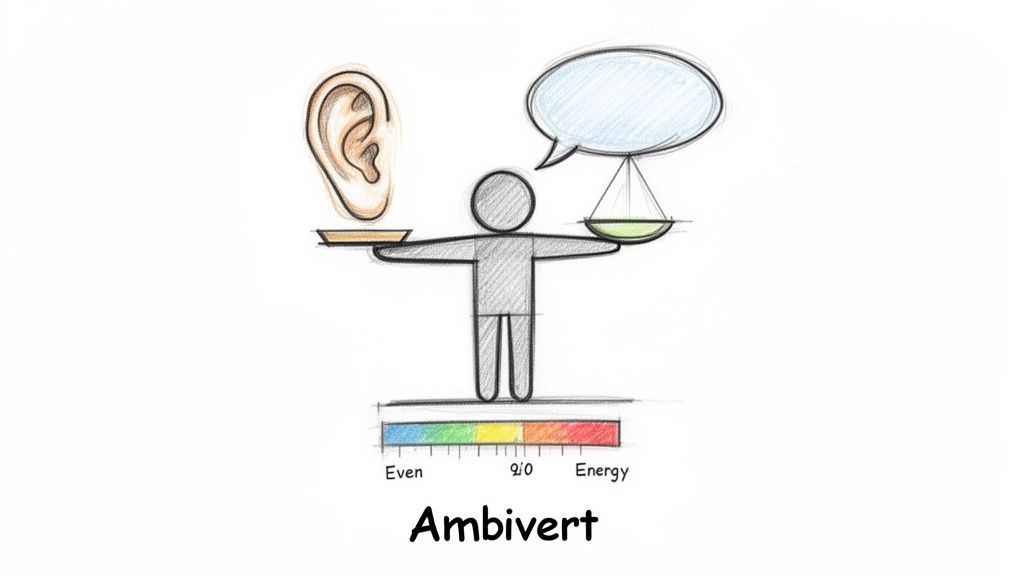
Unlike personality types that swing to extremes, the ambivert’s energy is remarkably consistent and adaptable. Their behaviour is predictable, but in the best way possible. They listen intently, absorbing what you’re saying before offering a thoughtful, assertive response. This balance keeps them from either dominating the conversation or fading into the background. You’ll notice them by their steady conversational rhythm.
Key Behavioural Cues of an Ambivert
So, how do you spot an ambivert during a call or meeting? Look for someone who combines active listening with confident engagement. They aren’t just nodding along; they’re asking smart, clarifying questions and sharing their own views without steamrolling the discussion.
Here are a few specific signals to watch for:
- Flexible Social Energy: They’re just as comfortable in a one-on-one deep dive as they are in a larger group discussion, shifting their style without showing any signs of strain.
- Balanced Dialogue: The conversation feels like a genuine two-way street. They contribute as much as they absorb, making sure the dialogue is productive, not a monologue.
- Rapport Without Oversharing: Ambiverts are brilliant at building authentic connections. They can handle the small talk needed to build rapport but will instinctively steer the conversation back to business.
These traits make them perfect for complex sales cycles where mutual trust and deep understanding are essential. Building out a detailed persona profile for your ideal customer can help you fine-tune how you connect with these balanced communicators.
An ambivert’s greatest strength in a sales context is their inherent stability. Their consistent energy and balanced communication style remove guesswork, allowing you to focus on building a substantive, value-driven relationship.
Why Ambiverts Excel in Consultative Sales
The whole idea behind consultative selling is to deeply understand a client's needs before you even think about proposing a solution. Ambiverts are naturally wired for this. Because they’re equally comfortable speaking and listening, they create an environment where problems can be discussed openly and solutions can be built together.
Think of a financial advisor. An ambivert client will openly share their financial goals and listen carefully to complex investment strategies. For a B2B sales rep, it means the prospect will clearly articulate their pain points and stay engaged while you explain how your product addresses them.
To click with an ambivert, mirror their pace. Bring a mix of data-driven proof and relatable stories to the table, appealing to both their analytical and empathetic sides. This measured, balanced approach aligns perfectly with their nature, building the trust you need to move the deal forward.
Decoding the Omnivert for High-Stakes Conversations
Where an ambivert offers consistency, an omnivert is a fascinating puzzle. Their communication style isn't a blend; it’s a pendulum, swinging between the extremes of extraversion and deep introversion. This situational shift makes them a unique challenge in any high-stakes conversation. The person you meet one day might feel completely different the next.
For sales leaders, founders, and consultants, getting a handle on this dynamic is absolutely crucial. An omnivert’s behaviour isn’t just random—it's triggered by context, mood, and their immediate environment. It’s a common and costly mistake to see a sudden switch from engaging to withdrawn as a sign of disinterest. These shifts are actually signals, inviting you to adapt your strategy on the fly.
The Tell-Tale Signs of an Omnivert
The dead giveaway of an omnivert is dramatic inconsistency. You might see them command a room at a networking event, full of charisma and energy, only to find them quiet, analytical, and reserved in your one-on-one demo the next day. This isn't a red flag; it's a core part of who they are.
Here are the key diagnostic signals to watch for:
- Extreme Energy Swings: Their social battery doesn't drain slowly; it flips like a switch. They can be intensely "on," dominating conversations, or suddenly "off," preferring to listen and process everything internally.
- Context-Driven Behaviour: How they express themselves is highly dependent on the situation. In a creative brainstorming session, they might be the most vocal person in the room. But during a technical review, they could become silent and introspective.
- Emotional Reactivity: An omnivert's mood can dramatically influence their communication style. A stressful day might push them into a withdrawn, introverted state, while some good news could trigger a highly extraverted and expressive mode.
Unlike the steady ambivert, an omnivert forces you to read the room—and them—in real-time. The trick is not to get thrown off by their unpredictability. Instead, you have to see it as a direct cue to pivot your approach.
The core challenge in the ambivert vs omnivert discussion is navigating the omnivert's unpredictability. Treat their behavioural shifts not as disinterest, but as a direct signal to change your communication style immediately.
Strategies for Navigating Omnivert Unpredictability
Engaging an omnivert successfully means being prepared for both sides of their personality. A one-size-fits-all pitch is almost guaranteed to fall flat. What you need is a flexible game plan that allows you to respond effectively to whichever mode they happen to be in.
One powerful strategy is to prepare two distinct communication plans: one for their extraverted side (energetic, big-picture) and another for their introverted side (detailed, analytical). Then, use targeted discovery questions right at the start of your conversation to get a read on their current state.
For instance, asking something like, "Should we start with a high-level overview, or would you prefer to dive straight into the technical specifics?" can reveal their mindset. Their answer gives you the data you need to choose the right approach, turning their unpredictability from a challenge into a real strategic advantage.
How Ambiverts and Omniverts Navigate the Sales Cycle
Knowing the theory is one thing, but seeing how ambiverts and omniverts act at each stage of the sales journey is where the magic happens. This is where you turn knowledge into actual results. Their fundamental differences in consistency and energy create distinct behavioural patterns, from the very first email to the final handshake. When you can spot these patterns, you’re in a much better position to anticipate their next move and steer the conversation.
Think of an ambivert’s journey through the sales cycle as a steady, predictable rhythm. They offer balanced feedback, stay engaged, and move things along at a consistent pace. An omnivert, however, is a different story. Their path is full of peaks and valleys, which means you need to be far more nimble and responsive to keep the deal on track.
Initial Outreach and Discovery
Right from the first point of contact, the differences between these personalities jump out. An ambivert is usually receptive and will meet you halfway in a balanced conversation. They’ll listen to what you have to say, ask intelligent questions, and give you a clear sense of where things stand.
An omnivert’s reaction? It's a coin toss, entirely dependent on their mood. If you catch them in an extraverted moment, they might sound incredibly enthusiastic and ready to chat for hours. But if they’re in an introverted headspace, you could be met with radio silence or a curt, analytical reply that forces you to completely rethink your follow-up.
This simple three-step process is a great mental model for figuring out how to handle an omnivert's shifts on the fly.
As the graphic shows, it’s all about staying dynamic—watch their cues, get a read on their energy, and be ready to adapt your game plan in real time.
Objection Handling and Closing
When you hit the objection handling stage, an ambivert typically raises concerns in a way that feels collaborative. They frame it as a problem-solving session, which makes them far easier to work with. Their feedback is consistent and aimed at finding a solution that works for everyone.
Omniverts, on the other hand, can be a moving target. In an extraverted phase, their objections might be big-picture and delivered with a lot of energy. But if they flip into an introverted, analytical mode during a technical demo, their objections can become razor-sharp and incredibly detailed. To keep track of these behavioural swings and apply the right strategies, using one of the best CRM systems is a game-changer.
Picture a founder pitching to a venture capitalist who’s an omnivert. That VC might be charismatic and visionary in the first meeting, only to become a sceptical, detail-obsessed analyst when it’s time to review the numbers. You have to be ready for both.
Breaking down these behaviours across the entire sales process can make the differences crystal clear.
Behavioural Breakdown Across the Sales Cycle
To really nail this down, it helps to look at these personalities side-by-side at each key stage of the sale. This table offers a head-to-head comparison of how ambiverts and omniverts typically show up and what you can do about it.
| Sales Stage | Ambivert Response | Omnivert Response | Recommended Tactic |
|---|---|---|---|
| Discovery Call | Engages in balanced dialogue; asks clarifying questions. | Either highly talkative and big-picture or quiet and analytical. | For omniverts, use opening questions to gauge their current mode. |
| Presenting a Demo | Provides steady feedback and remains consistently engaged. | Can swing from enthusiastic engagement to silent observation. | Pause frequently to check for understanding and adapt your pacing. |
| Objection Handling | Voices concerns constructively to find a solution together. | Objections can be emotional and broad or deeply technical and critical. | Address the logic for their analytical mode; use stories for their expressive mode. |
| Closing | Makes a decision based on a logical review of value. | Decision-making can be impulsive (extraverted) or highly deliberative (introverted). | Summarise value logically but be prepared for a sudden change of heart. |
As you can see, the ambivert offers a smoother ride, but the omnivert can still be a fantastic—and often decisive—customer if you learn to read their signals and adapt. It's less about a fixed playbook and more about developing the flexibility to meet them where they are in that specific moment.
The Sales Playbook for Engaging Each Personality Type
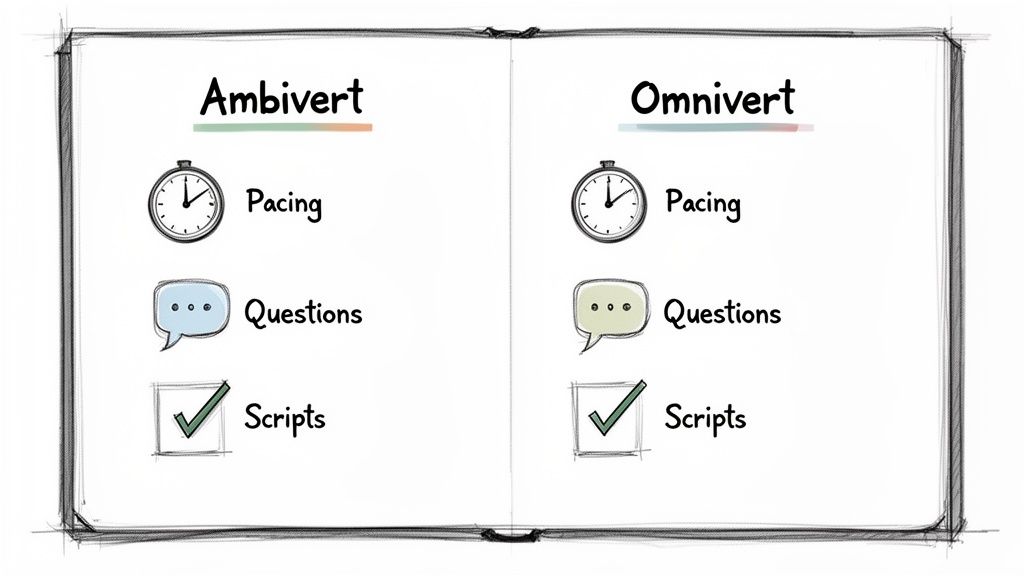
Alright, let's move from theory to tactics. This is where you get a real edge in the field. Understanding the ambivert vs. omnivert dynamic is about more than just personality labels; it’s about ditching generic scripts for conversations that actually connect. This playbook breaks down specific messaging, pacing, and objection-handling strategies for both types.
For ambiverts, the name of the game is collaborative momentum. For omniverts, it's all about situational adaptation. Your ability to deploy the right play at the right time can completely change the outcome of a high-stakes meeting, turning what could have been a roadblock into a genuine opportunity.
Crafting Messages for the Ambivert
Engaging an ambivert is an exercise in balance. They appreciate directness, sure, but they’re put off by overly aggressive or purely transactional talk. Your messaging needs to mirror their own style: thoughtful, assertive, and always focused on mutual benefit.
Use collaborative language. You want to invite them into a partnership. Frame your pitch less like a presentation and more like a joint problem-solving session. This simple shift shows you respect their intelligence and their preference for a balanced dialogue.
Here’s a simple template for a follow-up email that works:
- Subject: Following up on our chat about [Prospect's Goal]
- Body: Hi [Name], thanks for the insightful conversation earlier. I’ve been thinking about your point on [Specific Challenge], and I believe we can solve it by [Proposed Solution]. What are your thoughts on exploring this together next week?
This works because it isn't pushy. It acknowledges their contribution ("insightful conversation"), homes in on their needs, and suggests a collaborative next step. It’s a peer-to-peer approach.
Dual Strategies for the Omnivert
The omnivert, on the other hand, demands a more dynamic playbook. You need two distinct approaches ready to deploy, depending on whether they're in an extraverted or introverted mode. The real skill is diagnosing their current state on the fly and adapting your strategy instantly.
If they’re in extraverted mode—energetic, talkative, and zeroed in on the big picture—match that energy. Use enthusiastic language, focus on vision and outcomes, and keep the pace brisk.
But if they’re in introverted mode—quiet, analytical, and asking about the details—you have to shift gears completely. Slow down. Provide data and evidence. Most importantly, give them space to think.
When you're facing an omnivert in introvert mode, switch from making statements to asking open-ended questions. Instead of saying, "This feature will boost your efficiency," try asking, "How do you see this feature fitting into your current workflow?" This invites them to process things analytically, which is exactly what they need to do.
Pacing and Objection Handling
Your meeting pace needs to be tailored, too. With an ambivert, aim for a steady, consistent rhythm. Allow for natural pauses and make sure the conversation is a true give-and-take. When they raise an objection, don’t see it as a fight; see it as a request for more information and work through it with them.
Handling an omnivert’s objections first requires you to identify their mode.
- Extraverted Objections: These often sound broad and emotional. Think, "I'm just not feeling excited about this!" Your best counter is a vision-based story or strong social proof.
- Introverted Objections: These are typically specific and logical, like, "I need to see the exact data on this integration." Respond with hard facts, case studies, and detailed specs. No fluff.
This is where modern tools give you a serious advantage. AI-driven platforms can analyse a prospect's digital footprint and communication signals before you even get on a call. This provides a data-backed prediction of their likely communication style, letting you prepare the right playbook in advance and personalise follow-ups to drastically reduce ghosting. You can go deeper into these advanced techniques by exploring our guide to personality-based sales strategies.
Still Unsure About Ambiverts and Omniverts? Let's Clear Things Up.
Even with a solid playbook, getting a feel for these personality nuances takes practice. A few common questions always seem to pop up, so let's tackle them head-on. Getting these details straight will sharpen your instincts for reading and adapting to any prospect you meet.
Can a Person Be Both an Ambivert and an Omnivert?
In a word, no. The two terms describe completely different ways of managing and expressing social energy. The core difference in the ambivert vs omnivert debate boils down to one thing: consistency versus extremes.
An ambivert is all about a stable, natural balance. Think of them as having a blended personality where introverted and extraverted traits just... coexist. They can easily slide into different social gears without feeling drained or like they're putting on a completely different face.
An omnivert, on the other hand, is more like a switch than a dial. They swing between being fully "on" (extraverted) or fully "off" (introverted), and that switch is flipped by their mood, the environment, or just how much energy they have in the tank. There’s not much of a middle ground, which can make their behaviour feel unpredictable if you don't know what to look for.
How Can I Quickly Identify an Omnivert on a Sales Call?
To spot an omnivert quickly, look for the disconnect. One of the biggest tells is a mismatch between how they appear online and how they show up on the call. Their professional profile might scream "social butterfly," but in your meeting, they're quiet, reserved, and focused on the details.
To figure out which mode they're in right now, use a couple of targeted questions right at the start.
- Check their energy levels: A simple, "Is now still a good time, or would you prefer we jump straight to the technical specs?" works wonders.
- Listen to their tone: A big-picture, enthusiastic response tells you they're in extravert mode. A short, direct answer means they're in a more analytical, introverted state.
Their answer gives you everything you need to know to pace the conversation and frame your message from the get-go.
The fastest way to decode an omnivert is to spot the contrast. If their energy on the call feels completely different from the energy in their last email or their public profile, you're likely dealing with an omnivert's situational shift.
Is One Personality Type Better for Sales Success?
Honestly, anyone with enough self-awareness can crush it in sales. But if you look at the data, ambiverts often have a natural edge. Their balanced communication style is a superpower in this field.
Ambiverts just get the rhythm of a good conversation. They know when to drive the discussion forward and when to shut up and listen. This allows them to build genuine rapport without overwhelming the prospect, and they can dig into customer needs without coming across as passive.
Studies back this up, showing ambiverts can outperform both hardcore extraverts and introverts, bringing in higher sales revenue. Why? Because their natural stability and adaptability are perfect for consultative selling, where everything hinges on trust and understanding. A sharp omnivert can learn to manage their energy swings, but an ambivert’s consistency is a powerful, built-in advantage.
Ready to stop guessing and start connecting with prospects on their terms? Mindreader uses advanced AI to decode your client's communication style, giving you the exact playbook you need to build trust and close deals faster. See how it works at https://www.themindreader.ai.