Personalization at Scale: AI-CRM for Finance Sales
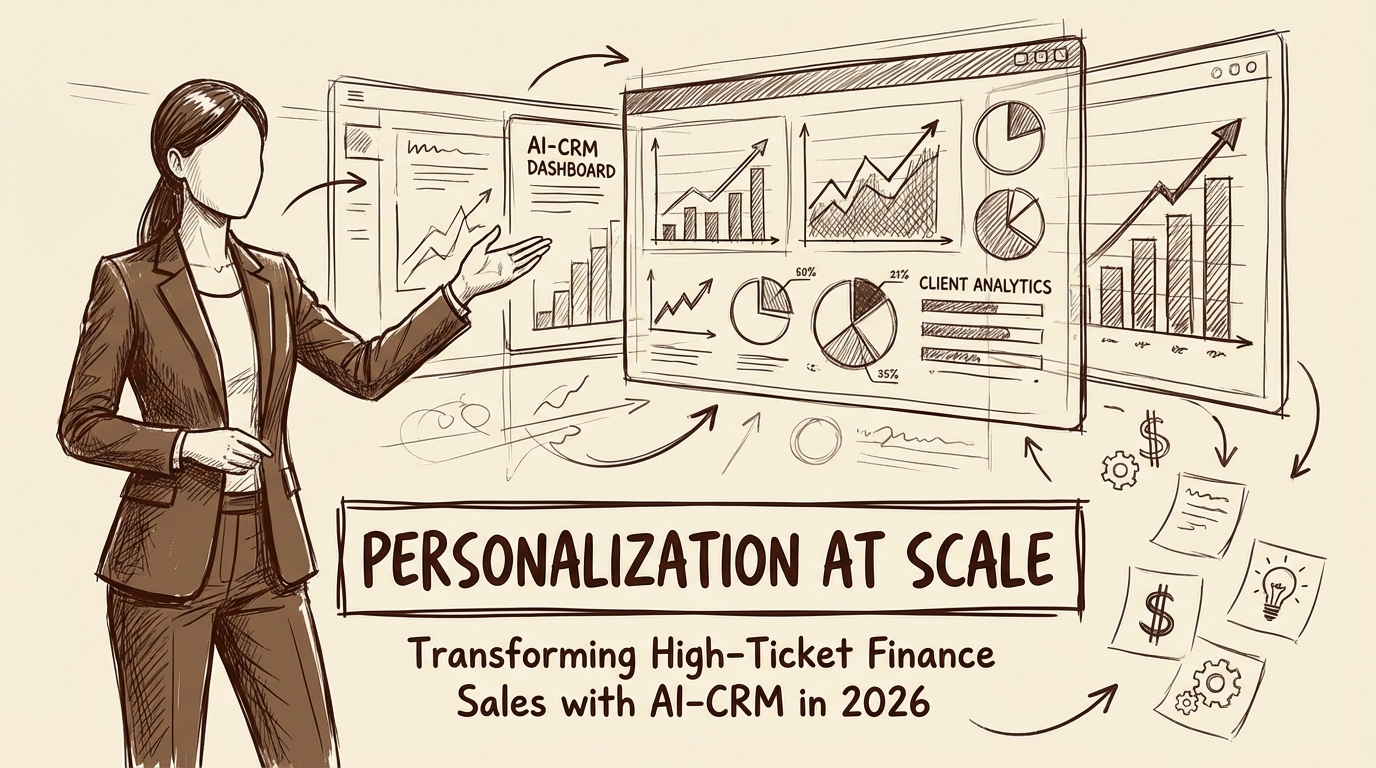
In the world of high-ticket finance sales, selling a premium investment plan or a private wealth package often hinges on a single conversation. Long emails and flashy pitches may grab attention for a moment, but what truly seals the deal is knowing your prospect’s mindset and needs before they even mention them. That’s where personalization at scale becomes your strategic edge. By blending CRM data and conversation insights, you can tailor each interaction to address hidden concerns and build unshakeable trust.
The Shift to Signal-Driven Consultative Selling
High-ticket finance deals require a consultative approach. Prospects want to feel understood and guided, not sold to. They expect advisors who anticipate questions—even the unspoken ones—and offer relevant solutions. Traditional email blasts or one-size-fits-all templates rarely cut through. Instead, you need to track meaningful signals: email opens, link clicks, video-watch durations, you name it. These behaviors flag interest or skepticism, allowing you to respond personally.
According to Mindreader Blog, finance teams that use behavioral data to tailor follow-ups see up to three times more effective nurturing. The reason is simple: when prospects linger on pricing pages or replay testimonials, they’re giving you insight into their priorities. Responding with targeted messages, such as customized payment breakdowns or ROI-related case studies, keeps them engaged and reassured. It’s the perfect recipe for relationship selling that feels authentic, not forced.
How CRM + Conversation Insights Powers Personalization at Scale
CRM platforms have moved beyond static contact records. Many are now powered by artificial intelligence, scanning every interaction to refine your outreach strategy. Modern AI-CRM tools do more than log calls; they analyze sentiment and detect buying signals, all in real time. If a client mentions “cash flow concerns” in an email, the system can flag it for deeper financing discussions. This approach transforms basic CRMs into dynamic intelligence centers that update as the conversation evolves.
Platforms enriched with natural language processing (NLP) don’t just gather data; they interpret it. For instance, partial replies might suggest doubts about ROI, prompting automated scripts to share relevant case studies. Advisors can then step into calls better prepared, focusing on the specific obstacles prospective clients are facing. According to TechImplement, companies that adopt AI-CRM often see a 20–30% boost in revenue within the first year. That’s because their follow-ups aren’t guesswork—they’re informed by real-time buyer psychology.
Real-World Impact: Stats That Prove the Trend

Personalized interactions drive higher conversions across the entire customer journey. Research from Monday.com shows that AI-driven personalization lifts conversions by as much as 15–30% in many sectors. This is especially true for finance, where trust and clarity are priorities. When you spot hesitations early—like multiple replays of your pricing video—and respond with calculators or flexible payment options, you address objections while they’re still small.
Another significant benefit is shorter sales cycles. By understanding each stakeholder’s concerns—pricing, compliance, or risk appetite—you can address them promptly without endless back-and-forth. This consultative advantage works for complex products like private equity portfolios or corporate lending programs. Over time, these strategies become self-reinforcing: your CRM gathers more data, refines its predictions, and helps your team close deals faster. According to DestinationCRM, smarter pipelines often yield more accurate forecasts, too.
3 Practical Tips to Implement Personalization at Scale in Finance Sales
1. Automate Signal Tracking with CRM Integrations: If your CRM can track email opens or video play rates, connect the dots. Set scoring rules: 10 points for an open, 25 for clicking on a financial plan link, 50 for scheduling a call. Focus on prospects whose scores jump rapidly. According to Vtiger, these thresholds can trigger timely email workflows or text campaigns, bringing warm leads to the surface.
2. Craft Dynamic Content Sequences: To handle specific objections, create email or chat templates that adapt to each buyer’s role or industry. For example, if they watch a webinar about risk management, send them a detailed guide on hedging strategies. Show them you listened. Tailored content resonates, especially in finance where details about installment schedules or ROI breakdowns matter. Small tweaks can significantly boost response rates.
3. Leverage Conversation Insights for Objection Handling: Objections about price or terms are signs of deeper worries. NLP tools embedded in your CRM can detect words like “risk,” “uncertain,” or “budget.” This helps you respond fast. You might send an ROI calculator or direct them to Mindreader Objection Handling resources. Personalizing how you address each worry not only shortens sales cycles, but also solidifies trust.
Overcoming Scale Challenges Without Losing the Human Touch
There’s a risk that heavy automation feels impersonal. But smart AI can serve up data-driven recommendations while letting you add a human touch. It simply offers the “why” behind the suggestion. In finance, regulations also come into play, so you need transparency. Systems that track triggers—like repeated views of an online contract—can propose the right follow-up while you ensure everything is compliant.
Consider digital sales rooms for multi-stakeholder meetings. You can share a single, secure location for documents, calculators, and timelines. Whenever a stakeholder engages with a particular piece of content, your CRM instantly flags it. That way, you stay proactive, not reactive. This structure is especially handy for large loans, M&A transactions, or enterprise-level financing where multiple decision-makers have different priorities.
By blending automated signals with personal check-ins, you create a hybrid approach that remains warm yet efficient. For instance, you might send a midnight email after noticing that a busy executive opened two finance whitepapers at 11 p.m. You show respect for their schedule while providing timely answers. That’s the synergy of data plus empathy.
Measuring Success and Iterating for Sustained Growth

Success isn’t just about new deals. Track how fast leads move through your pipeline, how many come back with repeat business, and how many refer others. When you see dips, go back to your conversation data. Did an email series miss the mark, or did you not address a new objection trend? Trial and error is your friend here. According to Mindreader’s AI Sales & Marketing Personalization insights, frequent A/B testing keeps your scripts and pitches sharp.
If you want to spot cross-sell opportunities—like upgrading a client from standard retirement planning to high-level wealth management—focus on usage patterns over time. Is the client exploring advanced portfolio tools on your site? Are they opening emails about custom banking solutions? A quick conversation referencing those signals can lead to bigger deals. Consider linking them to Mindreader Banking & Finance resources for a deeper view of finance-specific buyer intelligence.
Your CRM’s predictive scoring also helps with forecasts. It marks at-risk deals if stakeholder engagement declines or new concerns pop up in emails. Early awareness prevents last-minute deal loss. Keep iterating these signals, and your pipeline becomes a living system that learns from every interaction.
A Motivating Reflection: Your Edge in 2026
The finance sellers who thrive most are the ones who read buyer signals as if they have a direct line to the client’s thoughts. Personalization at scale, shaped by AI-driven CRM and conversation data, isn’t just a trend. It’s becoming the mainstay of high-ticket finance sales in 2026. When you anticipate objections, deliver well-timed solutions, and offer clear ROI at every turn, you create relationships built on trust.
Picture your top prospect feeling understood without having to explain themselves. That’s the power of advanced buyer intelligence. As you refine your tactics, consider tools like Mindreader Blog Insights for deeper data, or incorporate Mindreader’s Objection Handling methods right in your CRM. By the time you get on a call, you’re already miles ahead, offering concrete guidance rather than simple sales pitches. That’s the future of high-ticket finance sales—one where every conversation starts with real empathy and ends in mutual success.