Buyer Intelligence for Risk-Averse & Growth Stakeholders
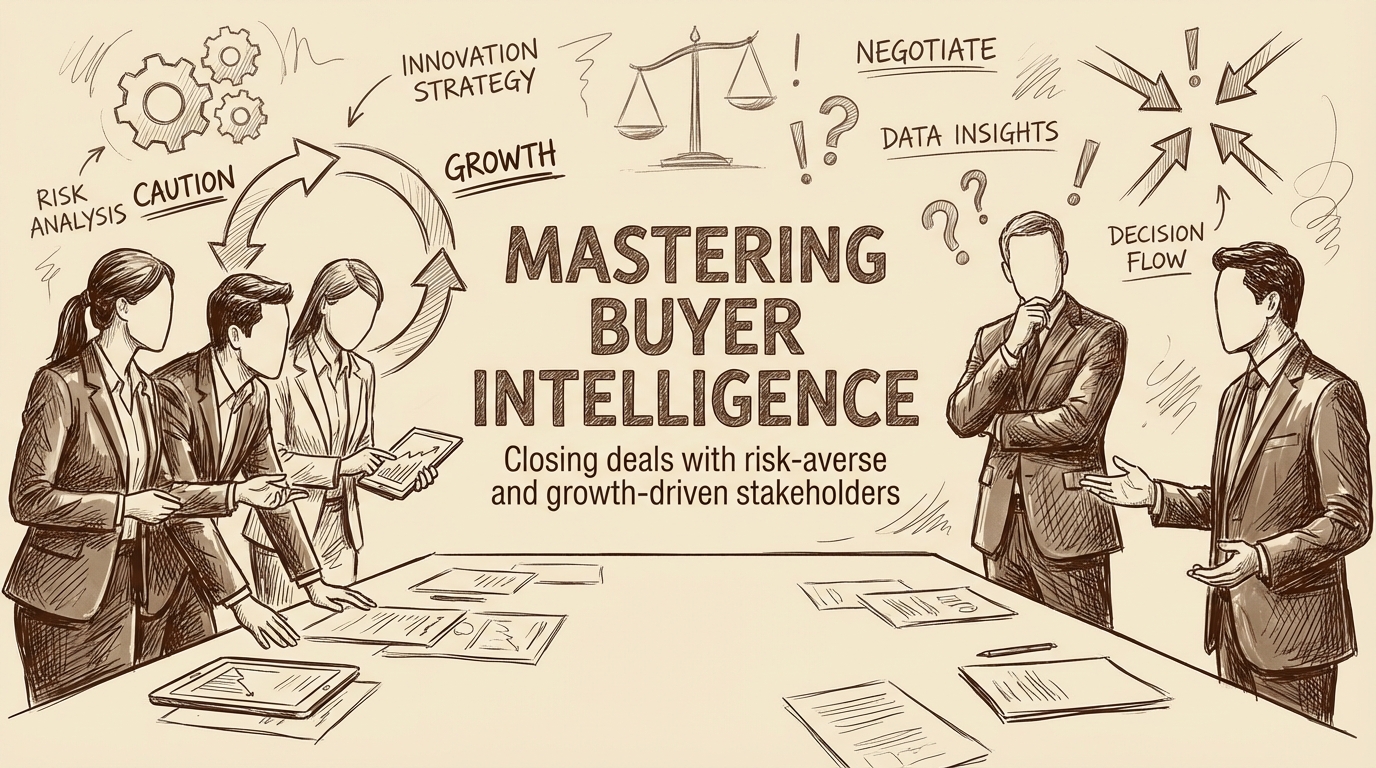
Multi-stakeholder deals often fall apart when sellers fail to adjust their approach to each person’s risk appetite. Buyer intelligence offers a clear advantage in these complex B2B environments, because it reveals how different personalities interpret uncertainty—and how to tailor conversations that appeal to each stakeholder’s real motivations. In this article, you’ll learn why risk-averse individuals focus on preventing losses, while growth-driven decision-makers chase bigger rewards, and how you can balance both mindsets to close high-value deals faster.
Understanding the Buyer Psychology Spectrum
In large organizations, buyer psychology sits on a spectrum of risk attitudes. Some stakeholders zero in on loss prevention, while others are eager to invest if it means big returns. This contrast can cause friction if you pitch your solution using only one angle—like safety or bold innovation—when multiple voices hold sway. The concept of mixed risk preferences appears in extensive research on household consumption, showing that demographics like age, gender, and even confidence levels affect how buyers respond to change. Risk-attitude studies confirm how these factors drive real purchasing behavior.

When multiple decision-makers gather, the finance or operations teams may be highly cautious, highlighting worst-case scenarios. Meanwhile, growth-focused leaders see risk as a stepping stone toward market share or product innovation. According to research on Prospect Theory, people perceive losses more intensely than gains, which triggers emotional barriers. In corporate buying, one cautious veto can halt progress. By recognizing these signals early, you can reframe potential risks as realistic steps toward measurable rewards.
Risk-Averse Buyers: Navigating Fear and Loss Aversion
Stakeholders who dread uncertainty generally belong to finance, procurement, or operations. They focus on limiting losses, insist on detailed proof, and question every unknown. Loss-aversion research shows that people feel losses twice as strongly as equivalent gains. This means someone might reject a deal that promises major upside if they can’t shake the fear of failure. In B2B sales, these doubts can turn into extended objection handling sessions, where every “what if” must be answered before the deal can advance.

Because they value stability, it helps to share real-world ROI data, case studies, and safe adoption plans. Create an actionable path forward: outline timelines, specific checkpoints, and examples of other clients’ successes. Tools that identify risk-based objections—like those featured by Mindreader—can help isolate and address these concerns quickly. Make it crystal clear that staying in the status quo also poses hidden risks. By reframing inaction as a potential loss, you’ll often see their defensive guard lower.
Growth-Driven Buyers: Fueling Ambition and Opportunity
On the flip side, growth-driven decision-makers jump at the chance to gain a competitive edge. Think CEOs, product leadership, or visionary innovators who value big wins. They often ask, “How will this take us further?” rather than “What could go wrong?” Studies on emotional buying factors note that excitement and the fear of missing out can inspire rapid decisions, especially when buyers feel they could gain a significant strategic advantage.

Use bright, upbeat language that highlights future possibilities. Show stats on market share improvement or time-to-value. Growth-oriented personalities are open to risk if there’s a solid plan for a worthwhile payoff. When you communicate the opportunity cost of staying the same, you help them see how much they risk losing by waiting. For deeper tips on connecting with each buyer’s ambition, exploring Mindreader can help sales professionals uncover buyer motivations without guesswork.
Key Statistical Insights into Buyer Behavior
Across the board, fear of loss makes a “save $50” message more persuasive than “earn $50,” as explained by loss-aversion psychology. In fact, many B2B purchase committees stall for months—research suggests 40% to 60% end up doing nothing because the threat of a bad decision outweighs the potential gains.
Meanwhile, those who lean toward growth are willing to spend 25% more on innovations if they view risk as a gateway to industry leadership. Some data even shows these optimistic adopters can increase their company’s budget for cutting-edge solutions when convincing ROI stories are shared. Balance their excitement with proof to avoid disappointments later.
Adapting Sales Conversations: Tailored Strategies
One-size-fits-all pitches rarely succeed when a cautious CFO and an ambitious product director both shape the outcome. That’s why consultative selling has become the go-to method. You ask pointed questions to uncover risk tolerance and organizational goals, then adjust how you frame benefits and feasibility. Diagnosing risk attitudes early softens objections and speeds up decisions.
In real-world discussions, highlight dependable outcomes to calm fear-centric minds, while detailing new-market potential for those who crave growth. Reframing risk is key: remind risk-averse stakeholders that doing nothing can cost them in maintenance or lost market share. Remind growth-driven stakeholders there’s a clear plan for how to reach the next level. By blending emotional empathy with factual evidence, you connect with both sides.
3 Practical Tips for Mastering Dual Buyer Dynamics
- Pinpoint Risk Tolerance Early: When you kick off the conversation, ask hypotheticals like, “What would justify taking on uncertainty for bigger gains?” or “How critical is uptime or ROI proof?” These quick checks guide how you tailor your pitch on the spot.
- Reframe Objections to Fit Each Lens: If the CFO pushes back on budget concerns, emphasize guaranteed cost savings. If the chief innovator wonders about strategic impact, paint a picture of 20% faster market entry. This dual-perspective approach prevents endless back-and-forth.
- Bridge Gaps with Social Proof: Show success stories of companies that overcame similar hurdles. According to Mindreader, targeted testimonials help defuse both financial anxiety and the fear of missing out on key growth opportunities.
Overcoming Multi-Stakeholder Friction
Deals today often involve six to ten decision-makers, and conflicting opinions can stall progress for months. Risk-averse types push for more due diligence, while growth-first teams want to act now. Simplify the process by scheduling shorter, focused discussions for each group, then bring them together for a final alignment. That way, you address hesitations up front, and the entire committee can see that you respect each side’s viewpoint.
It also pays to highlight potential downsides of inaction. If the competition is moving faster, your growth-driven contact will be motivated. If the finance team sees a missed savings window, they’ll feel more comfortable going forward. Harnessing sales conversation intelligence can help you track these signals in real time so each conversation lands effectively.
Building Lasting Relationships Through Psychology
True relationship selling goes beyond one-off persuasion; you create ongoing trust that encourages stakeholders to revisit you for future needs. In post-sale engagements, keep risk-averse clients calm with updates on solid performance metrics, while fueling growth-minded partners with fresh ideas for expansion. Over time, you become their go-to advisor.
These strategies aren’t about manipulation; they’re about meeting people where they are. People simply have different emotional and financial thresholds. Smart application of buyer psychology in sales—and a little empathy—positions you to navigate multi-stakeholder deals without the typical derailments. Ultimately, you’ll see greater success when your pitch fits both the cautious and the bold in the same deal.
For a deeper look at how advanced analytics spot these patterns before your first call, check out Mindreader. By understanding each buyer’s motivations, you’ll design a smoother, faster path to agreement.