A Practical Guide to Mastering High Ticket Closing
High-ticket closing is really an art form. It’s all about building deep, genuine trust and showing such undeniable value that a premium price feels like a no-brainer. This isn't your typical sales pitch; it's a consultative process. You dive deep to understand a client's core problems and then position your offer as the only logical solution. The goal is to move away from quick, transactional wins and towards building transformational partnerships.
What Is Modern High Ticket Closing
Forget the old-school, high-pressure tactics you've seen in movies. Modern high-ticket closing is a sophisticated game grounded in psychology, meticulous qualification, and authentic connection. Success today isn't measured by how hard you can push. It’s measured by how well you can guide a prospect to their own conclusion: that your solution is the essential next step they have to take.
This requires a total mental shift. You're not just a salesperson anymore. You're a trusted advisor, a problem-solver, and a partner invested in your client's success. The entire conversation hinges on demonstrating such profound value that the high price point stops feeling like a cost and starts feeling like a strategic, absolutely necessary investment.
The Shift From Transactional To Transformational
The real difference in modern high-ticket closing is the objective of the conversation.
- Transactional Sales: These are all about features, price, and getting the deal done fast. The relationship is usually short-term and superficial.
- Transformational Partnerships: This approach is laser-focused on the prospect's long-term goals, their biggest challenges, and the ultimate outcome they're dreaming of. The sale is just the beginning of a long-term relationship.
This distinction is everything. High-value buyers aren't just purchasing a product or service; they're investing in a result. They're buying a future state—a more profitable business, a healthier life, or a ridiculously efficient operation. Your job is to paint a crystal-clear picture of that future and prove you're the most reliable guide to get them there.
The goal is not to "sell" someone on a high-ticket offer. It's to help them decide if the transformation you provide is worth the investment required to achieve it. This subtle reframing changes everything about your approach.
Understanding Buyer Psychology And Archetypes
Every prospect is wired differently. Using a one-size-fits-all script in a high-stakes conversation is a surefire way to fail. The foundation of effective closing is understanding the underlying psychology and communication style of the person across the table. This is where buyer archetypes become your secret weapon.
For instance, you might be talking to:
- The decisive 'Knight' who just wants action, results, and a clear path to victory.
- The data-driven 'Wizard' who needs proof, stats, and a logical breakdown of the ROI before they even consider moving forward.
Figuring out these archetypes early on—sometimes even before the first call—lets you tailor your entire strategy. This is where a tool like Mindreader gives you a massive advantage. It can analyse a prospect's digital footprint to spot these patterns, so you're not just guessing. You walk into the conversation already knowing how to frame your value, pace the discussion, and build rapport on their terms.
This is also where solid sales enablement best practices come into play, equipping your team with the right training to handle these nuanced interactions. This precise, psychology-driven approach is what separates the elite closers from everyone else.
Profiling High-Value Prospects with Precision
Every big deal I've ever seen close started long before the first call. It begins with razor-sharp qualification and profiling that goes way beyond old-school acronyms like BANT (Budget, Authority, Need, Timing). To really nail high-ticket closing, you have to learn to read the subtle cues that signal a prospect is truly ready to make a significant investment.
This isn’t about guesswork; it’s about decoding a person’s digital footprint. How they talk on social media, the articles they share, even the tone of their first email—these are all clues to their core drivers and how they prefer to communicate. You’re essentially building a rich, multi-dimensional picture of the person before you ever say hello.
Going Beyond Surface-Level Qualification
Basic qualification tells you if someone can buy. Deep profiling tells you how they're wired to buy. Instead of just checking boxes, your goal is to uncover the human being behind the deal. That’s how you craft a message that actually connects on a personal level.
For instance, a quick look at a prospect’s public posts can reveal whether they’re a bold, decisive leader or a cautious, data-driven analyst. This insight is gold. It allows you to frame your entire conversation in a way that feels natural to them. To really sharpen your profiling, check out some of the best data enrichment tools that can help fill in the gaps and verify prospect info.
This flowchart lays out the core pillars of a modern approach to closing high-ticket deals.
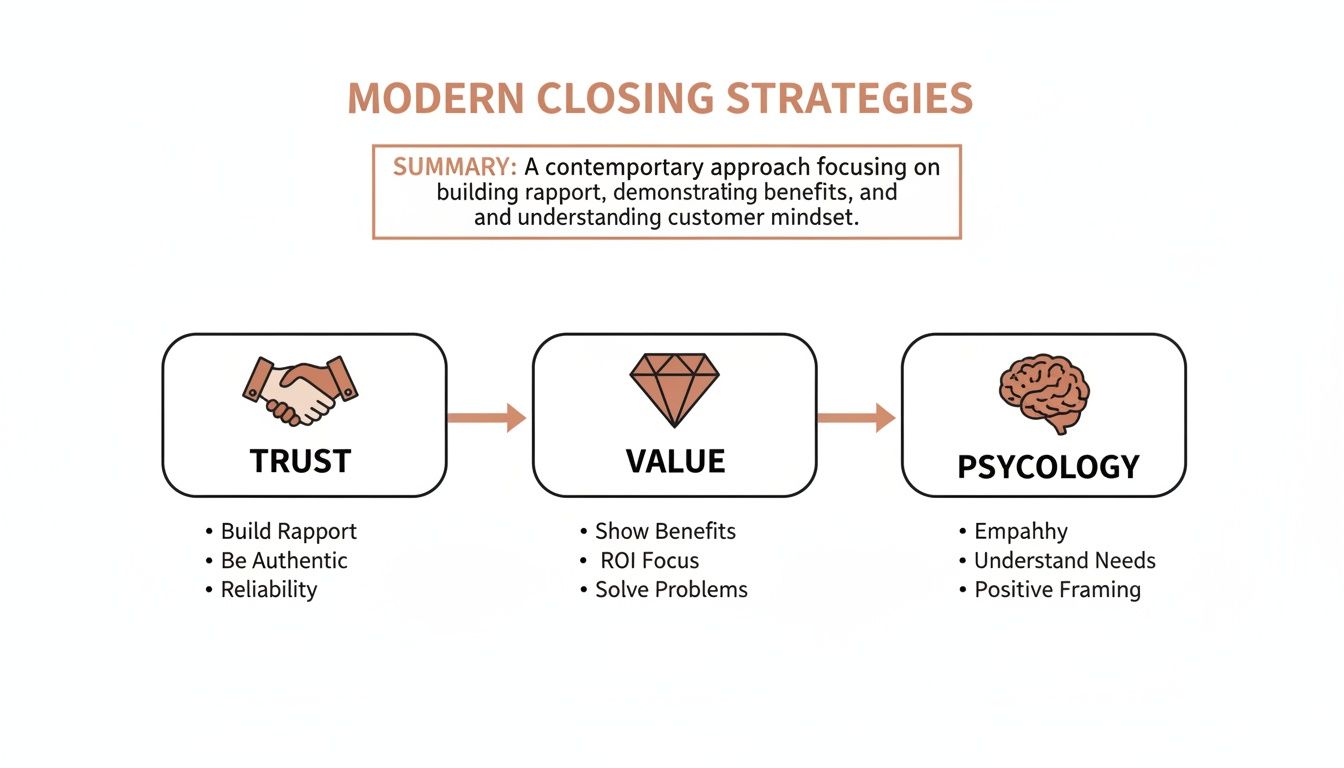
As you can see, success in these high-stakes conversations is a mix of building genuine trust, showing undeniable value, and, crucially, understanding buyer psychology.
Introducing the Four Buyer Archetypes
To make this practical, we can group these complex human behaviours into four clear archetypes. This is exactly what Mindreader’s Human Intelligence System (HIS) does, sorting prospects into primary types, each with its own unique motivators and communication style.
- The Knight: Action-oriented and decisive. They want the bottom line, the strategic edge, and the fastest path to a win.
- The Explorer: Innovative and driven by possibility. They get excited by new ideas and want to explore every potential outcome and creative use case.
- The Healer: Focused on relationships and impact. They care about the people, the team dynamics, and the positive change a decision will create.
- The Wizard: Analytical and data-obsessed. They need hard evidence, logical arguments, and a clear, step-by-step breakdown of how it all fits together.
Getting a handle on these archetypes is fundamental to effective customer profiling. It gives you the power to anticipate their needs and speak their language from the very first word.
Quick Guide to Prospect Archetypes
This table is your cheat sheet for identifying and engaging the four primary archetypes on the fly.
| Archetype | Key Motivator | Preferred Communication Style | Effective Closing Tactic |
|---|---|---|---|
| Knight | Results & Efficiency | Direct, concise, bottom-line | Focus on competitive advantage & ROI |
| Explorer | Innovation & Freedom | Enthusiastic, big-picture | Brainstorm possibilities, co-create |
| Healer | Impact & Connection | Empathetic, story-driven | Share testimonials, highlight team wins |
| Wizard | Logic & Data | Factual, detailed, analytical | Provide case studies & data validation |
Use this as a starting point to tailor your approach and watch how much more receptive your prospects become.
Activating the Archetype Playbooks
Just identifying an archetype is step one. The real magic happens when you use tailored playbooks to guide your outreach. This is how you stop getting ignored and ghosted. Your message becomes so spot-on that it feels less like a sales pitch and more like a conversation they were already hoping to have.
The goal of profiling isn't to put people in a box. It's to find the right key to unlock a meaningful conversation, building rapport and trust from the very first word.
When you’re talking to a Knight, for example, your message needs to be direct and confident. Focus on results and what makes your solution better than the rest. Ditch the long, flowery emails and get straight to the point.
A Wizard would delete that email without a second thought. They need data, case studies, and a well-reasoned argument. Sending them a detailed whitepaper or a link to a data-heavy report will work wonders where a punchy one-liner would fail. The Healer wants to hear client success stories, while the Explorer will light up if you invite them to a "what if" brainstorming session.
This level of customisation proves you've done your homework and respect their way of thinking. It’s a massive differentiator that builds the foundation of trust you need to close any high-ticket deal. When you match your style to theirs, the entire process shifts from a tense negotiation into a genuine collaboration.
Structuring a High-Stakes Sales Conversation
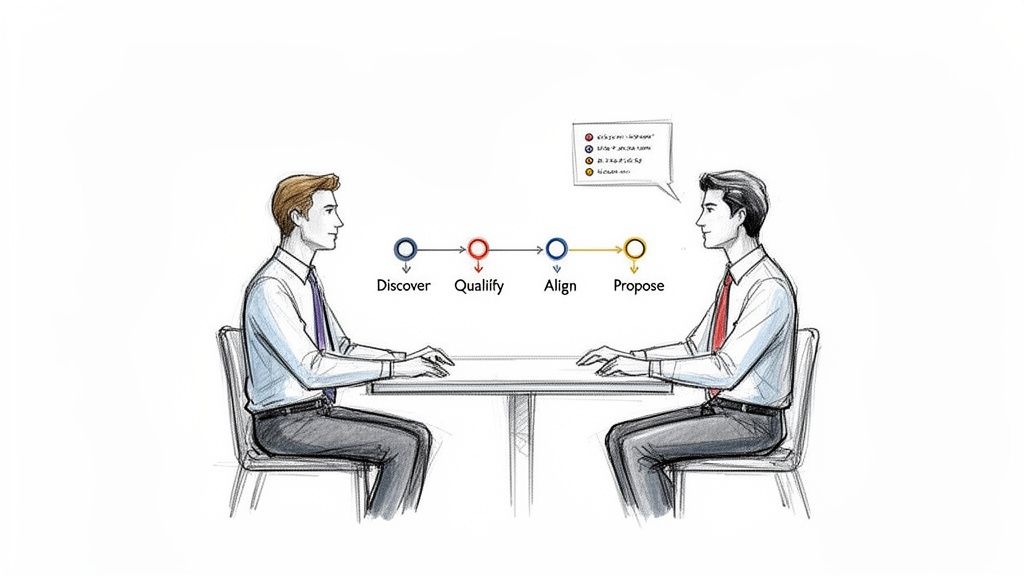
Forget the old-school sales pitch. The one where you drone on for forty minutes, hoping something, anything, sticks. A real high-ticket closing conversation is a masterclass in collaborative discovery. Your goal isn't to present; it's to guide, listen, and essentially co-create the solution with your prospect.
Think of it as an organised, yet fluid, dialogue. You're there to uncover their deepest needs and connect those pain points to a valuable, tangible outcome. This structure allows momentum to build naturally. Instead of pushing for a sale, you're pulling the prospect towards their own conclusion—that your offer is the key to solving their biggest challenges. That subtle shift in dynamic is what separates an average salesperson from an elite closer.
Pacing the Conversation for Each Archetype
The flow of your meeting has to adapt to the person across the table. A rigid script is your worst enemy here. The real secret is understanding their buyer archetype and adjusting your pacing and focus on the fly.
Pacing for the 'Knight': This prospect is decisive and just wants to get to the point. With a Knight, you need to drive the conversation forward with confidence. Start with the end goal, outline the strategic advantages, and present a clear path to victory. Wasting their time with excessive small talk or meandering stories will make them tune out almost immediately.
Pacing for the 'Explorer': The Explorer, on the other hand, thrives on possibility. Rush them, and you’ll shut them down completely. Your conversation should feel more like a brainstorming session. Explore "what if" scenarios, kick around creative applications, and give them the space to envision what the future could look like. Here, your role is more creative partner than vendor.
Getting this right is crucial. An AI-powered tool like Mindreader gives you this insight upfront, analysing a prospect's communication style to hand you a playbook before you even hop on the call. This prep work lets you anticipate talking points and structure the entire conversation in a way that truly resonates.
Real-World Example: Financial Services
Let's put this into practice. Imagine a financial advisor meeting a high-net-worth individual who profiles as a 'Wizard'. Instead of opening with glossy brochures about lifestyle and retirement dreams, the advisor leads with data. They walk the client through a detailed analysis of market trends, risk-adjusted returns, and a logical breakdown of the investment strategy.
Every point is backed by hard evidence. When the client asks a question, the advisor has performance charts and case studies ready to go. The conversation isn't about vague promises of wealth; it's a calm, fact-based discussion that satisfies the Wizard’s need for logical proof, building unshakable trust in the process.
High-ticket closing is less about having the perfect script and more about having the right framework. Know your key talking points, but be ready to deviate and follow the prospect's lead to create a truly personalised experience.
Adapting Your Message in Real Time
The best closers are masters of adaptation. They listen intently—not just to what is said, but how it's said—picking up on subtle cues that reveal a prospect's true priorities.
Let's say you walk into a meeting planning to discuss efficiency, but the prospect—a 'Healer'—keeps bringing up team morale. You have to pivot. Frame the benefits of your solution in terms of its positive impact on their people. Share stories of how other clients saw improved collaboration and employee satisfaction. This real-time adjustment shows you're actually listening, not just waiting for your turn to talk. It turns a standard pitch into a conversation that builds unstoppable momentum.
This mirrors the psychology you see in other high-stakes environments. Take high-ticket entertainment sales in Singapore, for example. Taylor Swift’s Eras Tour sold over 300,000 tickets across six shows, an outcome driven by scarcity and a deep, personal connection with the audience. For professionals in luxury sectors, these events highlight the sheer power of understanding urgency and desire in high-ticket closing—a process Mindreader's AI helps perfect. You can dive deeper into Singapore's major event dynamics and their economic impact in this HVS report.
Handling Objections and Negotiation Like a Pro
In the high-stakes world of big-ticket sales, most people get it wrong. They see an objection as a wall. A dead end. But experienced closers? We see them for what they are: requests for more information.
A prospect who raises a concern is actually engaged. They're thinking critically about what you're offering, which is infinitely better than someone just nodding along, waiting for the call to end. The real skill lies in telling the difference between a genuine concern and a simple negotiation tactic. Your ability to calmly and confidently navigate that moment will make or break the deal.
Reframe Objections with Archetype Insights
Generic, scripted answers to objections fall flat because they ignore the human on the other side of the table. The only way to truly connect is to tailor your response to their specific buyer archetype. You have to speak their language.
Here's how that looks in practice:
- For the data-driven 'Wizard': If they push back on price, don't waste time on vague promises. Give them the facts. Show them case studies with hard ROI, performance metrics, and a logical breakdown of how the investment pays for itself, step-by-step.
- For the relationship-focused 'Healer': When a 'Healer' worries about how this will affect their team, statistics are meaningless. They need reassurance. Share testimonials from happy clients who saw team morale skyrocket. Focus on the human impact.
- For the action-oriented 'Knight': If a 'Knight' brings up a competitor, it's a test of your conviction. Frame your response around your unique strategic advantages and how quickly they can get results. They want to know you're the fastest path to victory.
This isn’t just about countering a point; it’s about showing them you truly understand their world. For a deeper look at this, check out our guide on how AI helps you overcome client objections by decoding these subtle cues.
Navigating Price and Maintaining Control
Let's be clear: price objections are coming. But they're rarely about the actual number. Most of the time, it just means you haven't fully communicated the value.
The number one rule? Never offer a discount right away. It instantly devalues your offer and tells the prospect you weren't confident in your initial price.
Instead, use a simple but powerful technique called "Isolate and Reframe."
First, validate their feeling: "I understand this is a significant investment."
Next, isolate the issue: "Putting the price aside for a moment, is there anything else that would keep you from moving forward?"
This question is a game-changer. If they say no, you know it's purely a price negotiation. But if they bring up other concerns, you've just discovered the real roadblock. The price was just a smokescreen. This lets you stay in control of the conversation without making it feel like a confrontation.
Objections about price are almost never about the number. They're about an unresolved question of value. Your job is to answer that question so convincingly that the price becomes a secondary detail.
This principle is mission-critical in high-value sectors. Take Singapore's luxury real estate market, where investment sales have hit S$9.85 billion so far this year—a 12.5% jump. In an environment that competitive, sealing multimillion-dollar deals comes down to precise communication. This is exactly where tools like Mindreader give sellers an edge, helping them craft the exact message needed to close. You can see more on Singapore's investment sales on JLL.com.
Turn Objections into Opportunities
Every single objection is a gift. It's a chance to build a stronger case, reinforce your value, and show you're listening.
Treat each concern as an invitation to go deeper into their world. When you handle objections with empathy and precision, you're not just pushing for a signature. You're building the foundation for a long-term partnership based on real trust and understanding.
Your Follow-Up Game Plan: Using Tech to Close the Deal
The big meeting went great. You built rapport, uncovered pain points, and presented a compelling solution. But don’t pop the champagne just yet.
In high-ticket sales, the real work often starts after the presentation. The momentum you built can die in a day if your follow-up game is weak. This is where a smart, non-intrusive follow-up sequence becomes your secret weapon, turning that initial interest into a signed contract.
Forget those cringe-worthy "just checking in" emails. Your follow-up needs to be just as strategic and personalised as your first conversation. Thankfully, technology—especially AI-driven tools—lets you do this at scale without losing that human touch high-value prospects demand.
Don't Send the Same Message to Everyone
A one-size-fits-all follow-up is a one-way ticket to the spam folder. Each buyer archetype thinks differently, so you need to adapt your approach to keep them engaged and build trust.
- The Knight: This prospect is all business. They need direct, value-driven communication. Your follow-up should be sharp, to the point, and focused on the next clear action step. No fluff.
- The Explorer: These types thrive on new ideas and possibilities. Hook them by sending an interesting article or a creative "what if" scenario that builds on what you discussed.
- The Healer: This person is all about connection and reassurance. A follow-up that shares a relevant client success story or a glowing testimonial will resonate far more than a simple summary.
- The Wizard: This prospect needs more data to feel confident. Arm them with a detailed case study or a technical document that backs up everything you claimed.
Let AI and Your CRM Do the Heavy Lifting
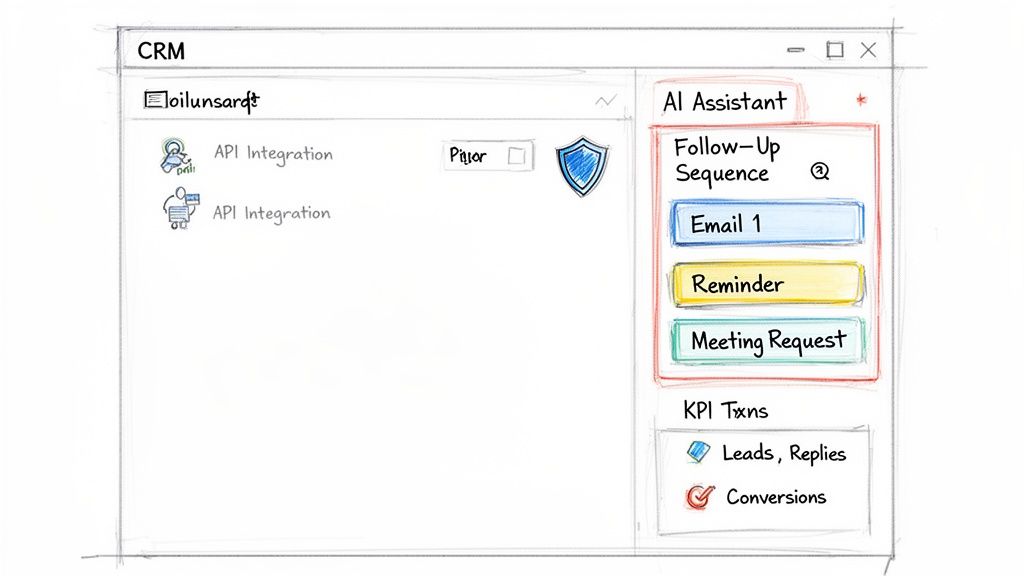
Trying to manually track every interaction and tailor every single message is a recipe for burnout. This is where plugging AI-driven insights directly into your Customer Relationship Management (CRM) system changes everything.
Imagine your CRM automatically flagging a prospect as a 'Wizard' and suggesting a data-rich follow-up email template. Tools like Mindreader use API integrations to pull in and enrich prospect data right inside your CRM, giving you real-time guidance within your existing workflow. This makes sure every touchpoint is perfectly tuned to the prospect’s communication style. If you want to dive deeper, you can learn more about how AI improves follow-up strategies in our detailed article.
This kind of smart automation helps you stay organised and brutally effective. In a booming digital sales market like Singapore, this tech-first approach isn't just nice to have—it's essential. Singapore's live commerce sector is on track to hit $1.67 billion, opening up massive opportunities for luxury sales pros and B2B consultants chasing affluent buyers. Using AI to analyse a prospect's digital footprint helps you pivot your talking points and close deals in these fast-paced, trust-based environments.
A smart follow-up system isn’t about sending more messages; it's about sending the right message at the right time. Automation gets their attention, but personalisation gets the sale.
Playing Fair and Measuring What Matters
In high-stakes sales, trust is your most valuable asset. Period.
Be upfront about how you collect and use data. Make sure your communication practices respect privacy and give prospects an easy way to opt out. Building a reputation for ethical, transparent engagement is what creates long-term success.
Finally, you can't improve what you don't measure. Tracking the right Key Performance Indicators (KPIs) is the only way to know if your follow-up strategy is actually working.
Essential Follow-Up KPIs to Track:
- Response Rate: What percentage of your follow-ups get a reply? If it's low, your messaging is likely off-target.
- Time to Close: How many days pass between the initial meeting and a signed deal? The right tech and tactics should shrink this cycle.
- Meeting-to-Close Conversion Rate: Of all the qualified prospects you meet, how many actually become clients? This is the ultimate report card for your entire high-ticket closing process.
Proven Frameworks for Asking for the Sale
This is it. The moment of truth where high-ticket deals are won or lost: when you actually ask for the business. This isn't the time for old-school, aggressive tactics. The "Always Be Closing" mindset just creates pressure and makes prospects defensive.
Instead, the best closers use confident, collaborative frameworks. They make saying "yes" feel like the prospect’s own smart, empowered decision, not something they were pushed into.
The real secret isn’t just how you ask, but when. The perfect time to close isn't a gamble; it’s telegraphed by subtle buying signals. Pay close attention. When a prospect starts using "we" language, like, "How would we integrate this with our current system?" or their tone shifts from problems to possibilities, they're already taking mental ownership. That's your green light to guide them over the finish line.
The Summary Close
The Summary Close is hands-down one of the most effective and natural ways to seal a high-ticket deal. Why? Because it’s not a pitch; it’s a logical recap. You’re simply connecting the dots of your conversation, summarising the value you've both agreed upon before you propose moving forward.
It’s an incredibly powerful way to reinforce the ROI and remind the prospect of their own words. You're basically holding up a mirror, showing them how your solution directly fixes the specific pains they shared with you.
Here’s how it flows:
- Recap Their Pains: Start by restating the core problems they told you they were facing.
- Connect to Your Solution: Directly tie each one of those pain points to a specific benefit your solution delivers.
- Confirm You're Aligned: Ask a simple question to get a nod of agreement.
- Propose the Next Step: Confidently and clearly state what needs to happen next to get started.
B2B Software Example: "So, just to quickly recap our chat, you're wrestling with manual reporting that's eating up 20 hours a week, and the lack of real-time data is leading to some costly mistakes. We've agreed our platform would completely automate that reporting to give your team that time back, and the live dashboard would put an end to those errors. Does it sound like we've covered your main concerns?"
Once they say yes, you transition smoothly: "Great. In that case, the next step is to get the paperwork sent over. I can have that in your inbox this afternoon. How does that sound?"
The Option Close
The Option Close is another brilliant framework because it shifts the prospect’s focus from "if" to "which." It’s a subtle but powerful psychological shift. You’re giving them a sense of control, making them feel like an active participant in the decision rather than someone just being sold to. You simply present two solid paths forward—both of which result in a sale.
By presenting two choices, you change the entire dynamic of the decision. The question is no longer 'Yes or No?' but 'Which of these excellent options is better for me?' This sense of empowerment dramatically increases closing rates.
This technique works particularly well when you have different service tiers, packages, or implementation plans.
Financial Advisor Example: A client has S$500,000 ready to invest but is feeling a bit hesitant. You could say: "Based on your goals for steady growth while managing risk, we have two excellent ways we can proceed. We can structure the portfolio with a 70/30 split that favours blue-chip equities for maximum stability, or we can go with a 60/40 split that introduces some higher-growth tech funds for a bit more upside. Which of those approaches feels more aligned with your comfort level for the long term?"
Tailoring the Close in High-Value Markets
Adapting your closing style is absolutely critical, especially in dynamic markets. Take Singapore's booming luxury retail sector, for instance. High-ticket closing rates have surged right alongside an 11.1% year-on-year jump in watches and jewellery sales.
For sales professionals in that space, using tools to profile clients into archetypes—like the decisive Knight or the intuitive Wizard—is becoming essential for tailoring a pitch and boosting conversions. You can read more about what’s fuelling this trend in Singapore's $4.2 billion retail market.
By mastering these frameworks, you stop being just a salesperson and become a trusted guide. You create genuine urgency built on value, not pressure, and you empower your prospects to confidently invest in the future you've helped them see so clearly.
Post-Close Strategy and Performance Tracking
Getting the signature feels like the finish line, but in the high-stakes world of big-ticket sales, it’s really just the starting gun. What you do after the ink is dry is what separates a one-time transaction from a long-term, profitable partnership. A solid post-close strategy is your best weapon against buyer's remorse and the bedrock for turning a happy customer into a raving fan who brings you more business.
The first 48 hours are everything. This is the peak window for doubt to creep in, where a client might start second-guessing their significant investment. You need an immediate, structured onboarding sequence to slam that window shut. It’s non-negotiable. This isn’t just about being organised; it’s about instantly reaffirming their decision and proving you’re ready to deliver.
Crafting Your Post-Close Sequence
Your first move should feel like a natural hand-off from sales to success, keeping the energy and excitement high.
- The Welcome Packet: As soon as the deal is done, fire off a personalised welcome email. This should recap their goals, outline the agreed-upon next steps, and provide links or access to any initial resources. It's a simple touch that screams professionalism.
- The Kick-Off Call: Get this on the calendar within a few days. This isn't another sales pitch. It’s a strategy session. Use it to align on expectations, introduce them to key people on your team they'll be working with, and map out a clear plan for the first 30 days.
- The First Win: This is your secret weapon. Find a way to deliver a quick, tangible result as soon as humanly possible. This small victory offers immediate proof of concept, smashes any lingering doubts, and builds a massive amount of trust right out of the gate.
Taking these steps shows your commitment goes way beyond just getting paid. You’re setting the tone for the entire relationship.
Measuring What Matters Most
If you want to get seriously good at high-ticket closing, you have to look past the basic conversion rate. When you get smart with your data, closing big deals stops being a mysterious art and becomes a repeatable science. You need to focus on the key performance indicators (KPIs) that tell you the real story of your sales health.
The goal isn’t just to close one big deal. It’s to build a predictable system that closes them over and over again. That system is built on tracking, analysing, and optimising your numbers.
Watching the right data is especially important in a hot market. For example, with Singapore's retail sales hitting $4.4 billion—a 6.3% jump from the previous year—the opportunity in high-end sectors is massive. Online sales made up 16.9% of that pie, proving that smart, timely outreach can pay off big. By analysing your own performance, you can learn how to ride these waves. You can read more about how Singapore's retail surge created a prime window for high ticket sales.
Here are the core KPIs you need to have on your dashboard:
- Sales Cycle Length: How many days does it take, on average, to get a prospect from that first "hello" to a signed contract? A shorter cycle usually means your process is tight and efficient.
- Average Deal Size: Are your deals consistently hitting the price point you’re aiming for? If this number is dipping, it might be a sign that your value framing needs work.
- Client Lifetime Value (CLV): This is the king of all metrics. It tracks the total revenue you earn from a client over the entire relationship. A high CLV is proof that your retention and upselling strategies are working wonders.
By making a habit of reviewing these numbers, you’ll quickly see what’s working, what’s broken, and where the real opportunities for growth are hiding.
Got Questions About High Ticket Closing?
Even with the best playbook, high ticket closing is a field that brings up a lot of questions. It’s a delicate dance of psychology, strategy, and timing, so it’s completely normal to want clarity on the finer points. Let's break down some of the most common queries we hear from sales pros.
Think of this as your final debrief—a chance to sharpen your instincts before you step into your next high-stakes conversation.
How Is High Ticket Closing Different From Regular Sales?
The short answer? The stakes and the psychology. In a typical sale, you might focus on product features and a quick turnaround. But high ticket closing is a completely different game. It’s a longer, more consultative journey because the client is taking on a much bigger financial and emotional risk.
This is where trust and undeniable value become everything. You’re not just selling a service; you're selling a transformational outcome or a massive return on investment. This often means you're navigating conversations with a whole team of stakeholders, not just one person. The entire process feels less like a pitch and more like you're co-creating a bespoke solution, which demands a deep, nuanced understanding of their business and what really drives them.
What Are the Most Common Mistakes People Make?
It’s painful to watch, but so many well-intentioned closers stumble over the same few hurdles. The most frequent mistake by far is rushing the process. They push for the close before building a real foundation of trust, and it almost always blows up in their face.
Other classic trip-ups include:
- Misreading a prospect’s true motivation, like hammering on a logical argument when you can tell the decision is actually being driven by emotion.
- Sticking to a generic script that completely fails to connect with the prospect’s unique personality and communication style.
- Treating objections like roadblocks you have to smash through, instead of seeing them as invitations to provide more clarity and build a stronger connection.
- Sending those vague "just checking in" follow-ups that add zero value and slowly kill the momentum you worked so hard to build.
Avoiding these pitfalls comes down to meticulous prep work and the agility to adapt your game plan on the fly, based on who’s sitting across from you.
How Can AI Tools Genuinely Improve My Close Rate?
This is where it gets interesting. AI tools like Mindreader are built to take the guesswork out of high ticket closing. They allow you to achieve a level of hyper-personalisation that’s just not possible to do manually at scale. Instead of spending hours digging through a prospect’s LinkedIn, an AI can analyse their digital footprint in seconds and give you a reliable buyer archetype.
This has a direct, measurable impact on your close rate.
- Smarter Outreach: You can craft initial messages that actually resonate, which sends your reply rates through the roof.
- Better Preparation: You walk into meetings already armed with talking points and a communication strategy tailored to their personality.
- Anticipatory Objection Handling: The AI helps you see potential objections coming based on their archetype, so you’re ready to handle them with confidence and precision.
It's not about replacing the human element of sales—that’s irreplaceable. It’s about augmenting your intuition with powerful data, making every single interaction more impactful and building the deep trust you need to land those high-value deals.
What Is the Best Way to Handle Price Objections?
Here’s the secret: handling price objections effectively starts long before you even mention the price. Your job from the very first conversation is to build such an unshakeable case for value that the investment feels like a logical next step, not a sticker shock.
When the objection does pop up (and it will), don't get defensive. First, validate their concern with empathy: "I understand this is a significant investment." It immediately shows you're on their side.
Next, isolate the objection. Make sure the price is the only thing holding them back. Then, it's time to reframe the entire conversation around the value and ROI, not the cost. How you do this depends on their archetype; a 'Knight' needs to see the clear strategic win, while a 'Wizard' will demand hard data proving the return. And please, never offer a discount right away. Instead, get curious. Explore what would need to be true for this investment to feel right for them.
Ready to stop guessing and start closing with precision? Mindreader gives you the AI-powered insights to understand any prospect's communication style in seconds. Prepare for meetings faster, handle objections with confidence, and build the trust that seals high-ticket deals.
Discover how Mindreader can elevate your sales conversations today.