Customer profiling Mastery: Decode Audiences & Boost Engagement
Let's be honest, customer profiling isn't just about sticking labels on people. It's about creating a detailed, almost living portrait of your ideal buyers. You need to go way beyond their job titles to really get what makes them tick—their motivations, their biggest headaches, and how they prefer to talk.
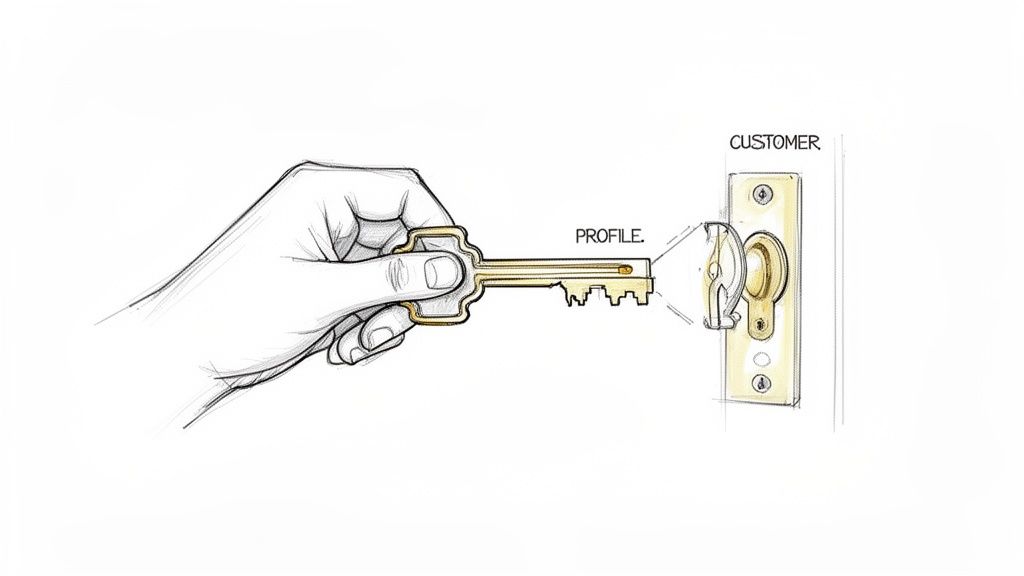
Think of it like a locksmith crafting a key for a specific, intricate lock instead of just trying a generic master key on everything. It's about precision, not volume. This is how your sales team can build real rapport, fast, and craft messages that actually land.
Why Customer Profiling Is Your Sales Superpower
In today's market, buyers don't just want personalised interactions; they expect them. A one-size-fits-all pitch is a dead-end strategy. When you get customer profiling right, you shift the entire dynamic. Your sales process stops being a monologue and turns into a meaningful dialogue, letting you connect on a human level and even anticipate needs before they're spoken out loud.
It's More Than Just Personality—It's About the Context of the Conversation
True customer profiling isn't a static analysis of someone's personality. It’s also about understanding the fluid context of every single interaction you have.
Is the meeting a formal Zoom call or a quick, informal phone chat? What is the topic about? What is the mood? All these factors actually affect the conversation. Each of these elements—the channel, the topic, the mood—completely shapes the dynamic.
A "mind reader" in sales doesn't just focus on profiling the customer, but also on yourself so that you can prepare yourself in the best way. While we can profile the customer to some extent, there are some things that are outside of our control. Recognizing these contextual layers gives you the power to respond with agility and real empathy.
This situational awareness is what separates the good from the great. It shows you're not just reading from a script; you're actively listening and reacting to the reality of the moment. That’s how you build serious trust. To get this right from the start, it's essential to begin by creating a detailed Ideal Customer Profile.
Before we dive deeper, let’s look at how this modern approach stacks up against old-school sales tactics. The difference is night and day.
Traditional Sales vs Profiled Sales Approach
| Aspect | Traditional Sales | Profiled Sales |
|---|---|---|
| Outreach | Generic, one-size-fits-all emails and calls. | Personalised messages that address specific pain points. |
| Pitch | A monologue focused on product features. | A dialogue focused on solving the customer's problems. |
| Rapport | Slow to build, often feels forced. | Built quickly through genuine understanding and empathy. |
| Efficiency | High volume, low conversion rate. "Spray and pray." | Lower volume, higher conversion rate. "Precision and purpose." |
| Outcome | Transactional relationships. | Long-term, trust-based partnerships. |
As you can see, profiling isn't just a minor tweak—it's a fundamental shift in strategy that leads to far better outcomes.
The Big Shift to Hyper-Personalisation
The demand for experiences that feel like they were made just for us is growing, and fast. In Singapore's competitive 2025 market, for example, a staggering 71% of shoppers expect hyper-personalised recommendations. This isn't some minor preference; it's a massive shift in what buyers expect from businesses.
This makes deep profiling absolutely essential if you want to cut through the noise. It’s no longer optional.
Thankfully, modern tools are making this level of insight more accessible than ever. By analysing the right signals, you can finally move away from guesswork and toward a strategy built on solid data. For a deeper look at how this all works, you can explore the science behind understanding consumer behavior for business success in our other articles.
Profiling the Situation, Not Just the Person
Truly exceptional customer profiling goes one step deeper. It looks beyond fixed personality traits and tunes into the context of the conversation itself. Why? Because a customer isn't just one type of person. Their mood, behaviour, and how they receive information can shift dramatically depending on the environment.
Getting a handle on this is the secret to building genuine connections and adapting your game plan on the fly.
Think about the massive difference between a scheduled, 30-minute Zoom call to walk through a formal proposal and a sudden, five-minute phone call about a small technical glitch. It’s the same person on the other end, but they’ll communicate in a completely different way. The channel, the topic, even the general vibe of the day—all of these forces are shaping the interaction.
A classic mistake in sales is creating a customer profile and treating it like an unchanging script. But real conversations are messy and unpredictable. A single profile can’t possibly predict the stress of a looming deadline or the excitement of a new project kicking off, both of which radically alter your customer’s mindset.
Becoming a Situational Mind Reader
This is where situational awareness becomes your superpower. The best sales professionals are masters at reading the room, even when it’s a virtual one. They don’t just focus on who the customer is; they analyse the entire conversational backdrop.
Often, these contextual factors are totally out of your control, and that’s perfectly fine. The goal isn’t to manipulate the situation. It’s to recognise what makes it unique and prepare yourself to navigate it effectively. This extra layer of situational profiling is what gives you the agility to be authentic and responsive.
When you focus on both the customer and the context, you stop pitching and start collaborating. This self-awareness lets you prepare for multiple outcomes, so you can guide the conversation forward no matter which turn it takes.
Key Contextual Factors to Analyse
Learning to spot these variables is the first step toward mastering situational awareness. Before you jump on any call or walk into any meeting, take a moment to consider the powerful influence of these factors.
- Communication Channel: A formal video conference on Zoom feels completely different from a quick, informal text message or an audio-only phone call. Every channel comes with its own unspoken rules and affects how clearly your message lands.
- Meeting Topic: Are you diving into sensitive pricing negotiations, brainstorming big-picture ideas, or putting out a fire? The subject matter sets the emotional tone and dictates the level of formality you’ll need.
- Emotional Tenor: Is the customer relaxed and open to chatting, or are they stressed and short on time? Tuning into their mood allows you to either match their energy or help bring the tension down a notch.
- Timing: Is it the start of a chaotic Monday morning or a chilled-out Friday afternoon? The timing of your chat can have a huge impact on your customer’s attention span and how willing they are to really engage.
At the end of the day, you can’t control every part of a sales conversation. But you can always control how prepared and responsive you are. By layering situational analysis on top of traditional customer profiling, you turn potential roadblocks into opportunities for stronger, more meaningful connections.
Once you’ve got a handle on situational awareness, the next move is to find a simple, powerful way to understand what really drives your buyer. While every customer is their own person, most of us lean towards one of four primary communication styles in a sales conversation. Spotting these patterns is the key to adapting your message so it genuinely lands.
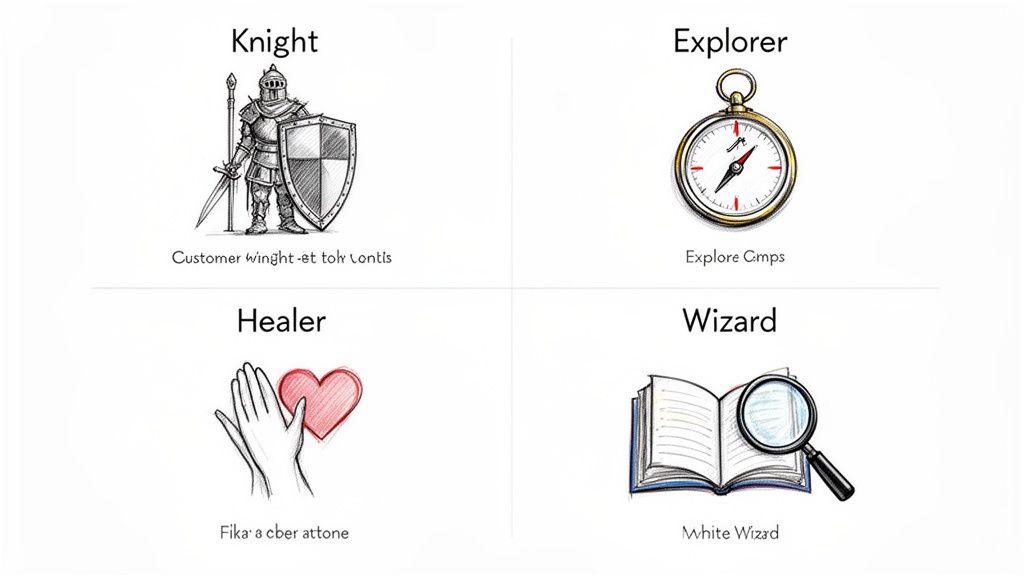
This framework isn't about boxing people in. Think of it as a mental map to help you navigate conversations with more confidence and skill, moving you from the 'why' of profiling to the 'how'.
The Knight: The Result-Driven Decision-Maker
The Knight is all about one thing: the bottom line. They are direct, decisive, and have zero patience for fluff. When you're talking to a Knight, you need to get straight to the point and show them how your solution delivers a clear, tangible return on their investment.
They live for action and outcomes. Their first question is always some version of, "How will this help me win?" To get their attention, you need a crisp, clear business case that highlights measurable results and a no-nonsense path to getting it done.
The Explorer: The Innovative Visionary
On the flip side, you have the Explorer. These are the big-picture thinkers, motivated by new ideas and what’s possible down the road. They’re curious, open-minded, and love to brainstorm about the future. For them, innovation is exciting, and they aren't bogged down by minor details at the start.
Your conversation with an Explorer should be about vision and potential. You aren't just selling a product; you're co-creating a better future with them. Kick things off with phrases like, "What if we could..." to spark their imagination and reveal new opportunities they hadn't even thought of.
Effective profiling combines understanding the customer's archetype with the context of the conversation. The goal is to prepare yourself to adapt, ensuring your message is not only heard but also valued, regardless of the situation.
The Healer: The Relationship-Oriented Partner
Healers run on trust, relationships, and human connection. They make decisions based on how they feel about you and your company. For them, reliability and support are everything, so building genuine rapport isn't just nice—it's essential.
They need to know you get their team's struggles and that you'll be there for them long-term. Share testimonials, customer success stories, and always use a warm, empathetic tone. With a Healer, the relationship is just as important as the product itself. For more strategies, you can explore our guide on selling to these four distinct personality types.
The Wizard: The Data-Focused Analyst
Finally, there’s the Wizard. Wizards are logical, analytical, and driven by data. They have to understand the 'how' and 'why' behind absolutely everything. Before they even think about making a decision, they will have meticulously researched your claims and analysed every piece of information they can find.
To win over a Wizard, you have to show up with your homework done. Come armed with facts, figures, technical specs, and security documentation. They are persuaded by evidence, not emotion. A well-structured, logical argument is your best—and only—path forward.
How to Gather Actionable Data for Customer Profiling
Building a truly accurate customer profile isn’t about drowning yourself in data. It’s about knowing where to look for the right signals. By focusing your attention on three key areas, you can start gathering the kind of intelligence that turns raw information into a clear roadmap for your sales conversations.
This is what moves you from guesswork to data-informed decisions, which is the very foundation of modern customer profiling.
Analyse Their Digital Footprint
A prospect’s digital presence is an absolute goldmine of insights if you know how to read it. Go beyond just their job title on LinkedIn. Look at the content they actively engage with—the articles they share, the comments they leave, and the influencers they follow. This activity peels back the layers, revealing their professional priorities and the topics that genuinely hold their attention.
In the same way, dig into their company’s publications, like annual reports or recent press releases. These documents are fantastic because they often spell out strategic goals and current challenges, giving you direct insight into the pressures and objectives driving your prospect’s decisions.
Decode Textual Signals in Communications
The way someone writes is packed with powerful clues about their communication style and, by extension, their personality. The language and tone they use in emails, messages, and other written forms are critical data points for building an effective profile.
- Word Choice: Do they use formal, data-heavy language, or is their tone more casual and relationship-focused? This is often a good indicator of whether they lean towards a Wizard or a Healer archetype.
- Response Length: Are their replies short and to the point, or are they more detailed and explanatory? A concise style often points to a Knight’s focus on getting things done efficiently.
- Pacing: How quickly do they reply? A rapid-fire response might signal urgency, while a more measured pace could indicate a thoughtful, analytical approach.
To really get a handle on gathering these kinds of insights, it’s worth exploring different user research methodologies to build robust and reliable customer profiles.
Interpret Conversational Cues
During a live conversation, whether it’s a call or a video chat, you get access to a rich layer of real-time data that you just can’t get anywhere else. Pay close attention to the non-verbal stuff—body language and tone of voice—as these signals often reveal more than words alone.
The types of questions a prospect asks are also incredibly telling. Are they laser-focused on ROI and timelines, or are they more interested in long-term partnership and support? These cues help you confirm or adjust your initial assessment on the fly. This gap between what businesses think they’re delivering and what customers feel is huge. In Singapore, for example, a mere 17% of consumers feel fully satisfied with their bank's personalisation efforts.
This massive disconnect often comes down to a failure to interpret customer signals, where 55% of people report having to repeat themselves to different representatives. It’s a clear sign that businesses aren't listening properly.
By bringing together data from digital footprints, textual signals, and conversational cues, you create a multi-dimensional view of your customer. This holistic approach is what prepares you to walk into any high-stakes conversation with confidence and precision.
Putting Customer Profiling into Practice with a Daily Workflow
Knowing the theory behind customer profiling is one thing. Actually weaving it into your daily sales hustle is where you start seeing the magic happen. A simple, structured workflow is what turns those abstract insights into tangible actions—the kind that build real rapport, shrink sales cycles, and ultimately, close more deals.
This repeatable process is all about moving from a reactive to a proactive mindset. It’s about being consistently prepared, adaptable, and relevant, whether you're about to jump on a call, in the middle of a pitch, or sending that crucial follow-up. Each stage builds on the last, creating a genuinely personalised experience for your customer.
To do this right, we need to gather clues from three key areas.
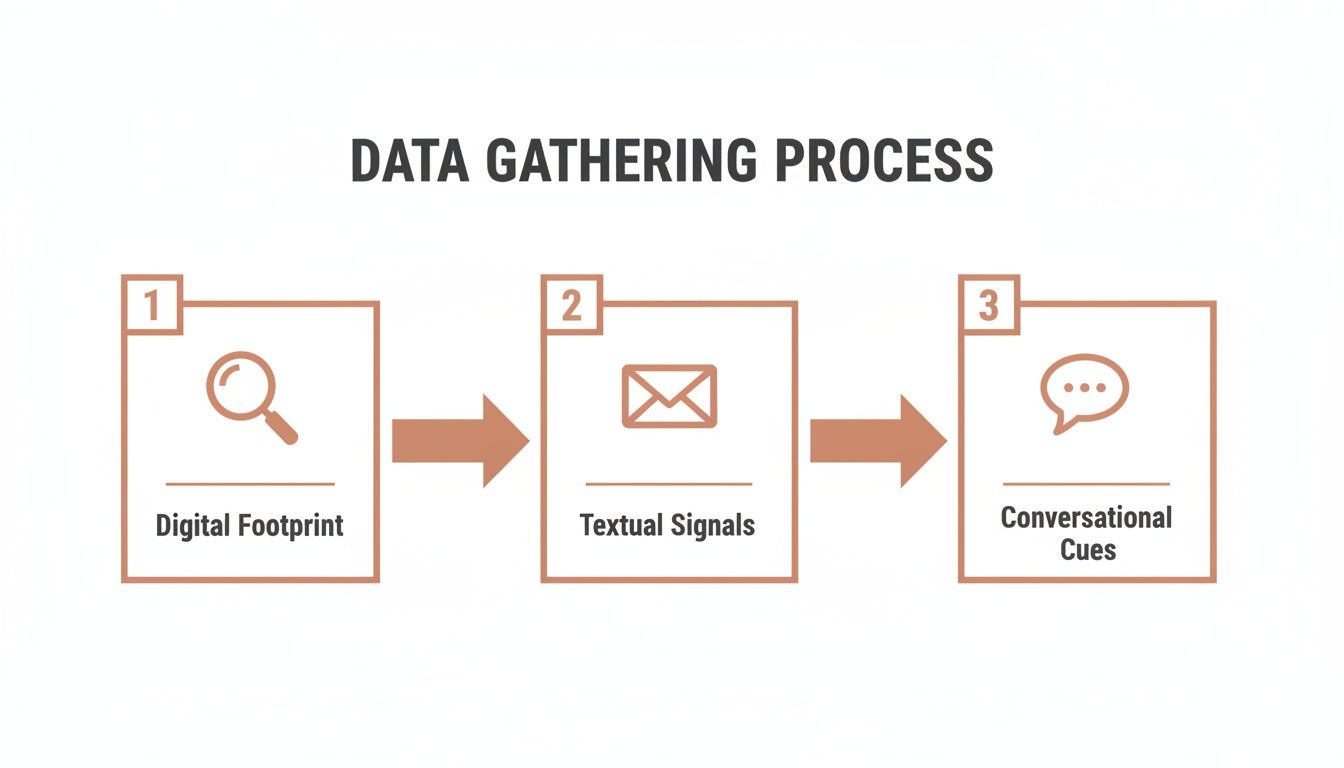
This flow shows how you can combine what you find from their digital footprint, how they write, and what they say in conversation to build a complete, holistic profile.
Pre-Call Preparation
Your prep work sets the tone for the entire relationship. Before you even think about dialling a number or clicking that Zoom link, spending just a few minutes on focused research gives you a massive head start. This isn’t about being a stalker; it's about smart intelligence gathering so you can craft an opening that immediately connects.
Try creating a simple pre-call checklist to keep yourself honest:
- Check LinkedIn Activity: What posts or articles have they liked or commented on recently? This is a goldmine for understanding their current professional priorities.
- Glance at Company News: Did they just announce a new product, secure funding, or hire a key executive? Mentioning this shows you’ve done your homework and you're not just another generic salesperson.
- Scan Your Email History: Re-read past emails. Is their language direct and full of data (likely a Wizard or Knight), or is it more collaborative and people-focused (a classic Healer or Explorer)?
This is your chance to form an initial hypothesis about their personality archetype and what they might need. Think of it as the foundation you'll build the rest of your conversation on.
In-Meeting Adaptation
Here’s the thing: no matter how much you prepare, a real conversation is always a bit unpredictable. This is where you need to listen actively and be ready to adapt your approach based on what they're giving you in real-time. Your pre-call assessment is a starting point, not a rigid script you have to follow.
You’re listening for signals that either confirm or challenge your initial read. For example, if you pegged them as a data-driven Wizard but they spend the first ten minutes talking about team morale, you need to pivot. This ability to adapt on the fly is what shows them you're truly present and responding to them as an individual, not just a profile.
Post-Call Follow-Up
The follow-up is where so many deals either move forward or die a slow death. A generic "Thanks for your time" email is a completely wasted opportunity. This is your moment to solidify the connection you just made.
Instead, use the insights you gathered to write a message that resonates. Reference specific things you talked about that align with their likely archetype. For a Knight, you might lead with a bulleted summary of next steps and projected ROI. For a Healer, you could start by reaffirming how much you understood their team's challenges. This kind of thoughtful communication proves you were listening and makes your message stand out in a sea of boring follow-ups.
This entire process, from prep to follow-up, can be broken down into a practical workflow.
Actionable Profiling Workflow Across The Sales Cycle
Here's a practical guide showing how you can apply these profiling techniques at each stage of a sales interaction for maximum impact.
| Sales Stage | Key Objective | Profiling Action Example |
|---|---|---|
| Initial Outreach | Get their attention and secure a meeting. | Analyse their LinkedIn profile for recent posts. Reference a specific interest in your cold email to show you've done your homework. |
| Discovery Call | Understand their core pain points and motivations. | Listen for keywords. Do they use "we" and "team" (Healer) or "I" and "results" (Knight)? Adjust your questions accordingly. |
| Product Demo | Show how your solution solves their specific problem. | For a Wizard, focus on the technical specs and efficiency gains. For an Explorer, highlight the innovative features and exciting potential. |
| Proposal/Negotiation | Present a compelling business case and handle objections. | A Knight will want a clear ROI breakdown. A Healer will be more concerned with how the change will impact their team's well-being. |
| Closing | Get the final commitment and sign the deal. | Reiterate the key benefit that aligns with their archetype. For an Explorer, it's the future possibilities; for a Knight, it's the guaranteed outcome. |
| Onboarding/Follow-Up | Ensure a smooth transition and build a long-term relationship. | Send a Healer a welcome note that mentions their team by name. Send a Wizard a concise, data-rich report on initial usage. |
By consistently applying this framework, you move beyond just selling a product and start building genuine, trust-based relationships that lead to better outcomes for everyone.
Ethical Profiling: Building Trust and Connection
When we talk about customer profiling, it’s easy to imagine a fine line between genuine understanding and outright manipulation. But in reality, the distinction isn't just fine—it's critical. Ethical profiling isn’t about digging for secrets or exploiting perceived weaknesses. It’s about using publicly available information to adapt how you communicate, building a real bridge of connection rather than a tool for pressure.
The core principle here is respect. Unethical practices, like intrusive data gathering or using insights to push a customer’s emotional buttons for a quick win, burn bridges. In sharp contrast, an ethical approach focuses on one thing: serving their needs more effectively. It’s the difference between listening to respond and listening to truly understand.
Trust is the foundation of every successful B2B partnership. When customer profiling is used to foster genuine dialogue and demonstrate empathy, it becomes a powerful tool for building and maintaining that trust over the long term.
This responsible approach gives your sales team the confidence to connect with integrity. It reinforces that your goal is to create stronger, more sustainable partnerships, not just to close another transaction. By committing to this, you ensure every single interaction is respectful and adds genuine value.
Upholding Fairness and Integrity
Bringing AI into the mix means we have to double down on our commitment to fairness. It's essential to recognise and actively mitigate potential biases in the algorithms that inform your strategy. To see how this is done, you can read about how Mindreader addresses potential biases in AI systems to ensure a responsible approach. This dedication to transparency and ethical data use is exactly what builds lasting customer loyalty.
Got Questions About Customer Profiling? We've Got Answers
Diving into customer profiling for the first time? It's natural to have a few questions pop up. Let's clear up some of the most common ones so you can start applying these techniques with confidence.
How Is a Customer Profile Different From a Buyer Persona?
It's a great question, and the two are often mixed up. While they're related, they operate on completely different levels.
Think of a buyer persona as a wide-angle shot. It’s a broad, generalised sketch of your ideal customer segment, created by marketing teams to shape entire campaigns. It’s about the "who" in a general sense.
A customer profile, on the other hand, is a close-up. It's a highly specific, individual-level analysis that sales teams use for direct, one-on-one engagement. It zooms in on a single person's communication style, their core motivations, and the immediate context of your conversation to help you adapt in real time.
Does Customer Profiling Work for Both B2B and B2C Sales?
Yes, absolutely. The core principles work in both worlds, but the data you zero in on will be different.
In B2C (Business-to-Consumer): The profile is all about the individual. You’re looking at personal details like their lifestyle, core values, and past buying habits.
In B2B (Business-to-Business): You still look at the individual's traits, but you add a crucial layer of business context. What’s their specific role in the buying committee? What are the company's biggest goals this quarter? What industry pressures are they facing?
The fundamental idea of adapting how you communicate stays the same. But in a B2B setting, the profile expands to include all the organisational factors that are pulling the strings behind the scenes and influencing that person's decisions.
Is This Whole Process Ethical?
When done right, it’s not just ethical—it’s respectful. Ethical customer profiling is about using publicly available information (like a prospect's LinkedIn activity or the tone of their emails) to better understand and serve them. The goal is always empathy and clearer communication, never manipulation.
It’s about respecting your customer enough to meet them where they are, speak their language, and address their actual needs. This is how you build real trust, not break it. Every conversation becomes grounded in a genuine connection and a desire to deliver real value.
Ready to stop guessing and start connecting on a deeper level? Mindreader translates complex customer signals into actionable sales guidance, helping you prepare for any high-stakes conversation in seconds. Discover how to adapt like water and close more deals.
Article created using Outrank