
The real difference between Assertive and Turbulent people boils down to one simple thing: how they handle pressure. Assertive individuals are self-assured and don't get rattled easily, while Turbulent individuals are more cautious, perfectionistic, and feel the weight of stress.
In a sales conversation, this is everything. You have to know whether your prospect is running on quiet confidence or is constantly looking for your reassurance. Getting this wrong means talking past them completely.
Deconstructing Assertive and Turbulent Mindsets
Getting a handle on the Assertive vs. Turbulent dynamic is a genuine game-changer, especially in sales. These aren't rigid boxes you stuff people into; think of them more like orientations that describe how someone responds to the world, particularly when the heat is on.
When you can spot these mindsets, you stop guessing and start strategising. Every email, every call, and every meeting can be shaped to hit the mark.
This distinction is even more critical in high-pressure markets. In Singapore, for example, a surprising 60.94% of the population leans Turbulent, with only 39.47% identifying as Assertive. This tilt tells you a lot about the local business culture. It means you're frequently dealing with prospects who will second-guess their decisions when things get serious. You can dig into more of these national personality trends over at 16Personalities.com.
Key Personality Orientations
At their core, these identities shape a person's confidence, how they make decisions, and how they keep their emotions in check.
- Assertive (-A) types are the calm, self-assured ones. Stress just seems to roll off their backs. They trust their gut, make a call, and aren't too bothered by what everyone else thinks.
- Turbulent (-T) types are incredibly success-driven and have a perfectionist streak, but they're also much more sensitive to stress. They're always searching for ways to improve, which also means they're prone to worry and a healthy dose of self-doubt.
The key takeaway is this: an Assertive prospect just wants the most efficient path to a solution. A Turbulent prospect needs you to calm their fears and show them exactly how you'll minimise risk before they'll even consider saying yes.
Core Differences at a Glance
This quick comparison table breaks down the practical differences you'll see and feel during a sales conversation.
| Trait | Assertive (-A) Approach | Turbulent (-T) Approach |
|---|---|---|
| Stress Response | Stays cool and composed under pressure. | Gets anxious and can overthink every detail. |
| Decision-Making | Decisive. Trusts their own judgment completely. | Needs validation from others; likely to second-guess. |
| Core Motivation | Efficiency, clear results, and a no-fuss outcome. | Perfection, constant improvement, and avoiding mistakes. |
| Communication | Direct, clear, and focused on the bottom line. | Questioning, detail-oriented, and more emotionally open. |
Understanding these underlying traits is your first step. If you want to see how they connect to deeper psychological frameworks, it's worth taking a cognitive functions test. This kind of knowledge helps you anticipate what your prospect needs before they even ask for it, allowing you to adapt on the fly.
How Assertive and Turbulent Buyers Make Decisions
To really connect with a prospect, you need to get inside their head. Understanding the deep-seated psychological drivers behind Assertive and Turbulent buyers isn't just helpful—it's everything. These orientations don't just tweak how people see things; they completely change how they process information, weigh risks, and finally say "yes" or "no".
Think of them as two sides of the same coin. An Assertive Buyer moves with confidence and an almost obsessive need for efficiency. They trust their gut, but they want you to back it up with hard data. Their main goal? The quickest, most effective path to a result. They don't get bogged down by stress or what others think.
On the flip side, a Turbulent Buyer is driven by the hunt for perfection and a powerful fear of making a mistake. They're wired to run through every "what-if" scenario, which means they need constant reassurance. For them, social proof, deep-dive explanations, and solid guarantees aren't nice-to-haves; they're deal-breakers.
The Assertive Buyer Profile
The Assertive buyer is all about action. They see a purchase as a lever to pull to achieve a goal, and they're looking for the straightest line from A to B. This sharp focus on efficiency leaves them with zero patience for vague answers or sales cycles that drag on forever.
Their confidence can be tricky to handle. Yes, they decide quickly, but they're also unshakeable once they've made up their mind. When an Assertive buyer pushes back, it’s not an invitation for a chat. It's a direct challenge to your value, usually focused on cold, hard metrics like ROI or performance.
The question rattling around an Assertive prospect's mind is always: "Will this get me the results I want, faster and better than anything else?" Their decision hinges on a clear, logical 'yes'.
The Turbulent Buyer Profile
The Turbulent buyer approaches every decision like a bomb disposal expert—slowly and with extreme caution. Their perfectionism pushes them to analyse every single detail, looking for potential landmines and ways to sidestep risk. It might look like hesitation, but it's really just their process for making the absolute best choice possible.
Because they feel pressure more intensely, they lean heavily on outside validation to feel safe. This is where your case studies, glowing testimonials, and iron-clad guarantees become your most powerful assets. An objection from a Turbulent buyer almost always comes from a place of fear—fear of choosing wrong, fear of being abandoned after the sale. Your job is to make them feel secure.
This snapshot breaks down the core differences in how each persona shows up in a sales conversation.

As you can see, Assertive buyers are guided by confident, data-backed logic. Turbulent buyers, however, are motivated by a fundamental need for security and validation.
To make this even clearer, here’s a quick-reference table that breaks down the core mindset of each buyer type. It’s a great cheat sheet for when you're preparing for a call.
Assertive vs Turbulent Buyer Mindset at a Glance
| Trait | Assertive Buyer Profile | Turbulent Buyer Profile |
|---|---|---|
| Core Motivation | Efficiency and achieving results quickly. | Security and making the "perfect" choice. |
| Decision Speed | Fast and decisive. | Slow and deliberate. |
| Risk Tolerance | High. Confident in their own judgement. | Low. Seeks to mitigate all potential risks. |
| Information Needs | Hard data, ROI, performance metrics. | Social proof, testimonials, guarantees, detailed specs. |
| Primary Objection | "This isn't the most effective solution." | "What if this goes wrong? What's the backup plan?" |
| Communication Style | Direct, concise, and to the point. | Inquisitive, detailed, and seeks reassurance. |
Ultimately, recognising these patterns is the first step. The real skill lies in adapting your approach on the fly to give each buyer exactly what they need to feel comfortable moving forward.
Tailoring Your Communication and Pitch
Knowing the difference between an Assertive and Turbulent buyer is one thing. Putting that knowledge into action is where you actually start closing more deals.
Your communication style—from the words you pick to the speed of your conversation—has to adapt to who you're talking to. A one-size-fits-all pitch is just a recipe for missed opportunities when you’re up against these distinct personalities.
The core principle is simple: match their energy and speak to what truly motivates them. For Assertive prospects, that means projecting confidence and getting straight to the point. For Turbulent prospects, it’s all about building a foundation of trust and making them feel safe first. This shift is what turns a sales monologue into a genuine, productive dialogue.
Communicating with the Assertive Prospect
When you’re engaging an Assertive individual, your language needs to be direct, concise, and focused on the outcome. They have zero patience for fluff or ambiguity. They just want the bottom line and to know how your solution gets them to their goal in the most efficient way possible.
Keep the conversational pace brisk and energetic. Confidence is your currency here; any hesitation or wishy-washy language can come across as a lack of belief in what you’re selling. Frame your value propositions as definitive statements, not as gentle suggestions.
Here are a few practical phrases that really land with Assertive buyers:
- "Our solution boosts efficiency by 30% within the first quarter."
- "The key benefit for you is direct access to X, which solves Y."
- "Let's cut to the chase—this is how we deliver a stronger ROI than anyone else."
Your goal isn't to be aggressive, but to be incredibly clear. Show them you respect their time by giving them the most critical information upfront, backed by hard data.
Engaging the Turbulent Prospect
Talking to a Turbulent prospect requires a complete change of gears. Empathy and reassurance are your most powerful tools. They are meticulously analysing every single detail, and their main concern is avoiding risk and steering clear of a bad decision.
Slow your pacing down—a lot. Leave room for pauses and actively invite them to ask questions. This shows them you aren't trying to rush them into anything and that you're confident enough to handle their toughest concerns. Your language should be supportive, collaborative, and centred on building a sense of security.
Many clients felt the same initial hesitation, and here’s how we ensured their success every step of the way. This single phrase can instantly validate their concerns and position you as a trusted partner rather than just a vendor.
Using the right phrasing makes all the difference in helping them feel understood and safe. Try these on for size:
- "I understand why that might be a concern. Let me walk you through our support process."
- "What's most important to you as we explore this?"
- "We have a comprehensive onboarding programme to ensure you feel confident from day one."
The different approaches needed for assertive versus turbulent prospects can be summed up visually.
This contrast really brings home the shift from a results-first message to a support-first one. By adapting your communication, you meet each personality type where they are, building the specific kind of trust they need to move forward. If you want to go deeper on this, you can also learn how to tailor your sales pitch with Tone Master AI, which helps refine these subtle but critical adjustments.
Reading the Signs: Verbal and Nonverbal Cues
Spotting the difference between an Assertive and a Turbulent prospect in a live conversation really boils down to observation. The clues are always there—in their word choice, the way they speak, and even how they carry themselves. If you can learn to read these signals, you gain a massive advantage, letting you pivot your entire approach on the fly.
An Assertive prospect usually gets straight to the point. They talk in terms of outcomes and what they need, using language that leaves little room for doubt. On the flip side, a Turbulent prospect is more questioning and cautious. Their speech is often peppered with "what if" scenarios, trying to sniff out any potential risks.
This difference in how they talk is one of the clearest windows into their mindset as they weigh a decision.
Decoding Verbal Statements
The words someone chooses are a dead giveaway of their core drivers. Assertive types use language to establish control and direction. Turbulent types use it to find reassurance and get all the facts on the table.
- Assertive Verbal Cue: "I need a solution that integrates seamlessly with our existing software." This isn't a suggestion; it's a clear, non-negotiable requirement focused entirely on the outcome.
- Turbulent Verbal Cue: "What happens if there are issues during the integration process? What does your support look like?" This question isn't just about support; it reveals a deep-seated concern about things going wrong and the need for a safety net.
But it’s not just what they say. The 'music of speech'—the rhythm, stress, and intonation—can tell you a lot. If you're interested in the technical side, understanding the role of prosody in speech can offer some incredible insights into spotting these underlying tendencies.
Analysing Nonverbal Signals
Body language is just as revealing, often giving you an unfiltered glimpse into how a prospect is really feeling. It can either confirm what they're saying or tell you a completely different story.
Assertive prospects just look confident. They maintain steady, unwavering eye contact, offer a firm handshake, and hold an open, relaxed posture. You'll notice their composure rarely cracks, even when you're talking through tough objections.
Turbulent prospects, however, might show physical signs of stress or intense concentration. This can come out as fidgeting, a furrowed brow as they think, or breaking eye contact when they feel uncertain. These aren't signs they're not interested—far from it. It just means their mind is working overtime, weighing every single angle.
A real estate agent notices a client repeatedly second-guessing their stated budget, a classic Turbulent trait. Instead of pushing for a decision, the agent pivots to reassuring them about the property's long-term value and stable market trends, directly addressing the unspoken fear of making a poor financial choice.
This image breaks down the key postural differences to look out for.
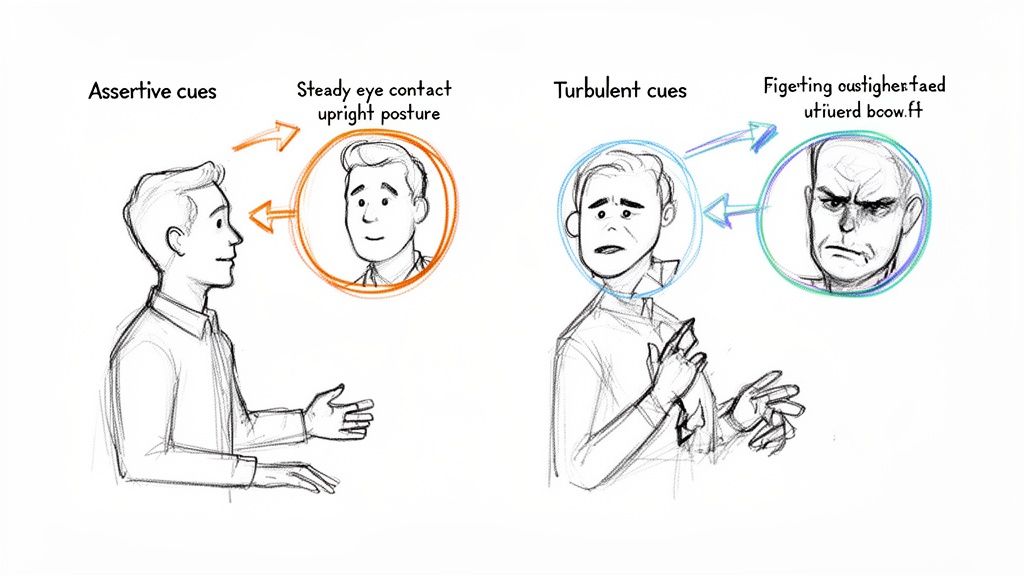
Think of these visual cues as a quick mental checklist for gauging a prospect's state of mind in the moment. When you combine these verbal and nonverbal insights, you’ve built a powerful framework for reading the room and making sure your response is perfectly tuned to who you're talking to.
Using Tech to Systematise Your Approach
Reading people is a powerful skill, but let's be honest—it’s tough to scale across an entire sales team. When you rely solely on intuition, you're bound to get inconsistent results and let good opportunities slip through the cracks. This is exactly where technology comes in, turning what feels like an art into a repeatable, data-driven process.
Modern platforms can analyse a prospect's digital footprint—everything from social media activity to the way they write their emails—to build a surprisingly accurate personality profile. It takes the guesswork out of the equation, giving you a solid strategic foundation before you even pick up the phone.
From Insight to Actionable Playbooks
The real magic isn't just knowing someone's personality type; it's what you do with that information. Instead of just telling you a prospect is Turbulent, the right tech generates a customised sales playbook.
What does that look like?
- Specific Talking Points: Language crafted to hit on their core motivators, whether that’s efficiency or security.
- Pacing Recommendations: Clear guidance on whether to keep the energy high and the pace brisk or to slow things down to build trust.
- Objection Handling Scripts: Ready-to-go responses that directly address the most common fears of an Assertive vs. a Turbulent buyer.
This kind of system gives you a serious strategic advantage. You can prepare smarter and walk into every conversation with confidence. To push this even further, many teams now integrate these insights directly into their existing workflows. For example, using an AI receptionist integration with CRM systems means every single lead gets enriched with personality data from the moment they first get in touch.
A Real-World Scenario
Picture a financial advisor prepping for a meeting with a high-net-worth prospect. A quick analysis flags the prospect as highly Turbulent.
The platform immediately creates a playbook, like the one in this UI sketch.
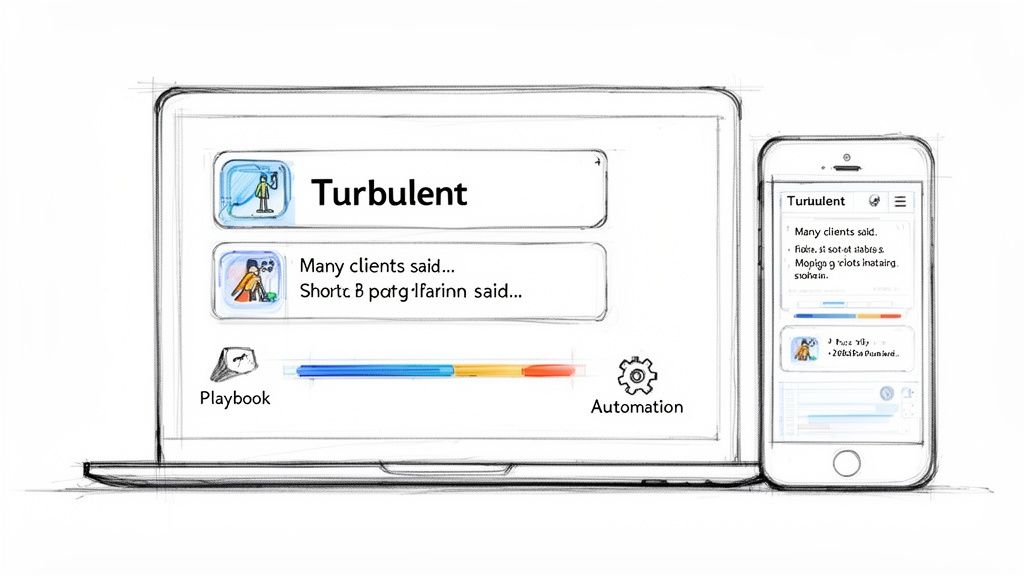
This simple interface gives the advisor clear directives: focus on building a sense of security, validate their concerns about market volatility, and use phrases that underscore long-term stability and support.
Instead of walking in with a generic pitch, the advisor is armed with a strategy tailored to the prospect’s deepest anxieties. This tech-driven approach transforms psychological insights into a repeatable process that cuts down on ghosting and helps close more deals. For anyone looking to put a system like this in place, exploring how an AI sales assistant can automate this prep work is a logical next step.
By systematising your approach, you move from hoping you connect with a prospect to knowing precisely how to build trust and demonstrate value based on their unique personality.
Let’s Address Some Common Questions
Even with the clearest frameworks, putting these ideas into practice in the real world naturally brings up a few questions. Let's tackle some of the most common ones that sales professionals have when they start tailoring their approach for Assertive versus Turbulent prospects. The goal here is to give you clear, practical answers so you can use these strategies both effectively and ethically.
Can a Prospect Be a Mix of Both Traits?
Yes, and this is a fantastic question because it gets right to the heart of the matter. The Assertive-Turbulent scale is a spectrum, not a rigid box you put someone in. Most people will lean one way, but you’ll absolutely see them show traits from the other side depending on the context. Your job is to spot their dominant tendency in the moment—during your sales conversation—and adjust your game plan from there.
Think about it this way: a manager who is usually cool-headed and Assertive might suddenly become much more Turbulent when they’re making a high-stakes decision that impacts their whole team. If you see that shift in their behaviour, it’s a massive clue. It tells you their needs have changed, maybe from wanting pure efficiency to needing some serious reassurance. Stay flexible.
Is This Approach Ethical to Use?
This is the most important question of all. Let me be clear: ethical application is about empathy and better communication, not manipulation. The entire point of understanding a client's personality is to adapt your own style to meet their needs more effectively and build a genuine connection.
It’s about presenting your solution in a way that truly resonates with them, reduces their stress, and helps them feel confident in the decision they're making. The goal is to create a better, more supportive buying experience for your client, not to exploit their personality for a quick win.
When you align your pitch with how they naturally prefer to communicate, you build trust. You show them you’ve actually listened to what they’ve said and, more importantly, what they haven't said. That's the foundation of modern, ethical selling.
How Accurate Is a Manual Assessment?
You can definitely develop a strong gut feeling for this just by paying attention to verbal and nonverbal cues. In fact, great salespeople have been doing this intuitively for years, sensing whether a prospect needs hard data or a bit of hand-holding. But let's be honest, this manual process can be hit-or-miss. It’s wide open to our own unconscious biases and simple misjudgements.
Things like stress, cultural norms, or even the fact that your prospect is just having a bad day can throw your read completely off. Human observation is a powerful tool, but it has its limits.
- Risk of Bias: Your own personality can easily colour how you see others.
- Inconsistency: Your accuracy can swing wildly from one day to the next, depending on how focused you are.
- Lack of Depth: What you see on the surface might be masking what’s really going on underneath.
This is where technology comes in. An objective analysis of communication patterns provides a much higher degree of accuracy and consistency. It’s like having a reliable co-pilot that confirms your intuition with data, giving you specific, actionable playbooks so you always start the conversation on the right foot.
Ready to stop guessing and start connecting with prospects on their terms? Mindreader analyses your prospect's communication style and gives you the exact playbook to build trust and close the deal. See how it works.