Advisor vs Vendor: Consultative Selling for B2B Buyers
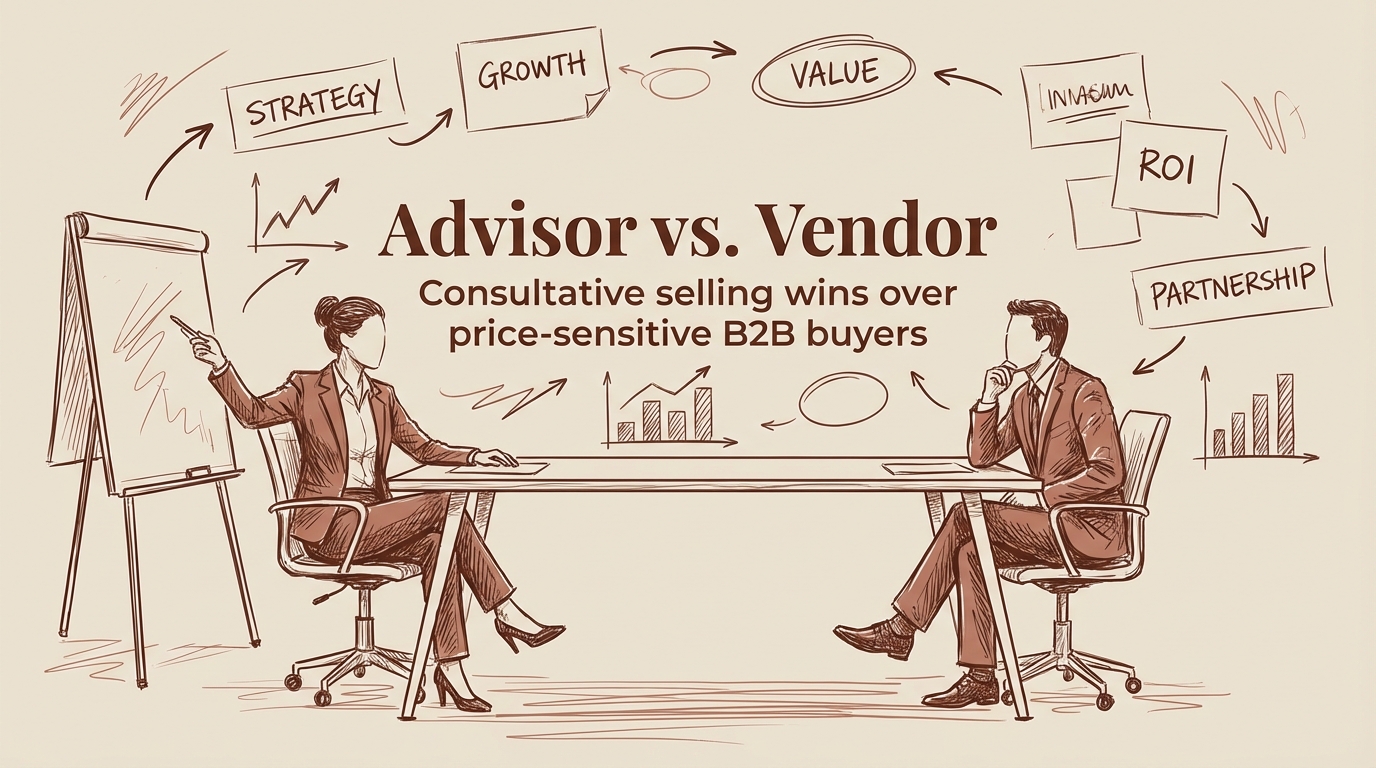
In today’s high-ticket B2B world, many deals seem to rise or fall on price. But beneath the surface, something more important is happening. Buyers want partners who can strategize with them, guide them through market changes, and ensure a solid return on every dollar. If you show up as a vendor who pushes features, you’ll likely face hard price objections. If you show up as an advisor who helps them plan for success, your proposals feel less like an expense and more like a growth plan. That’s the power of consultative selling.
The Rise of Price-Sensitive Buyers in High-Ticket B2B
In deals above $25K ACV, modern buyers arrive armed with research on your features, prices, and competitor options. Economic pressures also push them to scrutinize every line item. According to TheMindReader.ai, executives now demand outcome-focused messaging that proves real improvements in ROI. As a result, sellers who only lead with features or default pricing struggle to overcome cost concerns.
Consultative strategies shine here. They help you uncover real business problems and frame your solution around what the buyer needs to succeed. Instead of bombarding people with canned product pitches, advisors analyze each buyer’s pain points and risks, then address them with facts and examples. This approach doesn’t gloss over price. Rather, it proves to the buyer that every dollar has a purpose.

Vendor Selling: The Pitfalls in Price-Sensitive Markets
A vendor-centered approach often puts all the focus on product features. Statements like “We offer advanced segmentation” or “We have the most integrations” can backfire, because buyers already know these details from their research. And when budgets are tight, selling features alone leads to a familiar question: “Why should I pay that much for something I can get elsewhere?”
This mindset triggers the dreaded price objection. If you can’t clearly link your platform or service to a strategic outcome—such as time saved, risk reduced, or revenue gained—then price becomes the main battleground. Spraying prospects with generic emails or phone calls also does little to help. Experts at monday.com found that outcomes-based offers lead to far better response rates than one-size-fits-all messaging.
Naturally, focusing on features might still work for low-complexity deals. But in high-ticket B2B, where multiple stakeholders must agree on both price and long-term value, vendor selling often runs into a wall of questions about ROI, justification, and risk. Buyers see vendors as interchangeable, and that’s a tough place to be when budgets are on the line.
Advisor Mindset: Mastering Consultative Selling
The advisor approach flips the script. Instead of dwelling on product specs, you highlight the outcomes: “Here’s where you save operational costs,” or “Here’s how you scale faster.” Advisors ask deep, open-ended questions that get buyers talking about pain points. When you position yourself as a strategic ally rather than an order-taker, you help them see value beyond the price tag.
According to Sopro, consultative selling improves win rates because you’re no longer fending off cost objections with discounts. You’re guiding the buyer to see why your solution is safer, smarter, and more aligned with their bigger plans. Plus, you can address hidden concerns before price concerns even come up by linking each recommendation to what buyers need to feel safe committing. That’s the real difference an advisor brings.

Head-to-Head Comparison: Advisor vs. Vendor Tradeoffs
Let’s compare how vendors and advisors fare in today’s price-sensitive environment:
- Buyer Perception: Vendors are seen as salespeople chasing deals. Advisors are viewed as strategic consultants. When budgets are tight, trust and insight win over pitches.
- Objection Handling: Vendors often panic and lower price. Advisors use data or real-life proof to show how the investment pays for itself. For instance, referencing TheMindReader.ai stats about 3–5x pipeline conversions can calm cost worries.
- Deal Velocity: Vendors see slow progress if they can’t overcome budgeting hurdles. Advisors tend to close faster by helping the buyer weigh ROI and eliminate doubt without stalling.
- Long-Term Value: Vendors rely on pitching the next sale. Advisors build relationships that generate repeat business and referrals, a core element of relationship selling.
In short, vendor selling might work if you sell simple or low-priced products. But if you want to win big in high-ticket B2B, consultative selling stands head and shoulders above feature dumps.
3 Practical Tips to Shift from Vendor to Advisor
Transforming your mindset from vendor to advisor requires consistent practice. Here are three ways to start:
- Lead with Outcome-Focused Messaging: Talk about what your solution helps buyers achieve. For instance, mention cost savings, revenue boosts, or strategic gains. According to IDBS Global, deals can close 30% faster and win rates can double when teams personalize based on real intent data.
- Master Objection Handling with Risk Reversal: Price objections often mask fear that the solution won’t deliver. Combat this by proving you understand why buyers hesitate despite logical agreement. Then share case studies or ROI figures that show how potential losses are mitigated.
- Use AI for Deeper Buyer Insights: Harness advanced data to see how sales conversations stall even after positive meetings. Behavioral analytics can highlight moments when a buyer might pull back, letting you address concerns in real time.

Shifting your mindset takes intentional effort. You must learn to ask better questions, extract deeper business goals, and position your offering as the surest path to those goals. That’s when price becomes less of a sticking point.
Navigating Tradeoffs: When to Choose Each Approach
Not every deal demands a consultative approach. If you’re selling a straightforward, lower-cost product, being a vendor might get the job done quickly. But the game changes for complex, high-ticket prospects who have multiple decision-makers and strict budget guidelines. The consultative route is more work up front, yet it yields bigger returns in the form of long-term loyalty and stronger margins.
As CMSWire notes, authority now matters more than visibility in B2B. Buyers do much of their research without speaking to a rep, and only short-list based on perceived expertise. If all you have to offer is a standard features pitch, you’ll be the first to get cut. Let your data, insights, and genuine willingness to solve their problems be the reason they stick around to talk price.
Building the Advisor Edge in Your Team
To lock in these gains, you need a team trained to solve problems, not just push solutions. That means refining your questions, running role-plays, and constantly studying your market’s biggest concerns. Use CRM insights to capture buyer feedback, track each stage of the deal, and measure how effectively reps handle objections.
When sales leaders shift from counting dials or emails to rewarding deep discovery, everything changes. Advisors see themselves as an extension of the buyer’s organization—a key ally. That’s the ultimate form of relationship selling and explains why it’s so powerful in tough economic climates.
Reflective Close: Embrace Your Inner Advisor Today
Price sensitivity is real, but it’s not unbeatable. When you help your buyer navigate business challenges and connect investments to visible returns, you reshape the entire conversation. That’s the heart of consultative selling: trust, insight, and sincere collaboration.
As you prepare for your next high-ticket meeting, ask yourself: “Am I just pitching a product, or am I advising this buyer toward an outcome they truly want?” Make that shift, and you’ll see fewer stalls, stronger relationships, and more dependable revenue. If you want to remove the guesswork, consider using MindReader software, which helps you personalize conversations at scale and uncover underlying concerns before objections are voiced. That kind of real-time clarity can turn skeptical prospects into loyal partners.