10 Ways to Use Authority, Status & Ego in ABM Deals
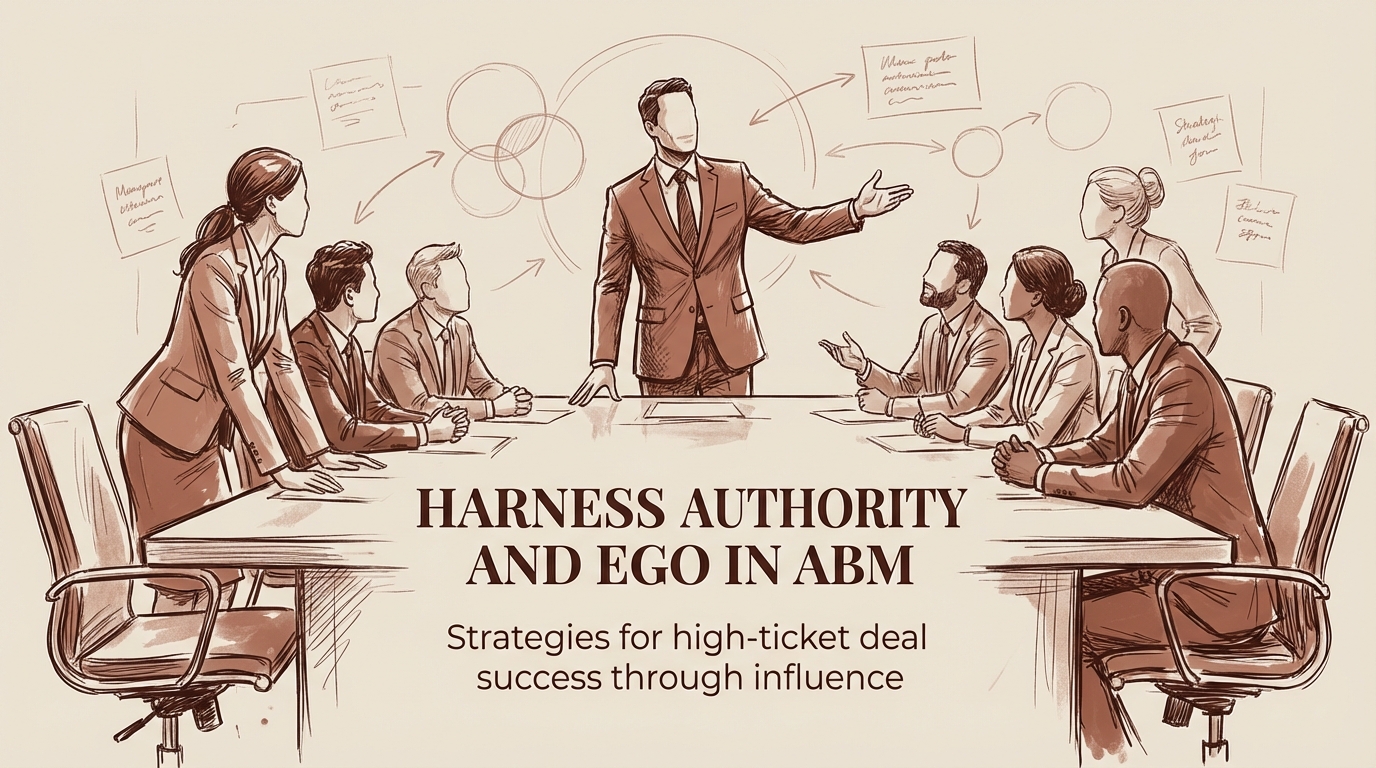
High-ticket deals often hinge on subtle cues far beyond simple ROI numbers. In account-based selling (ABM), you’re guiding multiple decision-makers who are each juggling authority, status, and ego needs, whether they admit it or not. When you understand those hidden drivers, you can speak to people’s aspirations, handle objections with empathy, and become the go-to advisor who makes each stakeholder feel seen. Below, we’ll explore why these psychological factors matter and how to leverage them in your favor.
Why Authority, Status, and Ego Dominate ABM Buying Decisions
ABM is all about focusing your energy on high-value accounts, often involving dozens of stakeholders. Many sales pros assume logic and cost savings are enough to close. But according to Insights for Professionals, ego expression and status signals can carry more weight than most of us realize. A decision-maker might champion a software solution because it boosts their professional image. Another might want to protect their sense of authority by choosing an industry leader they feel won’t let them down.

These status-focused needs become especially clear in large buying groups. As INZYNK points out, more than 30 people might shape a B2B deal, yet they spend only 5% of their time speaking with vendors. The rest is internal discussion, often guided by unspoken influences like peer pressure and desire for recognition. If you don’t engage these deeper motivations, deals can stall under “no decision” inertia. In the end, decisions are rarely about the best features; they’re about who the buyer becomes by choosing you.
Top 10 Ways to Harness Authority, Status, and Ego in Your ABM Strategy

Here are 10 practical ways to align your ABM approach with these core psychological drivers. By weaving authority, status, and ego into your sales process, you’ll connect more deeply with every influencer in the buying journey.
1. Position Yourself as the Industry Authority
Show buyers you’re not just another vendor by offering customized insights that relate directly to their biggest challenges. Cite case studies from recognized market leaders to reinforce your credibility. When you reference exclusive data or proven success, you create a sense of stability and expertise that fulfills a decision-maker’s need for authority. Highlighting what you’ve already achieved can lead them to think, “If it worked for that industry giant, it’ll work for us too.”
2. Mirror the Buyer’s Status Markers
Take time to research your target company’s public image and tone. Then, reflect that same vibe in your sales communication. If they pride themselves on innovation, show how you’ve fueled similar breakthroughs for a prominent client. If they focus on prestige, craft a message that positions your solution as the next step in elevating their brand. This “status mirroring” nurtures fast alignment and makes them feel understood at a deeper level.
3. Paint Ego-Boosting Success Journeys
People often buy solutions that help them see themselves in a better light. Share stories of how similar leaders transformed their organizations by championing a new approach. Let them envision becoming the hero who ushers in cutting-edge change. This approach connects to the concept of Mindreader buyer intelligence, which reveals that when buyers see themselves as visionaries, they’re more eager to act. Show them the spotlight they could step into.
4. Align with Psychographic Profiles
In ABM, you’re selling to many roles at once: finance, IT, operations, the C-suite, and more. Each group has its own ego triggers. According to Think ABM, psychographics go beyond demographics to capture motivations, fears, and desires. Address risk concerns for finance, highlight stability for IT, and promise status elevation for executives. You won’t always speak to each stakeholder directly, but tailored content can reach them through internal channels.
5. Offer Exclusive Access for Elite Buyers
Invite top-tier accounts to beta experiences, limited releases, or closed-door summits. These perks generate a “velvet rope” effect that appeals to ego and fosters a sense of belonging. Once key stakeholders feel included in an exclusive circle, they’re more likely to drive internal conversations that favor your solution. When paired with consultative selling, as Mindreader notes, exclusivity can speed up decision-making because it makes buyers feel valued and in-the-know.
6. Counter Objections with Authority
When handling objections in meetings, neutralize doubt by quoting notable industry experts, third-party data, or credible peer references. If someone says, “I’m not certain this works at scale,” respond with, “In a study by our leading data partner, organizations of your size reduced costs by 20%.” This approach aligns with the principle of Mindreader psychometric profiling, which suggests matching objections with the right reassurance can affirm the buyer’s sense of being a savvy decision-maker.
7. Elevate Influencers to Spark Consensus
In large buying committees, there are always informal leaders who influence group decisions behind the scenes. Arm these influencers with high-quality reports, case studies, or success stories so they can champion your solution internally. Insights from Hey Sid reveal that 86% of B2B marketers grapple with hidden influencers. By giving those influencers materials that raise their internal authority, you effectively position yourself as the safe, rewarding choice.
8. Use Language That Conveys Aspiration
Your phrasing sets the tone. Words like “excellence,” “pioneer,” and “industry leader” encourage the buyer to associate your offering with upward mobility. Instead of “save money,” talk about “unlocking new growth potential.” Instead of “better than the competition,” describe “joining the top tier of innovators.” This subtle shift speaks to emotional triggers tied to status and ambition, helping you stand out in the clutter of standard pitches.
9. Mitigate Loss Aversion by Preserving Status
No one wants to sign off on a project that ends up failing, especially in front of a large buying group. Show how your rollout plan safeguards them from public missteps. Offer a pilot phase where they can experience quick wins without risking the bigger picture. This tactic soothes risk-averse stakeholders and helps them feel secure, preserving the authority they have within their organization.
10. Time Your Ego Appeal for Maximum Impact
In ABM, timing is everything. Monitor how close the buyer is to making a decision—through email engagement or repeated visits to your pricing page. Then, release compelling materials that emphasize leadership and differentiation. As Kadence discusses, segmenting accounts by both fit and urgency can help you deliver the right ego-boosting content when it matters most. By the time the entire committee gathers for a final vote, you’ll already have built the emotional momentum to secure the win.
Practical Tips for Implementation in Your ABM Playbook
- Focus on Decision Timing: Not all great-fit accounts have the same urgency. Use every signal you can (like internal chat hints or direct feedback) to gauge readiness. This frees you to invest your energy where your message will land best.
- Surround the Buying Group with Consistent Messaging: Since major decisions often happen offline, support each influencer with targeted emails, remarketing ads, or social proof. They’ll repeat your message within their internal circles, influencing everyone else.
- Train on Emotional Cues: Teach your sales team how to read subtle signals of excitement or hesitation. This kind of sales conversation intelligence reveals when a stakeholder feels undervalued or when they’re brimming with ambition. Act on those cues by reaffirming their authority or spotlighting the unique status they gain by championing your solution.

Real-World Impact: Stats That Prove the Power
Teams that deploy these tactics often see more efficient pipelines and fewer stalled deals. According to Mindreader and other sales intelligence leaders, focusing on ego-driven motivations can slash “no decision” outcomes by addressing hidden fears. Additionally, Kadence notes that accounts scored by decision readiness close faster because you’re funneling resources into opportunities at the perfect time. It’s not just about who can pay; it’s about who’s hungry to win.
Elevating Your Relationship Selling Game
In the modern sales landscape, relationship selling stands out because it acknowledges the humanity behind every buyer. By weaving authority, ego, and status into your ABM strategy, you become more than a vendor—you become a trusted ally who sees each stakeholder’s hidden motivators. Instead of pushing a sale, you’re showing people how they can elevate their standing, protect their reputation, and gain prestige among peers. That’s a winning approach in high-ticket deals.
Check your current pipeline. Which stalled prospects secretly crave recognition or exclusivity? By applying these 10 methods—covering everything from thoughtful status cues to consultative feedback loops—you can transform a lukewarm lead into an enthusiastic champion. And when you’re ready to dig even deeper into buyer psychology in sales, Mindreader can reveal the hidden signals that boost your odds of closing. With the right strategy, you won’t just win the deal—you’ll elevate your relationships and brand reputation for the long run.