SMB Discovery Questions That Lead to Bigger Deals
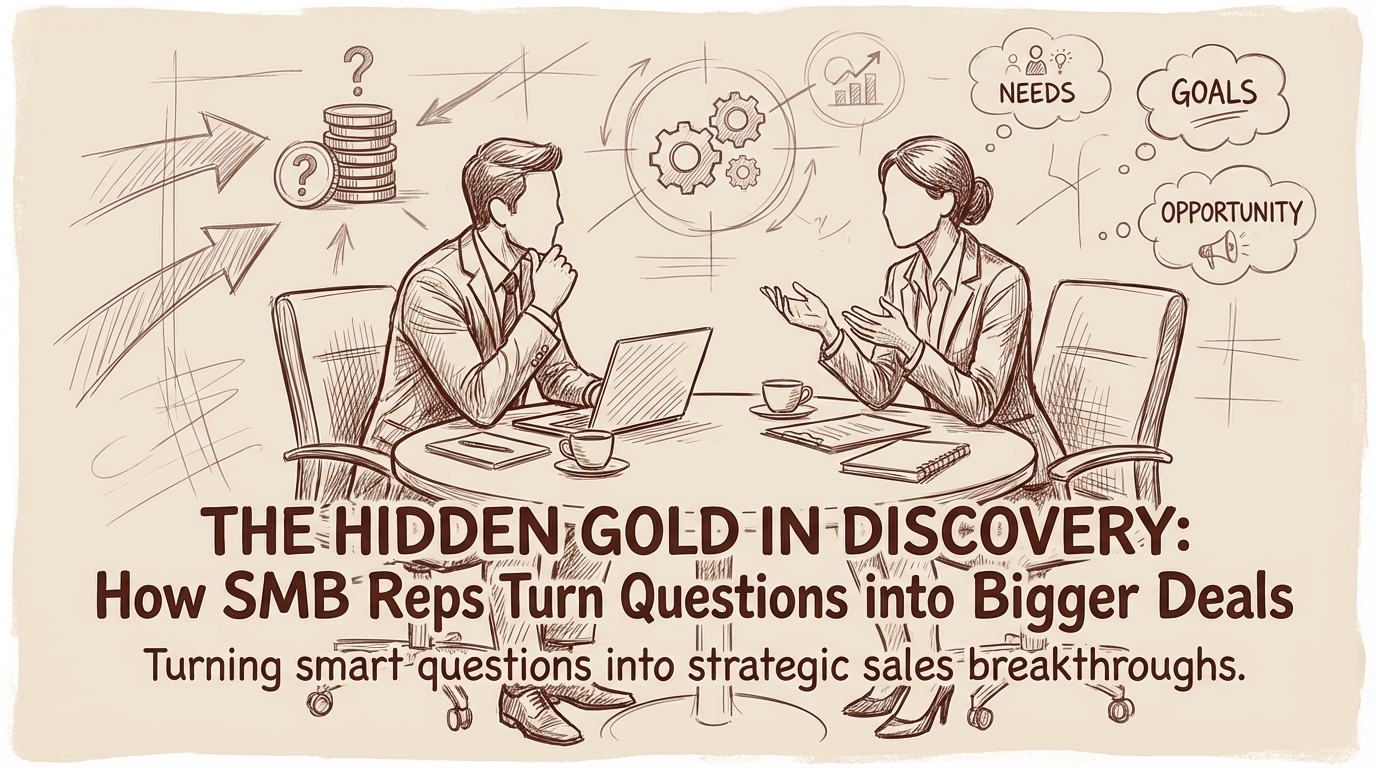
Most sales conversations follow a predictable script. You ask a few surface-level questions, listen politely, then rush into your pitch. But the real breakthrough often lives in the questions you never ask—the ones that reveal what your prospect hasn’t fully articulated yet. In 2026, the most successful SMB and mid-market reps are ditching checkbox discovery and mastering the art of uncovering hidden pain and buying triggers that actually move deals forward.

The Discovery Revolution: Why Questions Matter More Than Ever
In the modern sales ecosystem, buyers control the conversation. Research highlighted by GoConsensus shows B2B buyers spend only about 17 percent of their buying journey interacting with sales reps—which means every touchpoint has to count. The discovery call has become the single most important moment to capture attention, build trust, and establish relevance. Yet many reps still approach it like a rigid interview instead of a collaborative exploration.
That same research shows top-performing reps ask 39–40 percent more questions during discovery than average performers, and those questions focus on business impact, not features. For SMB and mid-market sales professionals, this shift in questioning can be the difference between a polite “Let me think about it” and a clear, confident step toward a deal.
Better questions generate momentum by forcing buyers to describe their real situation. When you ask what they’re doing today, where the process breaks down, and what they’ve already tried that failed, you surface urgency, constraints, and decision criteria that generic confirmation questions will never uncover.
Moving Beyond the Script: Consultative Selling Starts with Curiosity
Consultative selling has become a buzzword, but many reps still misunderstand it in practice. It’s not about being charming or over-indexing on rapport—though both help. It’s about asking questions that expand the prospect’s awareness of their own problem and potential solutions.
The best discovery calls don’t feel like interrogations. They feel like candid conversations between two professionals trying to solve a problem together. That shift happens when you move from confirmation questions (“Do you struggle with X?”) to exploration questions (“What’s stopping you from hitting your targets right now?”). The first invites a yes or no. The second demands reflection and invites a story.
For SMB and mid-market reps, this is especially powerful because decision-makers often wear multiple hats. They may not have clearly articulated their pain to themselves, let alone to a vendor. Your questions actually help them crystallize the problem. That’s the foundation of true consultative selling—you become a thinking partner, not just a product vendor.

The Three Layers of Effective Discovery: Current State, Impact, and Future State
Modern discovery has evolved from random questioning into structured exploration. A proven three-phase approach used by top reps focuses on building credibility early, anchoring the call around one or two real priorities, and going deeper without turning the call into an interrogation. A popular framework—Orientation, Exploration, and Advancement—works especially well in SMB and mid-market environments where buying committees are smaller but decisions are still complex, as broken down in The Ultimate Discovery Call Guide for B2B Sales in 2026.
1. Orientation: Understanding the Current State
Start by grounding the conversation in how things work today:
- “What does your process look like right now?”
- “What’s working well?”
- “Where are you seeing bottlenecks or breakdowns?”
These questions establish context and signal that you’re interested in their reality, not just your pitch. You’ll uncover existing tools, workflows, and the mindset they bring to the problem.
2. Exploration: Quantifying Impact and Surfacing Hidden Pain
Next, dig into the impact of the status quo:
- “What’s the cost of the current situation?”
- “How is this affecting your team’s productivity or morale?”
- “What’s at risk if nothing changes over the next 6–12 months?”
This is where hidden pain emerges. Many SMB leaders accept inefficiencies as just “the way things are done.” Your job is to help them see that what feels normal may be costing them thousands in lost time, revenue leakage, or employee frustration. Guides like Salesmate’s discovery question frameworks emphasize using this phase to identify pain, understand the buying process, and evaluate fit.
3. Advancement: Defining the Future State
Finally, help them envision a better future:
- “If you could wave a magic wand, what would change first?”
- “What would success look like 6–12 months after solving this?”
- “How would your team’s day-to-day be different?”
These questions move the buyer from problem-focused to possibility-focused thinking. It’s a subtle but powerful shift that primes them to evaluate solutions instead of staying stuck in frustration. Frameworks like those in Higher Levels’ step-by-step discovery guide recommend spending the majority of the call clarifying current state and pain, then confirming urgency and budget as you define the future state.
Uncovering the Hidden Buying Committee
One of the biggest reasons otherwise promising SMB and mid-market deals stall is failing to identify who else cares about solving the problem. A deal that looks straightforward on paper can grind to a halt when you realize your main contact doesn’t have full authority—or that a key stakeholder has been quietly blocking progress.
Instead of bluntly asking, “Who else is involved in this decision?”, experienced reps use questions that naturally surface the buying group:
- “Who else internally feels this pain day-to-day?”
- “Which teams are most affected when this doesn’t work well?”
- “Who would need to sign off on or champion a change like this?”
These questions acknowledge that real organizational change involves multiple voices. They help you map the political landscape without making your buyer defensive. In mid-market deals, this is non-negotiable. Finance may own the budget, operations may own the workflow, and an executive sponsor may own strategic alignment. Each has different concerns and evaluation criteria. Revealing those dynamics early gives you a roadmap for orchestrating follow-up conversations.

Three Essential Practices for SMB Discovery Success
- Ask fewer questions, go deeper: Top performers typically ask 11–14 questions in a 30-minute discovery call, focusing on depth over volume. When a buyer mentions a challenge, stay with it. Follow up with, “Tell me more about that” or “How is that impacting your team specifically?” This turns a checklist into a meaningful, two-way conversation.
- Use open-ended questions to avoid dead air: Yes-or-no questions shut down insight. Instead of asking, “Do you have budget for this?”, try, “What does the budget process look like for this type of initiative?” As outlined in Highspot’s guide to discovery calls, open-ended questions—like those in SPIN (Situation, Problem, Implication, Need-payoff)—encourage buyers to share context, constraints, and priorities in their own words.
- Listen for hesitation, not just clarity: A strong discovery call is one where the buyer does most of the talking, offers detailed context without being pushed, and clearly articulates pain and priorities. But pay close attention to moments of vagueness or hesitation. When they struggle to answer, that often signals that the real issue hasn’t surfaced yet. Respond with curiosity—“That sounds tricky; what makes it hard to get your arms around?”—and you’ll uncover deeper, often unspoken concerns.
Handling Objections with a Discovery Mindset
Most objections don’t appear out of nowhere at the end of the sales cycle—they’re planted during discovery. When you skip real digging and pivot to your pitch too quickly, objections surface later because you never addressed the concerns that truly matter.
For SMB and mid-market reps, this makes discovery a preventive tool. If you uncover early that a prospect worries about implementation complexity, you’ve already solved half the objection—you know the real fear. If they’re hesitant about ROI, you can steer your questions toward quantifying the cost of their current situation so ROI becomes clear and concrete, not theoretical.
Simple, repeatable frameworks help here. Anchor questions in what you’ve learned about their role, their metrics, and their business. Phrase questions so buyers must explain, not just agree. This combination of structure and authenticity transforms discovery from data collection into genuine problem-solving—and dramatically reduces surprise objections later.
The Momentum That Actually Closes Deals
The true measure of a great discovery call isn’t how many questions you asked or how many fields you filled out in your CRM. It’s whether the buyer starts asking you strategic questions—about impact, fit, timing, or next steps. That’s the moment you shift from vendor to trusted advisor. That’s when momentum builds toward a signed deal.
For SMB and mid-market sales reps, mastering discovery is the highest-ROI skill you can build. It costs nothing. It doesn’t require new technology, fancy tools, or complex processes. It’s a mindset shift—approaching every conversation with genuine curiosity about how your prospect works, what’s blocking their goals, and what would meaningfully change their business.
The sales landscape will keep evolving, but one truth remains constant: buyers reward reps who truly understand their world. Discovery questioning that uncovers hidden pain and real buying triggers isn’t just another tactic. It’s the foundation of relationship-driven selling that creates trust, accelerates deals, and unlocks partnerships that generate referrals and long-term value.
On your next discovery call, resist the urge to race through a script. Ask fewer, better questions. Go deeper. Listen for the stories behind your prospect’s answers. That’s where the hidden gold really is—and where bigger, better deals begin.