Role-Tailored Outreach for High-Ticket ABM Sales
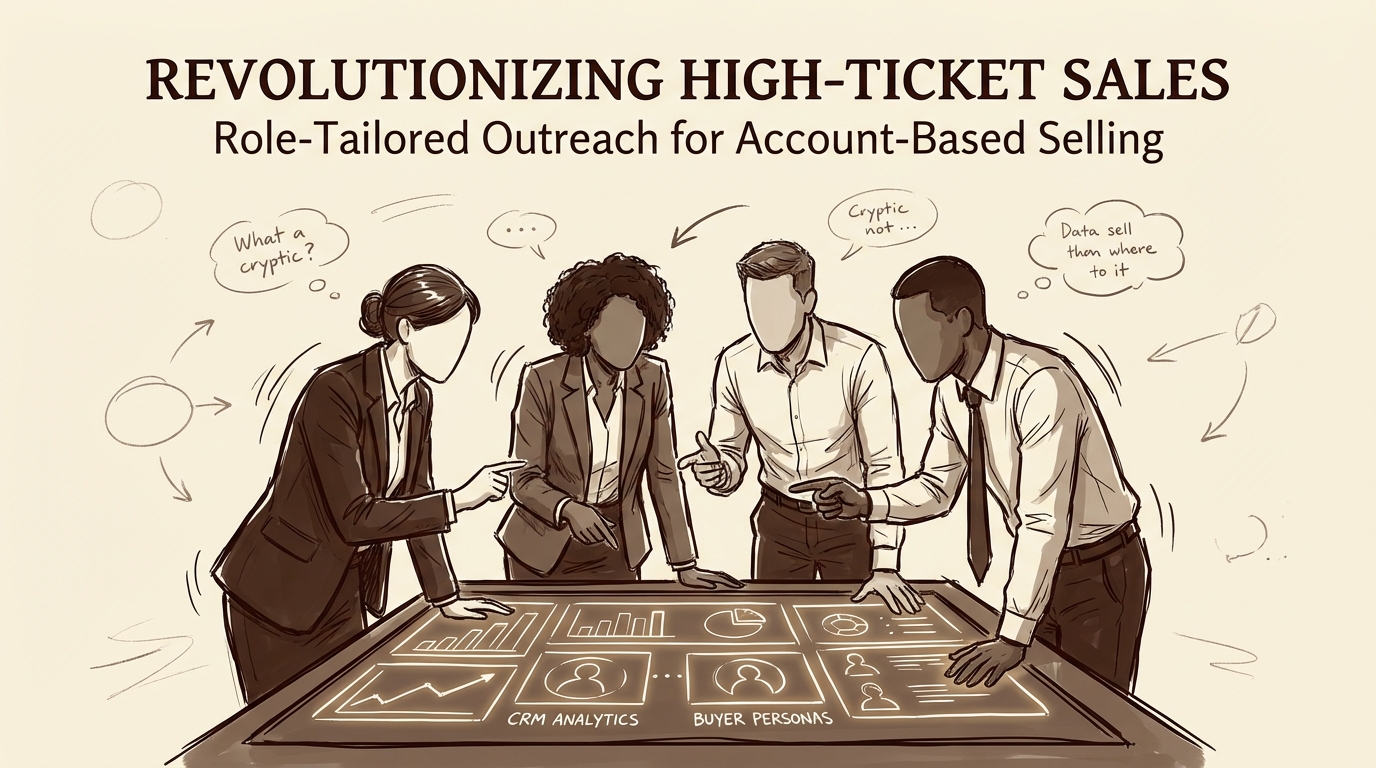
In the high-stakes realm of high-ticket sales, where each deal can shape a quarter’s success, account-based selling (ABS) has emerged as a definitive force shaping relationship-driven strategies. Enabled by advanced sales tools, teams now orchestrate hyper-personalized outreach sequences tailored to buyer roles and triggered by real-time account signals. Picture transforming cold prospects into loyal advocates through carefully crafted sales communication that anticipates objections and dissolves them before they even surface.
The Rise of Account-Based Selling Plays in 2026
Account-based selling plays, as noted by Highspot, represent the modern apex of sales enablement, focusing efforts on high-value target accounts instead of a broad spray-and-pray approach. These orchestrated outreach sequences integrate triggers—like renewals, usage changes, or intent surges—while mapping to the unique priorities of economic buyers, technical influencers, champions, and end-users. Teams leveraging AI-powered ABS strategies often report shorter sales cycles and higher win rates, a direct result of real-time intelligence and flawless execution.
This approach seamlessly aligns with consultative selling principles, positioning sales representatives as trusted guides through nuanced account research. By leveraging robust CRM insights and external data sources, every communication lands with pinpoint relevance. Objection handling shifts from reactive to proactive as sequences anticipate role-specific pain points, an effective strategy for building enduring relationships.
Why Role-Tailored Outreach Sequences Are the Game-Changer
Traditional funnels often treat contacts uniformly, but high-ticket deals demand a more measured approach. According to Cognism, role-tailored sequences recognize that a CFO fixates on ROI, while a VP of IT emphasizes security. Automated triggers—such as a pricing-page visit—activate these sequences promptly, keeping outreach timely.

As AdRoll explains, companies uniting ABM with account-based advertising see a remarkable 60% improvement in win rates. Moreover, responding to intent signals within 24 hours, as highlighted by Directive Consulting, can yield a 29% lift in opportunity creation. It's clear that data-fueled personalization fosters stronger bonds and higher lifetime value.
Building Effective Account-Based Selling Plays
Crafting profitable ABS plays begins with identifying prime accounts via firmographics and predictive scoring. After defining roles, pain points, and triggers within the buying committee, reps can personalize outreach sequences. According to Only B2B, layering in case studies for economic buyers or technical demos for influencers boosts conversion rates significantly.

Each interaction is an opportunity to bolster trust through consultative selling. Seamlessly pulling from CRM data and external intent tools, reps deliver relevant messaging at precisely the right moment. For additional ways to refine your objection-handling strategies, explore Mindreader’s Objection Handling.
Leveraging Triggers for Precision Timing
Triggers are the linchpin of modern ABS practices. Renewals, feature launches, and usage declines can all spark specific outreach. When usage dips, reps might share adoption resources with champions, whereas new competitive keyword activity prompts immediate economic buyer engagement. The swift response and timely engagement transform relationships, letting reps solve issues before they become objections—crucial for sustaining momentum in high-ticket deals.

3 Practical Tips for Implementing Role-Tailored Sequences
Here are some actionable strategies to prime your ABS approach:
- Standardize Account IDs and Data Sync: Keep CRM, marketing, and sales data aligned for real-time activation within 24 hours.
- Personalize by Role and Stage: Develop messaging frameworks unique to each stakeholder’s concerns to deliver truly consultative engagement.
- Measure and Iterate Weekly: Track KPIs like pipeline influence and ACV in your pipeline reviews to continuously enhance performance.
Overcoming Challenges with Sales Enablement Tooling
Data silos, content gaps, and low rep adoption often hinder ABS success. Fortunately, modern platforms provide AI-driven insights, recommended playbooks, and robust stakeholder maps. This unifies selling efforts and shapes informed strategies at every turn. For more about consultative engagement tips, see Mindreader’s Linkleads resource.
Real-World Impact on High-Ticket Revenue
When teams master ABS, they commonly witness bigger deal sizes, better personalization, and stronger retention. Multi-threaded outreach ensures each stakeholder feels heard. This synergy accelerates final decisions and unlocks new upsell opportunities. Post-sale, handoffs to customer success keep the momentum alive, culminating in a maximized CLV.
Embracing the Future of Relationship Selling
As 2026 unfolds, role-tailored outreach sequences within ABS stand as a critical trend for navigating complex, high-value deals. They empower reps with data-driven sales communication, making objection handling more effective and demonstrating consultative selling mastery at scale.
Ultimately, every major account is a constellation of unique perspectives in need of precise engagement. For an extra edge, consider integrating Mindreader software to elevate your sales plays through automated insights. Your next groundbreaking win awaits.
The 4-Point Role-Tailored Email Template That Gets 47% Open Rates
The most effective role-tailored emails follow a simple but powerful structure. First, the subject line references a specific trigger: "Your Q4 expansion plans" for CFOs or "Your team's workflow bottlenecks" for VPs of Operations. Second, the opening sentence acknowledges their role explicitly: "As someone overseeing [their priority]..." This immediately signals relevance. Third, include one data point or insight specific to their industry—your AI tools should surface this automatically. Finally, end with a single, low-friction question: "Would a 10-minute conversation about [specific outcome] be worth exploring?"
According to recent benchmarking data from account-based selling platforms, this four-point structure consistently outperforms generic outreach by 2-3x on open rates and response rates. The key is specificity—each element must demonstrate that you've done your homework and understand their world.