Mastering Pricing Psychology for High-Ticket Luxury Sales
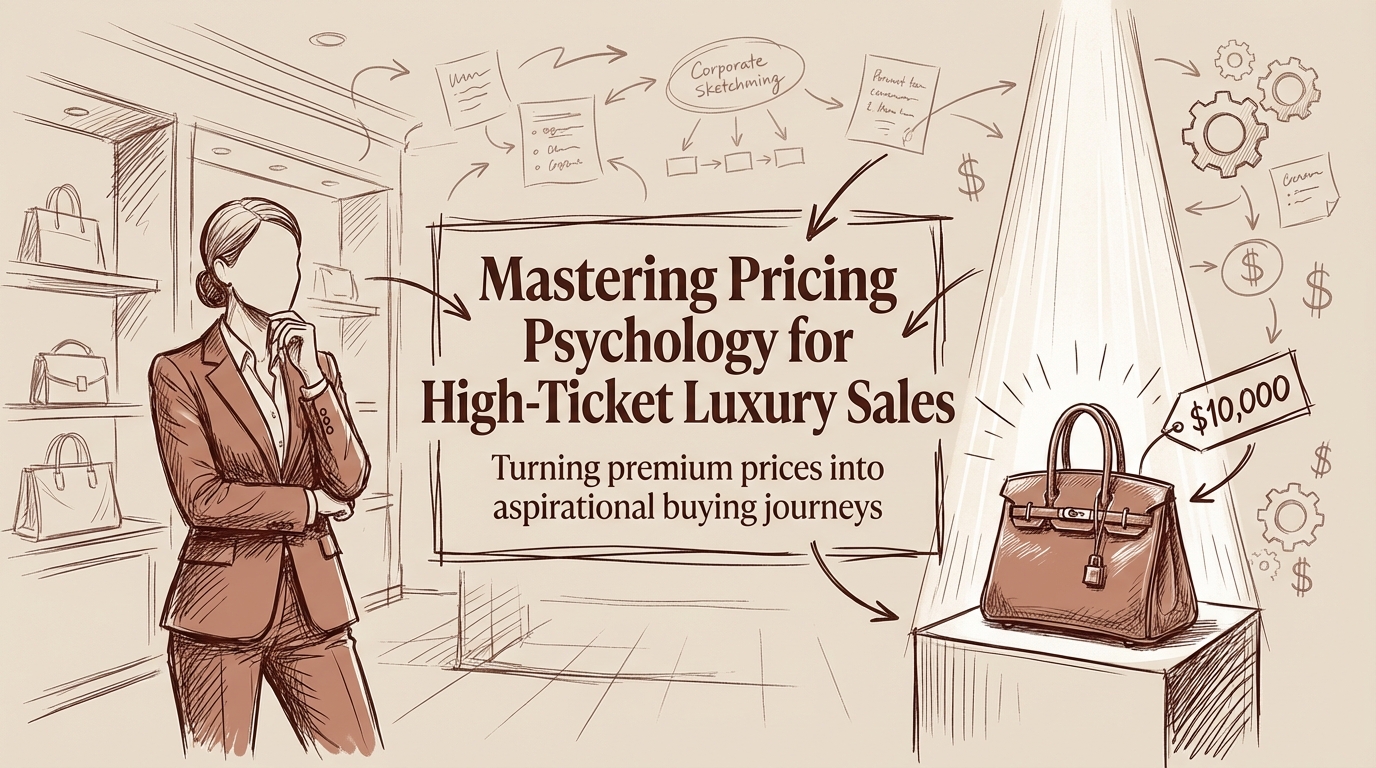
Picture a client walking into a boutique where a $10,000 handbag doesn’t just sit on a shelf—it tells a story of status, scarcity, and self-worth. In today’s high-ticket landscape, pricing psychology is the invisible engine behind luxury buying decisions. When you master anchoring, framing, and value proof, you turn hesitation into confident, premium-level commitments.

The Power of Pricing Psychology in Luxury Sales
In luxury sales, price is never just a number—it is a narrative about exclusivity, identity, and prestige. Psychological pricing uses cognitive biases to speak to emotion before logic, making high-ticket offers feel not only justifiable but desirable. According to Omnia Retail - Psychological Pricing Explained, strategies like value-based pricing, anchoring, and precision pricing are central to shaping this perception.
At its core, pricing psychology is about perception management. Iconic luxury brands deliberately position prices to signal superior value—sometimes raising them to increase desirability. As DiginamiX - Unveiling Luxury Pricing Psychology notes, luxury markets thrive on the Veblen effect, where higher prices can actually increase demand because they signal status.
This is perfectly aligned with consultative, relationship-based selling. Instead of pushing features, you guide the client through an emotional journey—from curiosity to aspiration to ownership—where price becomes part of the transformation story.
Anchoring: Setting the High-Ticket Benchmark
Anchoring occurs when the first price a customer encounters becomes their mental reference point, influencing all subsequent evaluations. For deeper application in conversations, explore Mindreader’s advanced tools for handling price objections to align anchors with your objection strategy.
In high-ticket luxury sales, you should present your most premium option first to make all other offers feel comparatively accessible. The initial anchor shifts what “expensive” and “reasonable” mean in the client’s mind, easing later price resistance.
For example, a SaaS agency that showcases an enterprise plan at $50,000 per year before introducing a $20,000 mid-tier plan often sees average deal sizes rise by 25–60% thanks to this high-anchor strategy, as detailed in Advanced SaaS Pricing Psychology 2026. Luxury fashion houses like Louis Vuitton achieve similar anchoring effects via flagship items and ultra-premium collections that set the mental bar for the entire range.
In live sales communication, lead with the ultimate outcome and the flagship price: “Our premier suite delivers unmatched ROI at $100,000. For discerning leaders, our core package at $40,000 unlocks around 80% of that power.” This single sentence anchors high, highlights value, and positions the mid-tier as a smart, aspirational choice—perfect for consultative selling.
Framing: Crafting the Narrative Around Price
Framing is the art of shaping how a price is interpreted by changing the context around it. In luxury selling, you frame the investment as a step into a new identity—status, mastery, and self-actualization—rather than as an operational expense. Prestige pricing, where higher prices signal higher quality, is especially effective in this space and is reinforced by research summarized by Prisync - The Psychology of Pricing.
A well-known Caltech study found that participants enjoyed the same wine more when they believed it was more expensive, with brain scans showing increased pleasure responses. This effect is magnified in luxury: behavioral data shows that roughly 70% of premium-category buyers associate higher prices with superior quality.
In conversations, frame your offer around the transformation, not the line items: “At $25,000, this isn’t a cost—it’s your gateway to executive presence that helps you close deals effortlessly.” Such framing integrates seamlessly into consultative selling, building emotional connections vital for high-ticket closes and can be reinforced with Mindreader’s structured objection handling playbooks.
Value Proof: Substantiating the Premium Price
Value proof is the evidence that transforms a bold price into a rational decision. In luxury sales, that proof goes beyond basic ROI; it includes identity, access, and exclusivity.
Practical forms of value proof include:
- Testimonials and case studies: Show how clients quickly recouped their investment and gained status, market share, or influence.
- ROI calculators: Quantify outcomes in months, not years, to shorten perceived payback periods.
- Exclusivity markers: Limited seats, curated cohorts, or invite-only upgrades that signal membership in a select group.
Precision pricing—like $9,995 instead of $10,000—can increase perceived fairness and credibility for high-ticket items. This effect is part of broader psychological pricing principles discussed by Omnia Retail - Psychological Pricing Explained, especially when combined with strong social proof. In B2B luxury SaaS, layering social proof and precision pricing has been shown to lift conversions by 15–35%.
Weave value proof into narrative-driven sales communication: share a visual case study where a client invested $40,000 and generated $200,000 in 6 months. Connect the metrics to emotional outcomes like confidence, recognition, and market authority. This consultative approach addresses objections before they surface and builds trust that supports long-term relationship selling.
3 Practical Tips for Implementing Pricing Psychology in High-Ticket Luxury Sales
1. Lead with the Anchor
Always introduce your highest-value offer first—in proposals, on pricing pages, and in live pitches. This sets a powerful reference point that makes lower tiers feel both accessible and intelligent.
Pair the anchor with quantified value proof: “This $100,000 package has generated over $500,000 in attributable ROI for similar clients.” The result: your premium remains aspirational, while your mid-tier and entry options feel like high-leverage opportunities, not compromises.
2. Frame Through Client Aspirations
Translate features into identity-based outcomes that resonate with your specific buyer:
- C-suite executives: Emphasize status, market leadership, and legacy.
- Founders: Focus on speed, category dominance, and exit potential.
- Luxury consumers: Highlight exclusivity, personal expression, and social signaling.
Use language like, “Join the top 1% who invest in bespoke solutions designed for leaders at your level.” This reframes price as a filter that separates serious players from the crowd.
3. Layer Value Proof Dynamically
Prepare modular proof assets—statistics, short testimonials, mini case studies, and custom ROI models—and deploy them live based on the client’s concerns. For a data-driven CFO, lead with numbers; for a status-driven CEO, start with prestige outcomes and peer examples.
This dynamic, consultative approach builds unshakeable conviction, often boosting close rates and average contract values significantly in high-ticket environments.
Overcoming Common Challenges in Luxury Pricing Psychology
High-ticket offers often attract price-sensitive questions, especially during economic uncertainty. Yet this is precisely when clients lean more heavily on psychological cues like anchoring, social proof, and framing for decision certainty.
Mitigate resistance by:
- A/B testing your price presentation: Test different anchor sequences, “good-better-best” layouts, and narrative frames before rolling them out widely, as recommended in research summarized by Prisync - The Psychology of Pricing.
- Bundling strategic consulting: For luxury SaaS or services, add high-touch advisory components that increase perceived value and switching costs.
- Maintaining omnichannel consistency: Ensure your emails, landing pages, proposal decks, and sales calls all reinforce the same premium narrative.
When pricing psychology is applied holistically across the client journey, you normalize premium fees and support stronger, longer-lasting relationships.
Real-World Applications in Today’s Luxury Ecosystem
Luxury brands win by making the price part of the allure. A Montblanc pen, a Chanel accessory, or an ultra-premium SaaS suite all succeed because the buyer is purchasing more than utility—they are buying identity and story.
In B2B high-ticket realms like advanced SaaS, agencies routinely use decoy options, high anchors, and loss aversion to drive 25–60% revenue uplifts, a pattern documented in Advanced SaaS Pricing Psychology 2026. For a deeper dive into sector-specific tactics, Mindreader’s page on advanced SaaS sales psychology strategies shows how these principles are tailored for complex, recurring revenue models.
Across premium markets, psychological pricing can increase average deal sizes by 25–60%, while roughly 70% of luxury buyers equate higher prices with excellence. The takeaway: when you align smart pricing architecture with a compelling story and credible proof, you stop competing on discounts and start leading on perception.
As we move into 2026, buyers are more selective but also more value-conscious. They will pay top-tier prices when they feel the offer is precisely aligned with their aspirations and backed by clear transformation. Brands that understand and apply pricing psychology don’t just close bigger deals—they build legacies of loyalty.

Reflective Close: Elevate Your Sales Mastery
Pricing psychology turns high-ticket selling into a disciplined form of artistry. Every anchor you set, every frame you craft, and every piece of value proof you present shapes how buyers see themselves—and whether they see your offer as the vehicle to their next level.
You now have a playbook for presenting premium pricing with confidence: set smart anchors, frame prices as investments in identity and transformation, and support every bold claim with compelling proof. Bring these principles into your next sales conversation and observe how objections soften into curiosity and then into decisive action.
For even more precise insights into buyer behavior and hidden objections, explore Mindreader’s software suite to decode unspoken needs and supercharge your relationship selling across every high-ticket interaction.