Mastering Multi-Stakeholder Enterprise SaaS Deals
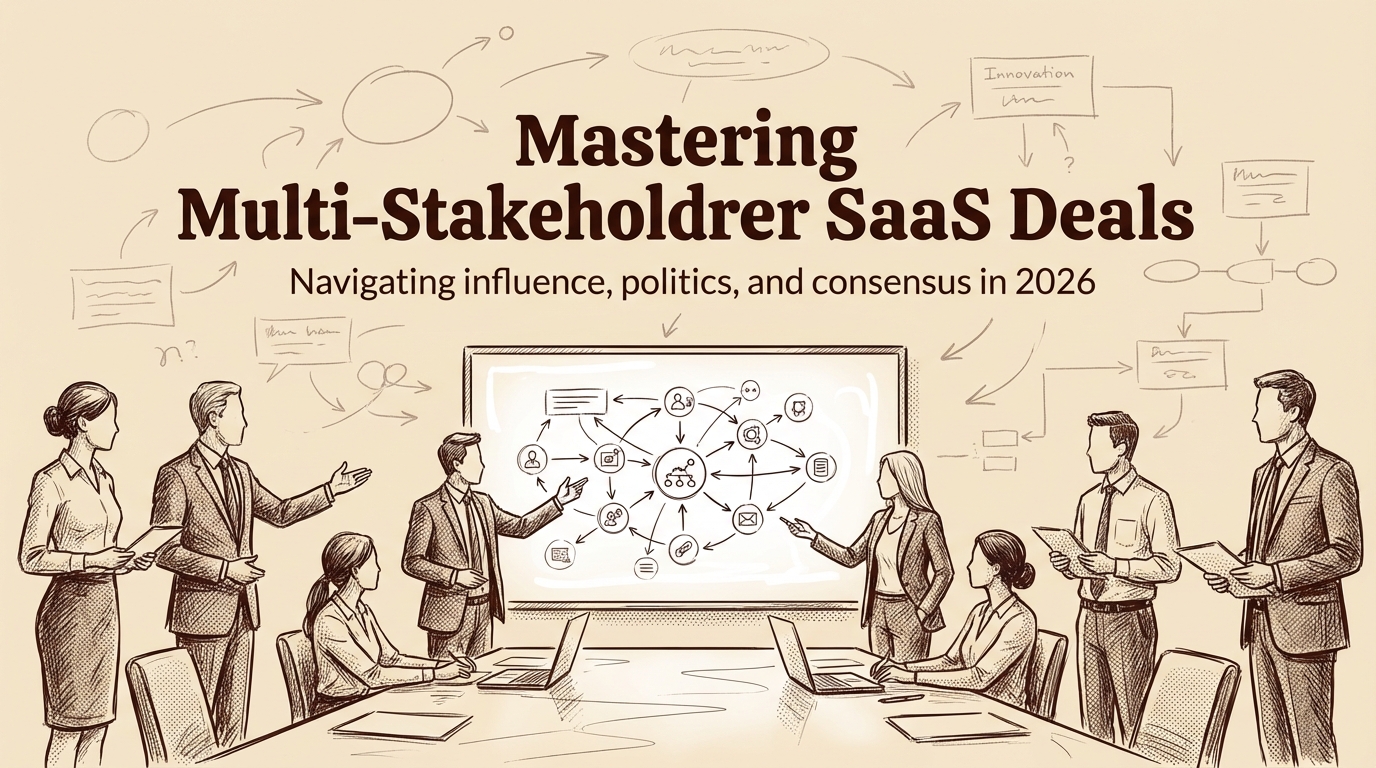
In the high-stakes world of enterprise SaaS sales, closing a single deal can feel like navigating a political summit. With buying committees now averaging 6-10 stakeholders across IT, finance, and legal, sales success relies on decoding influence maps and forging unbreakable consensus. According to Salesmate - Enterprise Sales in 2026, this complex environment is redefining relationship selling.
The Rise of Multi-Stakeholder Deals in Enterprise SaaS
Enterprise SaaS sales have evolved into long, high-touch processes of 3-12 months, often with contracts exceeding $100K. As noted by Fundraise Insider - The Complete Guide to SaaS Sales in 2026, these deals demand consultative approaches, where early discovery and open communication uncover business needs. Custom implementations and integrations are standard, requiring sellers to coordinate with IT, finance, and more. Decentralized purchasing and shadow IT further complicate decision-making, but also create land-and-expand opportunities.
Why Mapping Influence is Non-Negotiable
In multi-stakeholder environments, power dynamics shift quickly, and committees often involve founders, economic buyers, and technical gatekeepers. Building detailed relationship maps with reporting structures and stakeholder-specific buying criteria helps you navigate potential blockers. This is why Mindreader’s advanced objection handling tools can be instrumental for consultative sellers looking to tailor pitches for each role. Meanwhile, Directive - 2026 B2B SaaS Marketing Blueprint reports that B2B buyers complete 70% of their research before contacting sales, making influence mapping and proactive engagement essential.
Navigating Politics and Building Consensus
Office politics can derail even the best proposals if competing priorities go unaddressed. Security, ROI, and data ownership can take precedence for different stakeholders. As noted by RightLeft Agency - SaaS Business Model Trends 2026, consensus requires acknowledging each concern while emphasizing a solution’s cross-departmental value. Hybrid pricing models, usage-based elements, and multi-year discounts add layers to negotiations. Mindreader's consultative selling insights recommend steering committees through demos and sandboxes that build confidence across roles.

Collaboration among IT, procurement, and Software Asset Management (SAM) teams mirrors these seller-driven efforts. According to Zylo - 2026's Top SaaS Trends, more than 1,200 martech product consolidations last year underscore the push toward integrated platforms—and the need for influencing multiple voices.
3 Practical Tips for Winning Multi-Stakeholder Deals

- Build a Visual Influence Map: Create a clear overview of each stakeholder’s role and potential objections. Update it continually to support targeted communication and strategic relationship-building.
- Employ Consultative Selling Frameworks: Host dedicated sessions for each function—technical reviews for IT, ROI breakdowns for finance—to address concerns specifically.
- Facilitate Consensus with Shared Wins: Joint workshops or proof-of-concepts unify teams. Track progress against shared KPIs and use data to highlight ROI and expedite procurement.
Overcoming Common Pitfalls in Consensus-Building

One major hazard is over-reliance on a single champion. Broaden engagement using account-based marketing that addresses multiple roles simultaneously. Failing to follow up after a demo can also stall momentum—sustain interest with personalized materials addressing new questions. Security reviews and legal bottlenecks frequently slow progress, so proactively share compliance documents to show credibility.
Subscription fatigue heightens price scrutiny. Bundled value, justifiable ROI, and integrated features can counter these cost concerns. For expanded lead identification, Mindreader LinkLeads ensures no champion’s influence is overlooked.
The Future of Relationship Selling in Multi-Stakeholder SaaS
SaaS ecosystems will only expand, with AI-driven platforms adding new layers of complexity. Flexible renewals, outcome-based pricing, and mindful consensus-building will be vital in winning loyalty. These tactics reflect leadership in action—uniting multiple stakeholders behind a shared vision. Start leveraging Mindreader software today to automate influence mapping, streamline objection handling, and supercharge consultative sales relationships. Deals once seen as impossible become well within reach.
Decision-Maker Profiling: Economic Buyer vs Technical Buyer vs Champion
In multi-stakeholder enterprise deals, success depends on tailoring your approach to each decision-maker type. The Economic Buyer cares about ROI, TCO, and business impact—frame discussions around revenue growth, cost reduction, and competitive advantage. When presenting to CFOs or financial decision-makers, lead with quantified outcomes: "This solution typically delivers 3.2x ROI within 18 months." The Technical Buyer cares about security, integration, reliability, and implementation complexity—frame discussions around risk mitigation, technical compatibility, and operational continuity. When presenting to CTOs or IT leaders, lead with technical assurances: "SOC2 certified, API-first architecture, 99.99% uptime SLA." The Champion is your internal advocate who benefits personally from the solution's success—frame discussions around their career goals, team performance improvements, and organizational visibility. Empower champions with metrics they can share internally and recognition they can claim publicly.
Multi-Stakeholder Objection Handling Scripts for Common Scenarios
Scenario 1: IT security objects to data access requirements. Response: "Your concern about data governance is exactly why we built SOC2 compliance and role-based access controls into our core architecture. Would a 15-minute walkthrough with our security architect address your specific requirements?" Scenario 2: Finance objects to upfront costs. Response: "I understand budget pressure. Let's model this together: if we spread implementation over Q3 and Q4, how does that impact your quarterly spend while still capturing Q4 benefits?" Scenario 3: Legal objects to contract terms. Response: "Which specific terms create risk for your organization? Our legal team has alternative language that addresses common procurement concerns while maintaining mutual protections." Scenario 4: Operations objects to implementation disruption. Response: "We can implement in phases—starting with a pilot team that demonstrates value before broader rollout. What timeline would minimize disruption for your teams?"
Case Study: Closing a 7-Person Enterprise Deal Through Parallel Stakeholder Management
A SaaS company targeting a Fortune 500 retailer faced a classic multi-stakeholder challenge: the CFO demanded pricing justification, the CTO required security certifications, the VP of Operations worried about implementation timeline, the Legal department needed contract modifications, and three department heads had conflicting feature priorities. Instead of treating this as sequential obstacles, the sales team mapped influence relationships and discovered the CMO was the informal decision catalyst. They armed the CMO's team with ROI calculators the CFO would accept, scheduled a technical briefing for the CTO with their lead engineer, created an implementation roadmap that addressed Operations' concerns, and provided redline contract language for Legal. They also facilitated a working session where the three department heads collaborated on feature prioritization—turning potential conflict into shared ownership. The deal closed in 4 months with $450K ACV, and the unified stakeholder group became strong advocates for expansion.
Deal Velocity Tactics: Moving Parallel Stakeholders Forward Simultaneously
The most effective enterprise sellers don't wait for sequential approval—they move stakeholders forward in parallel. Schedule simultaneous briefings tailored to each stakeholder's priority: one session focused on ROI metrics for finance, another on technical architecture for IT, a third on implementation planning for operations. Create stakeholder-specific one-pagers that address each group's concerns while reinforcing shared value. Facilitate cross-functional working sessions where stakeholders discuss requirements together—this surfaces concerns early while building consensus. Use digital rooms where stakeholders can review materials, ask questions, and see each other's input—creating transparency that reduces contradictory feedback. Most importantly, identify the single stakeholder who can accelerate others (often the executive sponsor or budget holder) and ensure they're actively endorsing progress to their peers.