Mastering DISC Assessment Personality Types in Sales
If you’ve ever felt like you’re speaking a different language from your prospect, you’re not alone. The DISC assessment offers a way to translate those conversations, categorising communication styles into four main profiles: Dominance (D), Influence (I), Steadiness (S), and Compliance (C).
Getting a handle on these styles gives you a powerful framework to adapt your sales approach, matching how different people prefer to talk, think, and ultimately, make decisions.
Unlocking Sales Success with DISC Personality Insights
Think of the DISC model as your universal translator for sales. It’s not about putting people in a box. Instead, it’s a practical map for understanding their communication preferences and what truly drives them, especially when a deal is on the line.
When you can recognise these behavioural cues in real-time, you build rapport faster and cut through the friction that can stall a conversation. The goal isn’t to stereotype; it's to adapt your approach, making every interaction more relevant and steering the conversation toward a confident ‘yes’.
The Four Core Communication Styles
At its heart, the DISC model organises personalities along two simple axes: are they more outgoing or more reserved? And are they more task-oriented or people-oriented? This simple grid creates four distinct quadrants, each representing a primary communication style.
This visual gives you a great snapshot of the four DISC styles and what they represent.
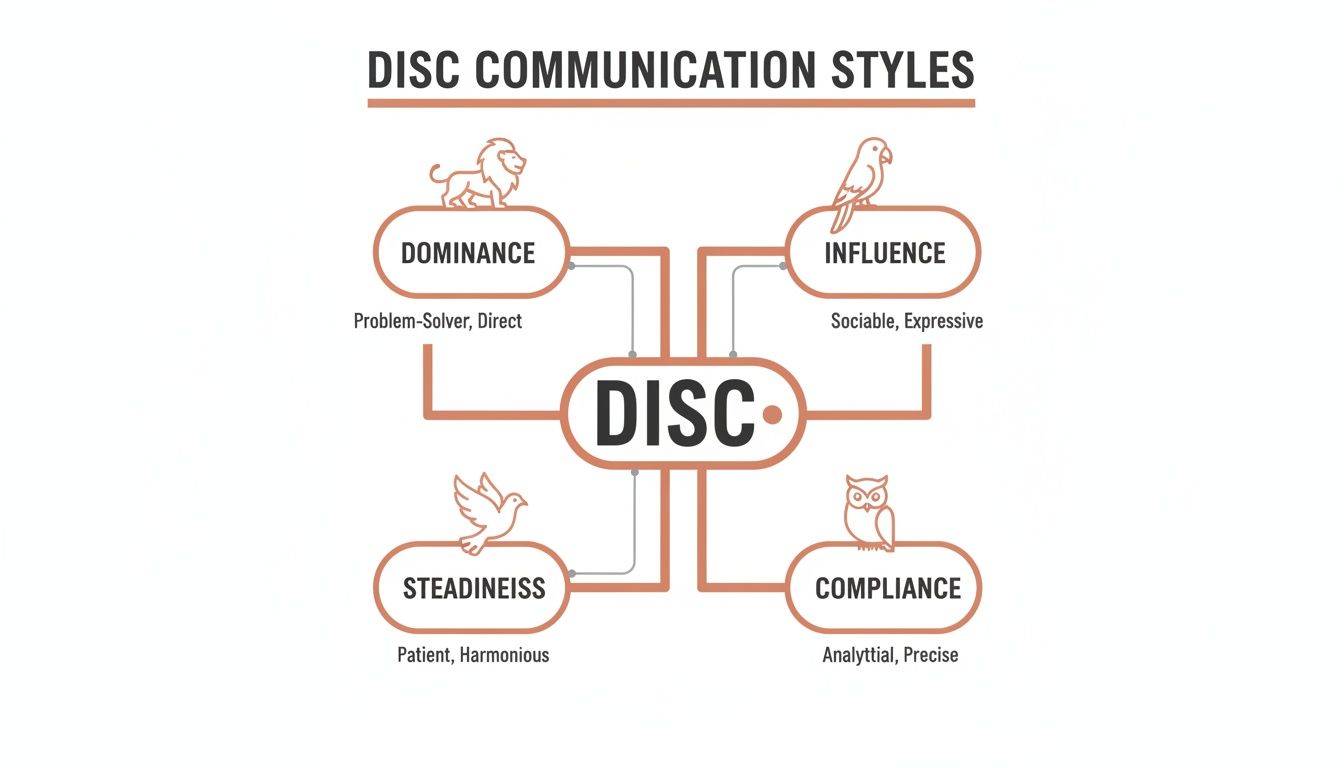
From the decisive lion representing Dominance to the wise owl symbolising Compliance, each animal perfectly captures the core traits of its corresponding style.
From Theory to Actionable Archetypes
Knowing the theory is one thing, but applying it on the fly during a high-stakes sales call? That’s a different ball game. To make it easier, we translate these foundational DISC types into memorable, actionable sales archetypes that you can actually use in the moment.
"Understanding someone's communication style is the first step. The real advantage comes from knowing exactly how to adapt your message, pacing, and pitch to align with that style."
To help you put this knowledge into practice, here’s a quick overview of how the DISC types map to more intuitive sales personalities.
A Quick Guide to the Four DISC Sales Personalities
This table breaks down each DISC type, its core driver, and how it translates into a practical archetype you can use to guide your sales conversations.
| DISC Type | Core Trait | Sales Approach Focus | Mindreader Archetype |
|---|---|---|---|
| Dominance (D) | Direct & Decisive | Results & Efficiency | Knight |
| Influence (I) | Enthusiastic & Social | Vision & Excitement | Explorer |
| Steadiness (S) | Patient & Reliable | Trust & Security | Healer |
| Compliance (C) | Analytical & Precise | Data & Logic | Wizard |
Thinking in terms of these archetypes—Knight, Explorer, Healer, and Wizard—gives you a clear path from abstract theory to real-world results. It allows you to move beyond basic labels and truly understand what makes each buyer tick.
If you’re keen to dive deeper, you can learn more about personality typing beyond the misconceptions in our detailed article.
Selling to the Decisive Knight (D-Type)
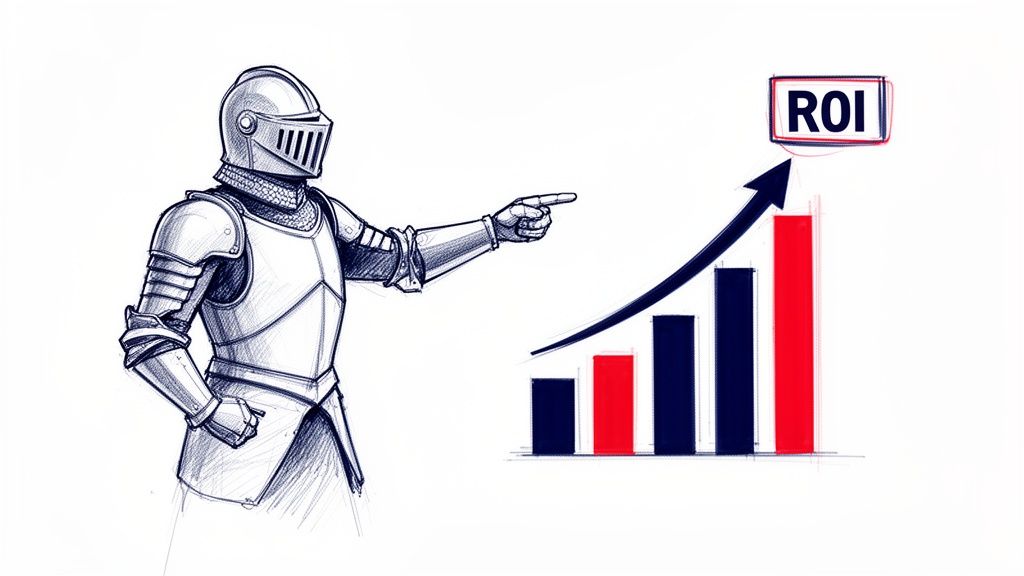
First up is the D-Type personality, who we call the Knight. Think of them as the direct, results-obsessed buyer in your pipeline. They're decisive, laser-focused on their goals, and have absolutely no time for small talk. Forget the backstory; they want the bottom line, and they want it now.
A Knight's core motivation is simple: winning. They thrive on challenges, viewing them as opportunities to prove themselves. Efficiency, action, and tangible results are the only metrics that matter to them. If you’re engaging with a Knight, you need to project confidence and cut straight to the chase.
How to Spot a Knight
Learning to spot a Knight early on is a game-changer. Their communication style is usually a dead giveaway—it’s direct, assertive, and often impatient. You'll quickly notice a few key behavioural cues:
- Direct and concise language: They speak in short sentences and use action-oriented verbs. Their emails are brief and get right to the point.
- Focus on the "what," not the "how": They're obsessed with the result, not the process. Expect blunt questions like, "What's the ROI?" or "Just give me the bottom line."
- Impatience with fluff: If you start with a long story or too much chitchat, you'll see them visibly lose interest. They often take control of the conversation, interrupting to get to the heart of the matter.
This personality is especially common in high-stakes industries. Here in Singapore's fast-paced business world, understanding DISC assessment personality types has become a secret weapon for top-performing sales teams. In fact, data shows 68% of B2B sales reps in the financial services sector identify as Dominance (D) types. Their direct, results-driven nature is a perfect fit for the high-pressure worlds of banking and insurance.
Winning Over the D-Type
To successfully sell to a Knight, you have to mirror their approach. Your pitch needs to be built around three things: outcomes, efficiency, and competitive advantage. Don't waste time trying to build a leisurely friendship. Instead, earn their respect by proving your competence and delivering value from the very first interaction.
Your goal with a D-Type isn't to be their friend; it's to be their most effective ally. Show them how your solution helps them win, and you will earn their business.
Here are a few proven tactics that work wonders with Knights:
- Lead with the Bottom Line: Don’t save the best for last. Start the conversation with the end result and the value you bring.
- Use Data and Evidence: Knights trust facts, not feelings. Back up every claim you make with hard data, measurable results, and clear metrics.
- Present Options, Not Orders: D-Types need to be in control. Frame your proposal with two or three clear options and let them make the final call.
- Respect Their Time: Keep your meetings short, focused, and stick to the agenda. Every minute should be dedicated to solving their specific problem.
Modern tools like Mindreader can give you a massive head start by generating sales playbooks tailored for these powerful decision-makers, helping you close deals faster and more efficiently. Learn more about selling to the four types in our in-depth sales series.
Engaging the Charismatic Explorer (I-Type)
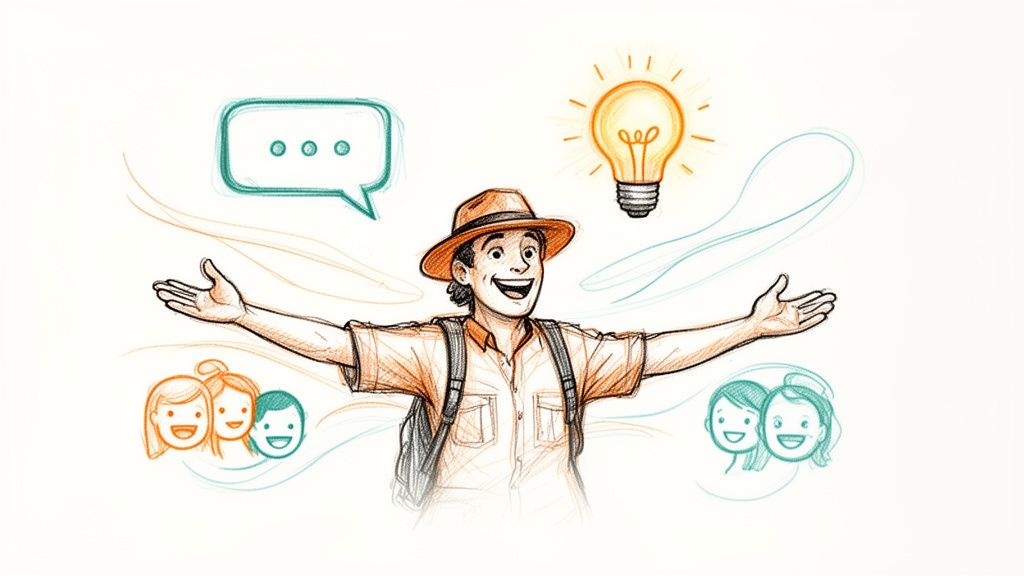
Now, let's step into the vibrant world of the I-Type personality, who we call the Explorer. These are the enthusiastic, optimistic, and highly social individuals you’ll meet. Explorers thrive on human connection, building relationships, and dreaming about the big picture. For them, the story and the people behind a solution are often far more captivating than the nitty-gritty technical details.
An Explorer's energy is infectious. They're natural storytellers, using expressive language and animated gestures to build rapport almost instantly. Their focus isn't on the granular "how" but on the exciting "what if." If you find yourself in a conversation that's less about features and more about future possibilities and shared excitement, you’re likely talking to an Explorer.
How to Identify an Explorer
Spotting an Explorer is all about tuning into their communication style. They are naturally outgoing and people-oriented, making them one of the more recognisable disc assessment personality types. Keep an eye out for these clear signals:
- Expressive and energetic communication: They use animated language, tell fantastic stories, and are quick to share personal anecdotes to forge a connection.
- Focus on relationships and vision: They’ll want to know about your team, your company's origin story, and how your solution will help people shine.
- Aversion to heavy details: Drowning them in dense data sheets or complex technical specs too early will make their eyes glaze over. They prefer inspiration over information overload.
This profile is incredibly common among founders and consultants who rely on networking and vision to build their ventures. A recent survey of 3,200 startup entrepreneurs and consultants found that Influence (I) DISC personality types dominate at 52%. This personality fuels the networking prowess in the region's vibrant founder ecosystem, where ventures raised SGD 12.4 billion in funding last year. You can read the full research on market trends to see how these personalities are shaping the business environment.
Strategies to Win Over the I-Type
To really click with an Explorer, you need to match their enthusiasm and focus on building a genuine relationship. Ditch the dry, feature-driven pitch. Instead, aim for a collaborative and exciting conversation that helps them see what's possible.
Your goal with an I-Type is to become a trusted co-pilot on their journey. Show them how your solution not only solves a problem but also makes their story of success even more compelling.
Here are a few proven tactics for connecting with an Explorer:
- Leverage Social Proof: Share testimonials, case studies, and glowing success stories from happy clients. Explorers are hugely influenced by the positive experiences of others.
- Foster a Collaborative Conversation: Ask for their ideas and opinions. Frame the discussion as a brainstorming session where you're building a vision together.
- Use Visuals and Storytelling: Paint a picture of what success looks like. Use powerful metaphors, analogies, and visual aids to bring the benefits to life in an exciting way.
- Keep the Energy High: Be enthusiastic, positive, and passionate. Your energy level will directly feed theirs.
By appealing to their personable nature, you’ll build the trust needed to guide them from that initial spark of excitement to a confident final decision.
Right, we've talked about the high-octane Explorer. Let's switch gears and meet their polar opposite: the Dependable Healer, our take on the Steadiness (S) personality type.
Calm, patient, and incredibly reliable, the Healer is the anchor in any storm. They're all about security, trust, and predictability. This makes them thoughtful, collaborative people who won’t be rushed into a decision.
Healers are driven by a deep-seated need for stability and harmony. Sudden changes or high-pressure tactics are their kryptonite, as it throws off the consistency they work so hard to create. Their approach to everything is methodical and sincere, which means they become fiercely loyal partners once you’ve earned their trust.
How to Spot a Healer
Spotting a Healer means you need to slow down and tune into their composed demeanour. Unlike the direct Knight or the flashy Explorer, a Healer’s signals are much more subtle. Within the DISC assessment personality types, the S-type is often the quiet backbone of a team.
Keep an eye out for these behavioural cues:
- Exceptional Listening Skills: They’re the ones who really listen. They absorb everything patiently and ask thoughtful, clarifying questions instead of jumping in.
- A preference for a step-by-step process: They find comfort in a clear, predictable plan. If you start jumping all over the place, you’ll make them uneasy.
- Calm and agreeable nature: Healers are the natural peacemakers. They steer clear of conflict and focus on making sure everyone feels comfortable and heard.
Strategies to Win Over the S-Type
Building a solid relationship with a Healer is a marathon, not a sprint. Trust is the only currency that matters to them, and you earn it through consistency, genuine support, and being a reliable presence. Pushing them with aggressive, "act now!" tactics is the fastest way to get them to retreat.
Your strategy needs to be built around demonstrating reliability and removing any hint of risk. You’re not a salesperson; you’re a dependable partner who will be there for the long haul.
To connect with a Healer, you have to prove your solution is a safe choice. Your goal isn't to close a deal, but to offer unwavering support and gently guide them, making sure they feel secure every single step of the way.
Here are a few tactics that work wonders with Healers:
- Offer Sincere Reassurance: Take their concerns seriously. Back up your claims with solid case studies, guarantees, and a crystal-clear implementation plan to build their confidence.
- Demonstrate Long-Term Value: Don't talk about quick fixes. Frame your solution as a stable, long-term investment that provides lasting security and support.
- Provide Consistent Follow-Up: A steady, gentle pace is key. Regular, supportive check-ins show you’re reliable and genuinely invested in their success, not just the sale.
- Avoid Pressure at All Costs: Give them all the time and space they need to talk it over with their team. Rushing a Healer will only create anxiety and destroy any trust you've managed to build.
Winning Over the Analytical Wizard (C-Type)
Last but certainly not least, we have the Compliance (C) personality—the analytical and precise Wizard. For this type, every decision is meticulously built on a solid foundation of data, logic, and cold, hard evidence.
Wizards are naturally sceptical of big, flashy claims and will always choose accuracy over enthusiasm. Their trust isn't something you get for free; you have to earn it through flawless preparation and even better execution.
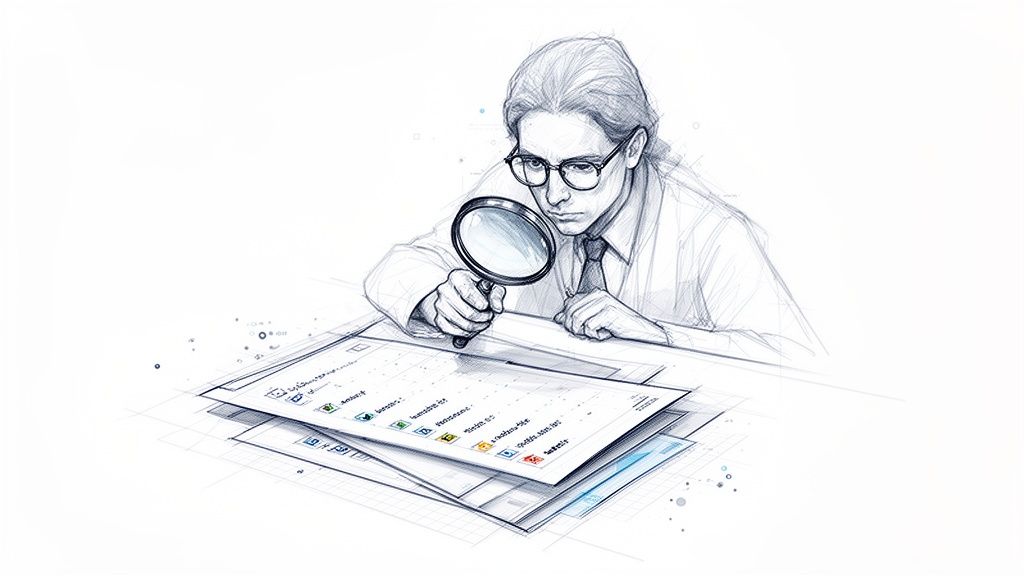
Their core driver is the need to be correct. The biggest fear for a Wizard is being wrong or, worse, being tied to a flawed solution. This is what pushes them to ask those deep, probing questions, scrutinise every last detail, and only move forward when they are absolutely confident in the logic and quality of what's in front of them.
How to Identify a Wizard
Spotting a Wizard comes down to paying attention to their systematic approach and their unwavering reliance on facts. Of all the disc assessment personality types, their behaviour is easily the most measured and reserved. Keep an eye out for these tell-tale signs:
- Thoughtful, detailed questions: They don't just scratch the surface. Expect them to dig deep into the specifics, asking "how" and "why" until they understand every single component of your solution.
- A systematic and organised approach: Their own communication is highly structured, and they expect you to mirror that. They love seeing an agenda, clear documentation, and a logical flow of ideas.
- Reliance on verifiable facts: They'll be the ones asking for data sheets, third-party validation, and comprehensive case studies. Anecdotes and glowing testimonials? They carry almost no weight here.
This analytical mindset is incredibly valuable in roles that demand precision and careful risk management. It's no surprise that in Singapore's enterprise teams, Compliance (C) and Steadiness (S) DISC types make up a combined 41% of sales leaders. A report from the Institute of Singapore Chartered Accountants (ISCA) that looked at 4,100 professionals found this combination drives risk-averse yet reliable performance, especially in a market where financial services are a huge part of the GDP. Discover more insights about market leadership trends.
Sales Tactics for the C-Type
If you want to win over a Wizard, you have to be more prepared than they are. Your approach needs to be professional, data-driven, and completely transparent. Steer clear of emotional appeals or high-pressure tactics; those will set off alarm bells and destroy any trust you've started to build.
With a C-Type, you are not selling a vision; you are proving a thesis. Every claim must be backed by undeniable proof, and your process must be as logical and sound as your product.
Here are a few proven strategies for engaging a Wizard effectively:
- Prepare a Detailed, Fact-Based Proposal: Your materials should be exhaustive, neatly organised, and packed with specific data. Try to anticipate their questions before they even ask and have the answers ready to go.
- Be Patient and Give Them Space: Wizards need time. They have to process all the information and do their own due diligence. Rushing them is the quickest way to kill the deal.
- Focus on Quality and Reliability: Hammer home points about your quality assurance, industry certifications, and the long-term reliability of your solution. Prove to them that you are the safest, most logical choice on the table.
- Admit What You Don't Know: If they throw a question at you and you don't have the answer, just say so. Promise to find out and get back to them. To a Wizard, your honesty and commitment to accuracy are far more valuable than a made-up answer.
How to Apply DISC Insights Ethically in Sales
Understanding the four DISC personality types gives you a serious edge in sales, but let's be clear: with great power comes great responsibility. Applying these insights ethically is everything. It’s the line between building genuine connections and just being manipulative.
The goal is never to stereotype or stuff a prospect into a box. Think of DISC as a guide for adapting your communication style to speak their language. It's about tweaking your approach to make the other person feel more comfortable and understood, not about tricking them into a decision.
A Framework for Respectful Adaptation
Using DISC ethically all starts with observation and empathy. When you pick up on behavioural cues in emails or on calls, you can use them to respectfully adjust your messaging. This isn’t about running some secret analysis; it's about being a better listener and a more considerate communicator.
Here’s a simple framework to keep you on the right track:
- Observe, Don't Assume: Notice if their emails are brief and direct (potential D-Type) or warm and full of stories (potential I-Type). Remember, these are just clues, not conclusions.
- Adapt Your Style: If someone seems all about the task at hand, get straight to the point. If they come across as more relationship-focused, take a moment to build rapport before diving into business talk.
- Focus on Their Needs: Use what you’ve learned to frame your solution in a way that connects with their likely priorities—whether that's efficiency, the big-picture vision, security, or getting the details right.
The most ethical and effective way to use DISC is to reduce communication friction, not to exploit personality traits. It’s about creating interactions that feel natural and valuable for the prospect, which in turn builds the trust you need for a lasting business relationship.
This approach transforms personality insights from a mere sales tactic into a powerful tool for creating more relevant, human connections. It helps you foster stronger relationships that naturally lead to better conversions and long-term loyalty.
By focusing on adaptation over manipulation, you ensure you're using these powerful insights to serve your prospects, not just your quota. For those interested in digging deeper, exploring the differences between traditional vs AI-powered personality assessment can offer more context on modern, ethical applications.
Your Top DISC Questions, Answered
Even when you’ve got a handle on the four core DISC styles, putting them into practice in the real world can bring up some questions. Let’s tackle the most common ones that sales professionals ask when using disc assessment personality types to connect better and close more deals.
How Reliable Is DISC for Predicting Sales?
Let's be clear: DISC won't tell you if someone will buy. It's not a crystal ball. But it's incredibly reliable for predicting how they prefer to communicate and make decisions, which is the next best thing.
Think of it as a communication roadmap. When you understand whether your prospect values directness, craves enthusiasm, needs security, or trusts data above all else, you can meet them on their own turf. This alignment builds trust almost instantly and makes your message far more persuasive, leading directly to better sales outcomes.
Can Someone Be a Mix of DISC Types?
Absolutely. In fact, everyone is a blend of all four styles. We're complex! That said, one or two styles almost always shine through as dominant, especially in a professional setting where we tend to lean into certain behaviours.
The real skill is in identifying their primary style to shape your opening move. After that, stay observant. As you talk, you'll pick up on their secondary traits. A great salesperson knows how to read the room and adjust on the fly.
The goal isn't to slap a perfect label on someone—it's to build a flexible communication strategy. Pinpointing the dominant style gives you a powerful starting point, but genuine connection happens when you adapt in real-time.
How Can I Identify a Type Without a Formal Test?
You don't need anyone to fill out a questionnaire to get a solid read on their style. Their digital footprint and communication habits leave a trail of powerful clues for you to follow.
Keep an eye out for these signals:
- Email Length and Tone: Are their messages short, sharp, and straight to the point (D-Type)? Or are they warm, friendly, and full of personal touches (I-Type)?
- LinkedIn Profile Focus: Do they pack their profile with measurable results and career wins (D/C-Types)? Or do they put the spotlight on personal recommendations and connections (I/S-Types)?
- The Questions They Ask: Do they drill down into the "what" and "why" (D/C-Types), or are they more curious about the "who" and "how" (I/S-Types)?
These cues are all you need to make an educated guess, allowing you to tailor your outreach and make a great impression from the very first hello.
Ready to stop guessing and start connecting with clients in a way that just clicks? Mindreader translates these personality insights into actionable sales playbooks, helping you prepare smarter, build trust faster, and close more deals. See how it works at https://www.themindreader.ai.